Building wealth is not only about finding the right investment or earning a higher salary. It is also about learning to think clearly when the stakes are high, preparing more rigorously than competitors, and turning ambition into an organization that can create value for a long time.
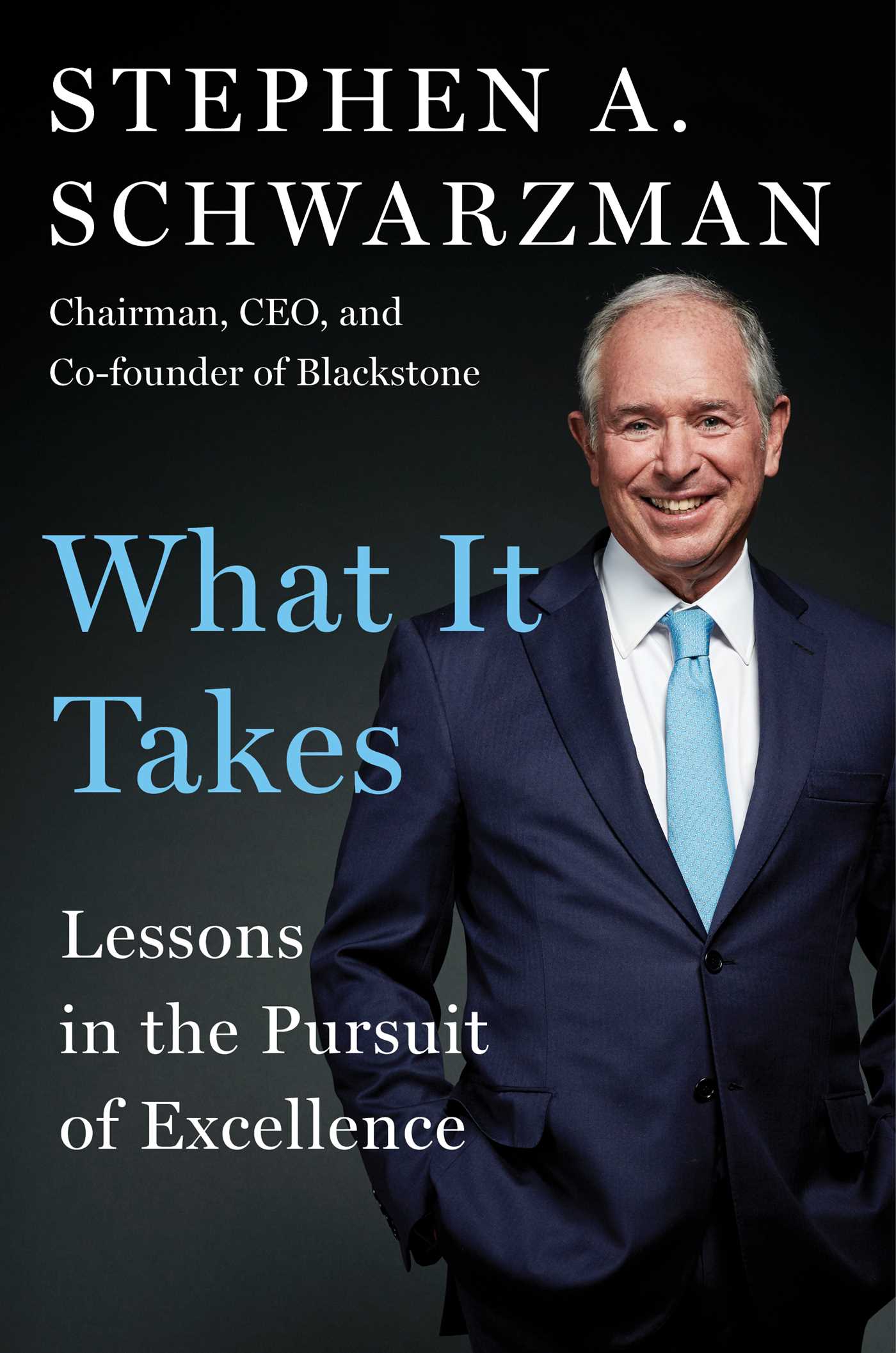
In What It Takes: Lessons in the Pursuit of Excellence, Stephen A. Schwarzman combines memoir with practical reflections on deal-making, investing, entrepreneurship, leadership, philanthropy, and institutional growth. His story is unusually large, but its most useful lessons are portable: define a meaningful standard, understand downside risk, recruit excellent people, and keep improving the quality of your decisions.
What the book is about
Schwarzman recounts his path from a family business and Yale to Wall Street, the founding of Blackstone with Peter G. Peterson, and the construction of a global investment firm. The narrative is not presented as a guaranteed formula. Instead, it shows how large outcomes emerge from repeated choices about people, preparation, risk, culture, and the scale of the opportunity.
The book’s central question is practical: what standards and habits help a person or institution pursue exceptional results without confusing boldness with recklessness? For a wealth-minded reader, that matters because sustainable wealth is usually connected to durable value creation—an investable business, a valuable skill, trusted relationships, or disciplined ownership.
Six ideas worth carrying forward
1. Set an ambitious but concrete standard
Ambition becomes useful when it changes what you prepare for and what you are willing to build. “Be successful” is too vague to guide a decision. A concrete standard might be to become the most trusted specialist in a narrow market, to build a company with recurring cash flow, or to reach a savings and investing target without sacrificing financial resilience.
The point is not to imitate Schwarzman’s scale. It is to stop shrinking a goal before you have examined its real possibilities.
2. Prepare until the important questions are visible
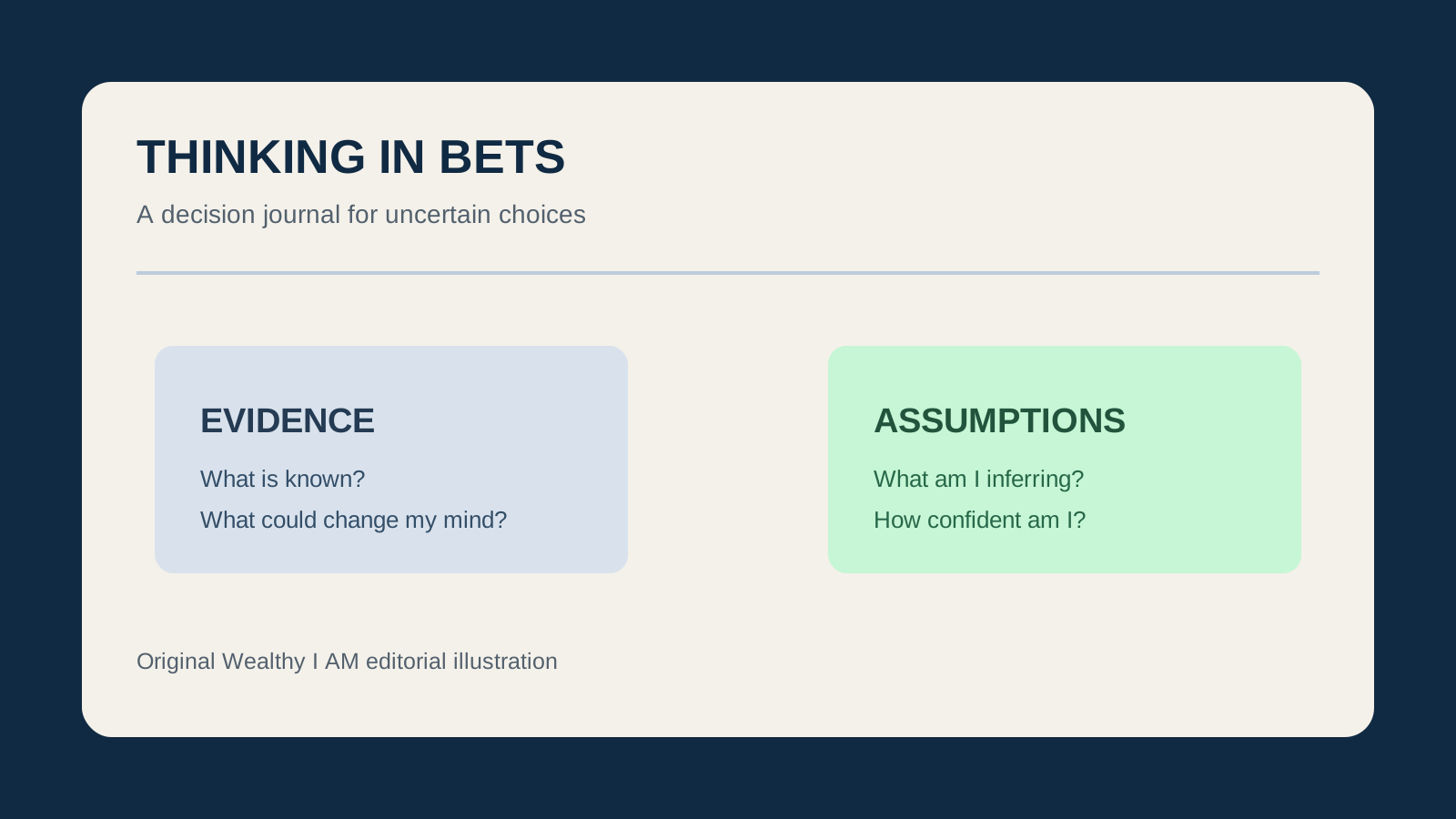
High-stakes decisions rarely become easy, but preparation can make them less mysterious. Before a business launch, acquisition, job change, or investment, write down the assumptions: who benefits, how value is created, what could go wrong, how much capital and time are required, and what evidence would change your mind.
Preparation is not endless research. It is the disciplined work of separating facts, assumptions, unknowns, and next actions.
3. Protect the downside
A recurring investing lesson in the book is the importance of avoiding permanent loss. This does not mean refusing all risk. It means distinguishing a temporary setback from a situation that can destroy capital, flexibility, reputation, or the ability to recover.
For personal wealth, downside protection can mean an emergency reserve, manageable debt, diversified investments, appropriate insurance, and refusing to risk money needed for near-term obligations. For an entrepreneur, it can mean testing demand before committing to a large fixed cost.
4. Build with people, not around yourself
Exceptional organizations are not simply the product of one person’s intelligence. They depend on people who can challenge assumptions, execute reliably, and take ownership. Hiring for judgment, integrity, learning ability, and complementary strengths is a form of wealth creation because it increases what the organization can accomplish without making the founder the bottleneck.
That lesson applies to a small business too. Document recurring work, clarify who owns each decision, and create a culture where bad news travels quickly enough to be useful.
5. Think in systems and scale
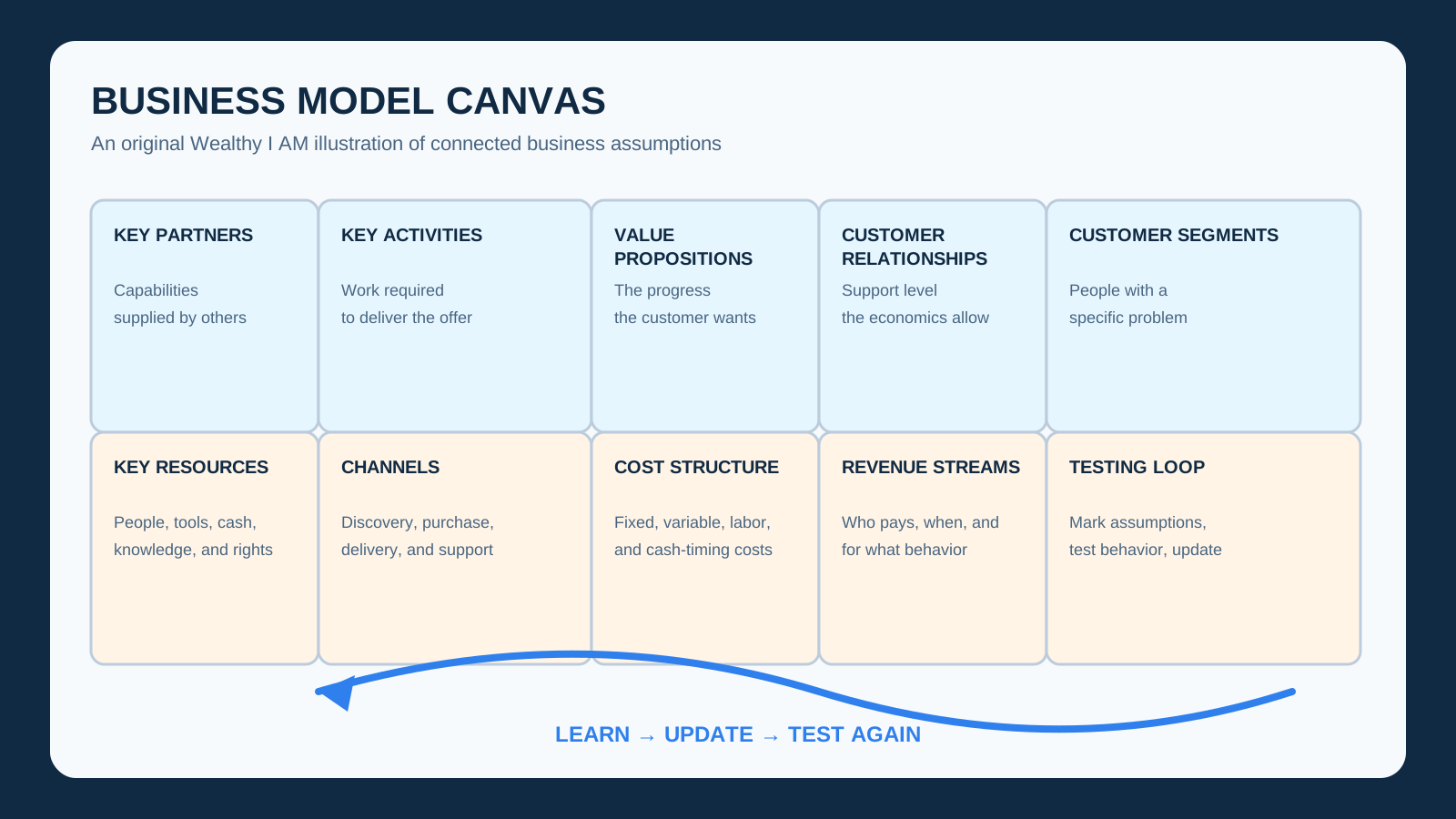
Schwarzman’s career illustrates the difference between completing transactions and building an institution. A one-time win may create income; a repeatable system can create durable enterprise value. Ask what must be true for an effort to work ten times, not just once. Can the process be taught? Can quality remain high? Does each success create better data, trust, talent, or distribution for the next one?
Scale is not merely “more.” Healthy scale means that the value created grows faster than the complexity and risk required to create it.
6. Treat excellence as a practice
Excellence is less a mood than a set of repeatable behaviors: review the work, learn from misses, raise standards carefully, and make the next decision better than the last. This mindset is especially important in investing, where a good process can still produce an unlucky result, and in business, where a promising idea can fail because execution was weak.
A practical step-by-step application
- Define your valuable outcome. Write one sentence describing the result you want to create for customers, employers, partners, or your household. Attach a measure: cash flow, retained customers, useful skills, or net worth.
- Map the downside. List the three ways the plan could cause permanent damage. Add one safeguard for each—cash reserves, staged spending, a position limit, a contract, or a second source of income.
- Separate facts from guesses. Make two columns before an important decision. Put verified information in one and assumptions in the other. Identify the cheapest experiment that could test the riskiest assumption.
- Upgrade the team or process. Choose one responsibility that currently depends too heavily on you. Assign clear ownership, document the standard, and schedule a review rather than relying on memory.
- Find the compounding loop. Identify an action that improves future actions: better customer feedback, stronger writing, cleaner data, more referrals, or automated saving. Repeat it weekly for twelve weeks.
- Conduct a monthly excellence review. Ask what worked, what failed, what was luck, what created durable value, and what you will stop doing. Keep the review factual and brief enough to repeat.
Important limitations
This is a memoir and a set of reflections, not a personal-finance plan or a promise that ambition produces wealth. Schwarzman’s access to capital, institutions, and opportunities is not available to everyone. Readers should also remember that investment and business outcomes depend on market conditions, timing, regulation, competition, and luck.
The most transferable lesson is therefore not “copy the outcome.” It is “improve the quality of the process.” Use the book’s emphasis on preparation, talent, scale, and downside protection alongside your own financial plan and circumstances.
Bottom line
What It Takes argues that extraordinary results are built through standards and decisions that ordinary days can support. Define a valuable goal, prepare for reality, protect your ability to recover, surround yourself with capable people, and design systems that get better with use. Those practices will not eliminate uncertainty, but they can make your work, business, and wealth-building decisions more deliberate—and more durable.
Sources and credits
- Simon & Schuster official book page — bibliographic details and publisher description.
- Amazon.com hardcover product page — matched U.S. product listing.
- Cover image credit — Simon & Schuster publisher image for hardcover ISBN 9781501158148.
- Google Books record — author and publication reference.