Building wealth rarely depends on one brilliant prediction. More often, it comes from making sound money decisions repeatedly: saving enough to invest, choosing a sensible portfolio, and staying committed when markets become uncomfortable. Just Keep Buying: Proven Ways to Save Money and Build Your Wealth by Nick Maggiulli offers a data-informed challenge to many dramatic personal-finance rules. Its central idea is memorable because it is both simple and demanding: create a sustainable system, then keep investing instead of waiting for perfect conditions.
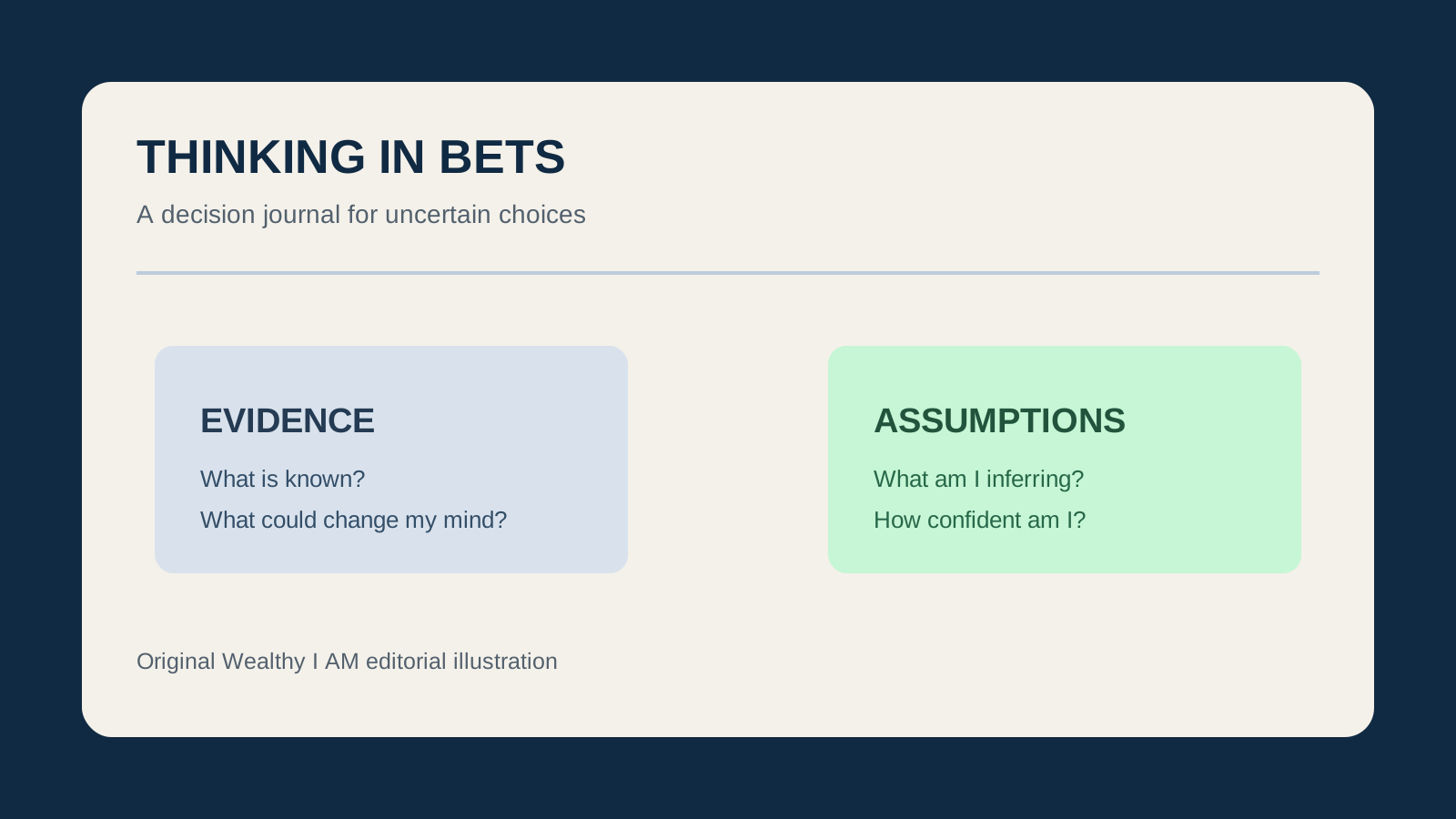
Maggiulli approaches saving and investing as questions that can be tested with evidence. Rather than treating every popular money opinion as a universal law, he asks what the numbers suggest about spending, saving, debt, market timing, and long-term behavior. The result is not a promise of effortless riches. It is a practical invitation to replace financial anxiety with repeatable decisions.

What the book is about
The book is organized around two connected jobs: saving and investing. Saving creates the capacity to invest, while investing gives saved money the opportunity to grow. Maggiulli examines common trade-offs, including whether people should focus only on cutting expenses, whether they should hold cash for a market decline, and how much uncertainty is unavoidable in financial life.
Its tone is useful for readers who feel every money decision has to be perfect. A good plan must fit real income, obligations, risk tolerance, and goals. A strategy that looks impressive but cannot be followed is weaker than a modest approach that survives busy months, emergencies, and market volatility.
Five practical lessons from Just Keep Buying
1. Build a savings rate you can sustain
Saving is important, but the highest theoretical savings rate is not automatically the best target. Start with a clear view of income, fixed costs, flexible spending, and irregular expenses. Choose an amount that leaves room for a life you can maintain. Increase it when income rises, but avoid turning every month into a punishment.
Try this: review three months of spending and separate essential costs from deliberate choices and accidental leakage. Automate a manageable transfer on payday. The goal is not deprivation; it is making wealth-building happen before money disappears into unplanned spending.
2. Invest consistently instead of waiting for perfection
Waiting for a crash requires knowing when to hold cash and when the decline is over. The book makes a case for a repeatable investing schedule. Consistency reduces emotional choices and keeps long-term capital exposed to markets instead of permanently sitting on the sidelines.
This does not mean buying blindly. Establish an emergency reserve, address high-cost debt, and select diversified investments appropriate to your circumstances. Then define the contribution schedule in advance. A system can be boring and effective.
3. Treat spending as a tool, not a moral scorecard
Advice often praises spending cuts without asking what the money is for. Maggiulli encourages readers to distinguish waste from meaningful spending. A purchase that improves health, relationships, time, or genuine enjoyment may be more valuable than a small cut that creates constant friction.
Try this: identify three spending categories that contribute most to your well-being and protect them intentionally. Then reduce low-value expenses without damaging the life you are trying to fund. Wealth is also the ability to use money deliberately.
4. Use income growth as a major wealth lever
Cutting expenses has a floor: essential spending cannot be reduced forever. Income growth has more room. Build valuable skills, negotiate when your contribution supports it, seek better opportunities, or develop a business asset that can serve more people. The message is not merely to work harder; it is to make progress less dependent on endless restriction.
Set one twelve-month income experiment: a certification, a portfolio, a new sales channel, or a conversation about compensation. Measure actions and results, then adjust.
5. Design for behavior during bad markets
A portfolio plan is incomplete until it explains what you will do when prices fall. Market declines are part of investing. Write down your allocation, contribution rule, rebalancing method, and the conditions that would justify changing the plan. Do not make a permanent decision from a temporary headline.
Risk should match your time horizon and ability to remain invested. Money needed soon should not face the same uncertainty as money intended for a distant goal. A calm process protects you from turning volatility into a realized loss through panic.
A seven-step action plan
- Set the destination: name a goal, date, and approximate amount.
- Make cash flow visible: track income and spending long enough to see patterns.
- Protect the foundation: create an emergency buffer and address expensive debt.
- Automate the first move: schedule saving and investing for payday.
- Choose a simple allocation: use diversified, low-cost investments you understand.
- Create a review rhythm: check monthly, but make major decisions under written rules.
- Increase capacity: direct part of every raise or new revenue stream toward investing while reserving money for meaningful living.
What to keep in perspective
Just Keep Buying is a framework, not individualized financial advice or a guarantee of returns. Tax rules, account choices, debt terms, insurance needs, and investment risks differ by person and country. Verify important decisions with current primary sources and, where appropriate, a qualified professional.
The book’s lasting value is behavioral. It makes wealth feel less like a contest of forecasts and more like a process of capacity, ownership, patience, and repeated action. You do not need to predict every market move to improve your position. You need a plan strong enough to follow and flexible enough to survive reality.
Bottom line
Nick Maggiulli’s practical lesson is to save intelligently, invest consistently, spend on what matters, grow earning power, and prepare emotionally for uncertainty. “Just keep buying” is not an excuse to ignore valuation, diversification, or personal circumstances. It is a reminder that long-term wealth is usually built through ordinary decisions made faithfully.
Sources and credits
- Harriman House book page — title, author, publisher, and ISBN.
- Amazon.com product page — verified US paperback product page.
- Nick Maggiulli, “Just Keep Buying (The Book)” — author overview.
- Open Library cover image — matched ISBN cover source.