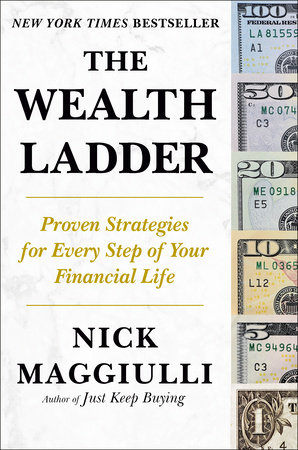
What if the next step in your financial life is not the same as the last one? In The Wealth Ladder: Proven Strategies for Every Step of Your Financial Life, Nick Maggiulli argues that wealth building is not a single contest where the most frugal person wins. It is a progression. The actions that help someone stabilize cash flow may be very different from the actions that help an established investor protect freedom, time, and peace of mind.
That perspective makes this 2025 book especially useful for readers who feel stuck between generic advice. Save more can be correct but incomplete. Invest aggressively can be sensible for one person and reckless for another. Maggiulli’s central lesson is to identify your current level, choose the constraint that matters most, and focus your effort there.
The book’s central idea: strategy should change as you climb
Maggiulli organizes financial progress into six levels. The exact dollar boundaries are less important than the framework: each stage has a different dominant problem. Early on, the challenge may be staying afloat and creating a surplus. Later, it may be increasing earning power, investing wisely, managing risk, or deciding what additional wealth is actually for.
This avoids a common mistake in personal finance: applying a true rule at the wrong time. Extreme frugality can help when expenses are out of control, but eventually the bigger opportunity may be a better skill, a stronger career move, or a business. Likewise, taking investment risk may be reasonable when your foundation is strong, but dangerous when a market decline would force you to sell or borrow.
Five practical lessons from The Wealth Ladder
1. Diagnose your bottleneck before choosing a tactic
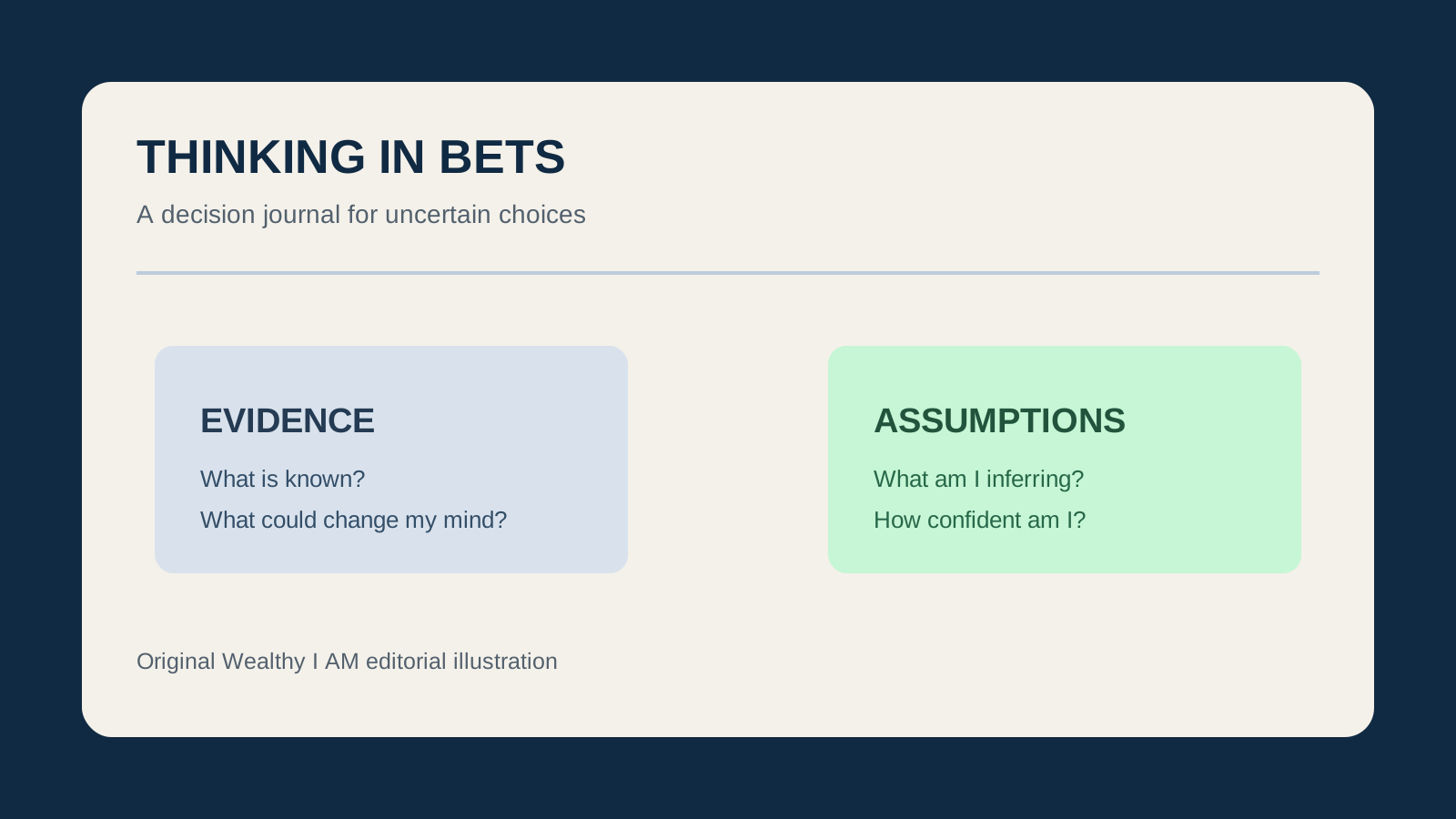
Start with a snapshot of your financial life: monthly income, essential spending, high-interest debt, cash reserves, investments, and the stability of your work. Then ask: What single weakness is most limiting my progress? If the answer is chaotic cash flow, a sophisticated portfolio will not solve the real problem. If you have a solid surplus but stagnant income, another round of small cuts may produce less than learning a valuable skill or negotiating compensation.
Write down the bottleneck in one sentence. For example: My income is inconsistent, so I cannot invest regularly. This turns vague anxiety into a decision.
2. Build a surplus before trying to optimize it
Wealth requires a gap between what comes in and what goes out. Review two months of transactions and separate essentials, meaningful priorities, and accidental spending. Protect expenses that genuinely improve your life, but remove or redesign purchases that deliver little value.
Automate the first move after payday: send a defined amount to an emergency reserve, debt repayment, or long-term investment account. The amount can start small. The important point is to create a repeatable system that survives busy weeks. A surplus gives you options; options are the foundation of every higher rung.
3. Treat earning power as an asset
Saving matters, but income determines how much can be saved and invested. Ask which ability, credential, relationship, or project could make your work more valuable over the next year. Choose one skill with a visible market: sales, software, analysis, management, communication, or a specialized trade.
Use a 90-day experiment. Spend a few hours each week learning, produce evidence through a project, and seek feedback from people who hire or pay for it. The aim is not endless preparation. It is to turn learning into leverage through a better role, higher rates, a side service, or a business opportunity.
4. Match investment risk to your ability to stay invested
Investing is not just a question of expected return. It is also a question of behavior. A portfolio that looks excellent on paper is a poor choice if a normal downturn will make you panic-sell. Before investing, define your time horizon, emergency needs, debt obligations, and tolerance for losses.
Favor a diversified, low-cost approach you understand, and keep near-term money out of assets that can fall sharply. Diversification spreads exposure across many holdings; low costs leave more of the return working for you. Revisit your plan when your life changes, not every time a headline changes.
5. Let wealth buy freedom, not just a larger scoreboard
Higher levels of wealth introduce a different question: what is enough? More money can improve security and choice, but it can also create new obligations, comparison, and complexity. Define the life your money is meant to support: flexible work, time with family, giving, travel, or the ability to take a thoughtful career risk.
Create a freedom number based on your priorities rather than someone else’s lifestyle. Then separate goals that require more money from goals that require better boundaries. A higher income cannot automatically create time, health, or meaningful relationships.
A step-by-step wealth-ladder reset
- Measure your current position. Record net worth, monthly surplus, debt interest rates, cash reserves, and invested assets.
- Name the next rung. Choose one realistic milestone, such as eliminating expensive debt, building three months of reserves, or increasing investable income.
- Select one lead action. Pick the action most likely to move that milestone. Do not launch ten financial projects at once.
- Schedule the system. Put transfers, learning blocks, debt payments, or review dates on your calendar and automate what can be automated.
- Review after 90 days. Keep what worked, remove friction, and identify the next bottleneck. Progress is a sequence of adjustments, not a permanent formula.
What to use carefully
A stage-based framework is helpful, but no book can replace personal judgment. Taxes, country, family responsibilities, health, job security, and access to financial products vary widely. A strategy that fits a U.S. investor with stable employment may not fit a freelancer or a household carrying expensive debt. Use Maggiulli’s levels as a diagnostic tool, not as permission to ignore your own numbers.
Also resist the temptation to turn wealth into a race. Moving upward financially is valuable when it increases resilience and choice. It is less valuable when every milestone simply creates a new comparison. The point of a ladder is to help you reach a better place, not to keep climbing without knowing why.
Bottom line
The Wealth Ladder offers a clear correction to one-size-fits-all money advice: the right move depends on where you are. Stabilize the foundation, grow your capacity to earn, invest in a way you can sustain, and let later wealth serve a deliberate life. The practical takeaway is simple: find today’s biggest constraint, solve it, and only then move to the next rung.
Sources and credit
- Nick Maggiulli, The Wealth Ladder: Proven Strategies for Every Step of Your Financial Life, Portfolio, 2025, ISBN 9780593854037.
- Penguin Random House / Portfolio official book page — bibliographic details and publisher description.
- Amazon.com product page for the U.S. hardcover edition.
- Books-A-Million listing — matched cover reference.
- Cover image credit: Penguin Random House cover image for ISBN 9780593854037, displayed for identification and commentary.