Money is often treated as a problem of accumulation: earn more, save more, invest more. Morgan Housel’s The Art of Spending Money: Simple Choices for a Richer Life asks a different question: once money is available, how can it be used in a way that genuinely improves life? The book’s answer is not a universal budget or a list of luxury purchases. It is a call to understand your own values, expectations, habits, and the difference between status and real utility.
That perspective matters for wealth builders. A large balance can provide options, but it cannot decide what those options should be used for. Spending can buy time, safety, health, learning, connection, and memorable experiences—or it can simply finance comparison. Housel’s practical contribution is to make spending an intentional part of financial success rather than an afterthought.
What the book is about
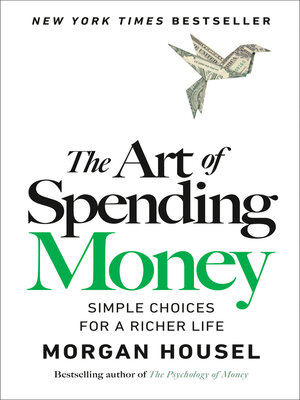
Published by Portfolio in 2025, The Art of Spending Money explores the psychology behind financial choices. Housel focuses on how people confuse admiration with envy, comfort with excess, and usefulness with status. Some people spend to impress an audience that is barely paying attention. Others accumulate indefinitely while refusing to spend on things that would make their daily lives safer, healthier, or more meaningful.
The central lesson is personal: the best use of money depends on the life you are trying to build. A purchase that is wasteful for one person may be deeply valuable for another. The goal is not to maximize consumption. It is to spend in ways that produce a durable return—often peace of mind, freedom, time, or relationships—while reducing spending that serves only comparison.
Key lessons for building a richer life
1. Separate status from utility
Status purchases are designed to communicate something to other people. Utility purchases solve a problem for you. The two can overlap, but they are not the same. A more expensive car may signal success without improving your commute. A reliable laptop, childcare arrangement, or comfortable mattress may look unremarkable while producing value every day.
Before a major purchase, ask: “If nobody else knew I owned this, would I still want it?” The question is not meant to eliminate every enjoyable or beautiful purchase. It helps reveal whether the real product is usefulness or public approval.
2. Treat expectations as part of the price
Happiness is shaped not only by what happens but by what you expected to happen. A raise, trip, or new home can feel ordinary when it quickly becomes the new baseline. Meanwhile, a modest improvement can feel powerful when it solves a problem you genuinely care about.
Use this insight by defining “enough” before income rises. Decide which improvements would materially change your life and which would merely reset your expectations. Without that boundary, higher earnings can create higher obligations rather than greater freedom.
3. Buy time and reduce recurring friction
Money is especially valuable when it removes a repeated source of stress. Paying for a service that saves hours, choosing a shorter commute, or moving to a simpler financial system can create benefits every week. These choices may not look impressive on social media, but their quiet compounding effect can be substantial.
Look for expenses that return time, attention, health, or reliability. The important test is whether the benefit continues after the initial excitement disappears.
4. Spend on experiences that fit your identity
Experiences are not automatically better than things. A costly trip can be forgettable, while a tool used for years can be deeply satisfying. The useful distinction is whether the spending fits your actual interests and relationships. Money works better when it supports the person you are, not the persona you think you should perform.
Review your last ten discretionary purchases. Which ones created lasting memories, convenience, or capability? Which ones became clutter or regret? Your own evidence is more useful than a generic rule about what people “should” buy.
5. Protect the value of financial independence
Saving and investing create an option: the ability to say no, withstand setbacks, or choose work for reasons beyond immediate income. Spending that weakens this option may be expensive even when it appears affordable. A richer life requires both enjoyment today and resilience tomorrow.
Keep a safety margin. Automate essential saving and investing first, then give yourself permission to spend the remaining money on priorities. This order turns enjoyment into a choice rather than a source of anxiety.
A step-by-step spending reset
- Write your “enough” definition. Describe the monthly lifestyle, emergency reserve, and level of flexibility that would make you feel secure. Use concrete numbers where possible.
- List your true priorities. Choose three to five categories where spending meaningfully improves your life—perhaps health, family, learning, travel, or time. Rank them instead of calling everything important.
- Audit the last 30 days. Mark each discretionary expense as utility, joy, convenience, status, habit, or regret. Do not judge yourself; look for patterns.
- Cut comparison spending. Cancel or reduce purchases whose main purpose is keeping up with a peer group, trend, or imagined audience. Redirect part of the money toward a stated priority.
- Fund one high-return improvement. Choose a purchase or service that saves recurring time, removes friction, or supports health. Set a spending limit and define the benefit you expect.
- Create a guilt-free account. After bills, safety savings, and investing are automated, route a deliberate amount into a separate account for enjoyment. Spend it without guilt, because the decision was made in advance.
- Review quarterly. Ask what actually made life better, what only raised expectations, and what you would happily pay for again. Adjust your plan based on lived results.
A practical example
Imagine a professional who earns more but feels no richer. Their spending has expanded around convenience, subscriptions, social pressure, and a larger home. A spending reset might show that the real priorities are family time, fitness, and the ability to take occasional unpaid breaks. The solution may not be another income target. It could be downsizing a recurring obligation, keeping an emergency reserve, paying for a service that returns a weekly evening, and directing the rest toward flexibility.
This is not an argument against ambition. More income can create more choices. It is an argument for defining the choices before lifestyle inflation defines them for you.
What to keep in mind
The book is a framework for reflection, not individualized financial advice. A satisfying spending plan still needs to account for debt, insurance, taxes, dependents, health, and long-term investing. “Spend on what matters” does not mean ignoring risk or using emotion to justify every purchase. It means combining a sound financial foundation with deliberate enjoyment.
Bottom line
The Art of Spending Money completes the wealth conversation by asking what accumulated money is for. Housel’s message is simple but demanding: stop borrowing your desires from other people, understand what actually improves your life, and use money to buy freedom, peace, time, and meaning where those things are valuable to you. Wealth is not only the ability to accumulate. It is the ability to choose well.
Sources and credits
- Penguin Random House publisher page — The Art of Spending Money by Morgan Housel
- Amazon.com product page — matched title and author
- OverDrive bibliographic record — ISBN 9780593716625
- Cover credit: matched edition cover image from OverDrive’s bibliographic record for ISBN 9780593716625.