Uncertainty is not a temporary inconvenience for a business owner. Markets shift, competitors appear, customers change their minds, and luck can help or hurt at any time. In Great by Choice, Jim Collins and Morten T. Hansen ask why some companies thrive in chaotic environments while others collapse. Their answer is not that the winners predicted the future. The stronger companies prepared carefully, moved with discipline, and used evidence to adjust.
Based on nine years of research, the book is a useful guide to building wealth through resilient businesses and better decisions. It does not promise control over events. Instead, it shows how consistent practices can improve your odds when conditions are outside your control.
Book facts
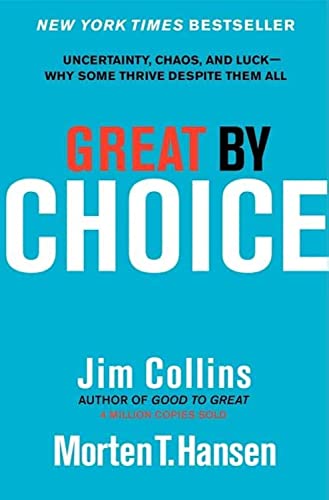
- Title: Great by Choice: Uncertainty, Chaos and Luck—Why Some Thrive Despite Them All
- Authors: Jim Collins and Morten T. Hansen
- First published: 2011
- Core topics: disciplined progress, preparation, experimentation, risk, luck, and leadership in uncertainty
The central idea: discipline beats prediction
Collins and Hansen studied companies that outperformed comparison companies during turbulent periods. The standout organizations were not necessarily more daring or more visionary. They combined ambitious goals with unusually consistent execution. They kept moving forward even when the environment was difficult, but they did so through self-imposed rules rather than emotional reactions.
This matters for wealth builders because financial success is exposed to uncertainty. A founder cannot know exactly when demand will change. An investor cannot know which headline will move a market. A disciplined process—cash reserves, defined risk limits, customer feedback, and regular review—can make a person less dependent on favorable timing.
Four lessons explained simply
1. The 20 Mile March
The authors use the metaphor of a steady march to describe consistent progress. The strongest companies set minimum and maximum boundaries for what they would accomplish in good times and bad. They did not sprint wildly when conditions were favorable or abandon progress when conditions became hard.
Applied personally, this could mean saving a fixed amount every month, publishing one useful product each week, or contacting a set number of customers. The target should be demanding but sustainable. Reliability compounds into skill, trust, cash flow, and confidence.
2. Fire bullets, then cannonballs
Before committing major resources, test an idea with small, affordable experiments. A bullet is a low-cost trial that helps calibrate your aim. A cannonball is a large commitment after evidence suggests the direction is promising. This sequence reduces the danger of betting everything on an untested assumption.
For a business, a bullet might be a paid pilot, a landing page, or ten customer interviews. For an investor, it may mean learning the business and building a position only after the thesis and risks are clear. Small tests are not hesitation; they are a way to buy information.
3. Productive paranoia
Great companies do not wait for a crisis before preparing. They keep reserves, consider unpleasant scenarios, and notice weak signals. Productive paranoia is not constant fear. It is the habit of asking what could go wrong and preparing an affordable response before the danger becomes urgent.
4. Return on luck
Luck affects everyone, but its impact depends on how prepared a person or company is when an opportunity appears. A strong balance sheet, valuable skill, trusted reputation, or flexible operation can turn a favorable surprise into a lasting advantage. Preparation also limits the damage from bad luck.
Step-by-step: turn the lessons into a wealth system
- Set your march. Choose one measurable result for the next year: a savings rate, cash reserve, number of customers, learning hours, or monthly profit. Define a minimum pace you will maintain in ordinary conditions.
- Set boundaries. Decide what you will not do even when excited: borrow beyond a limit, take unprofitable work, invest money needed for emergencies, or expand before delivery quality is stable.
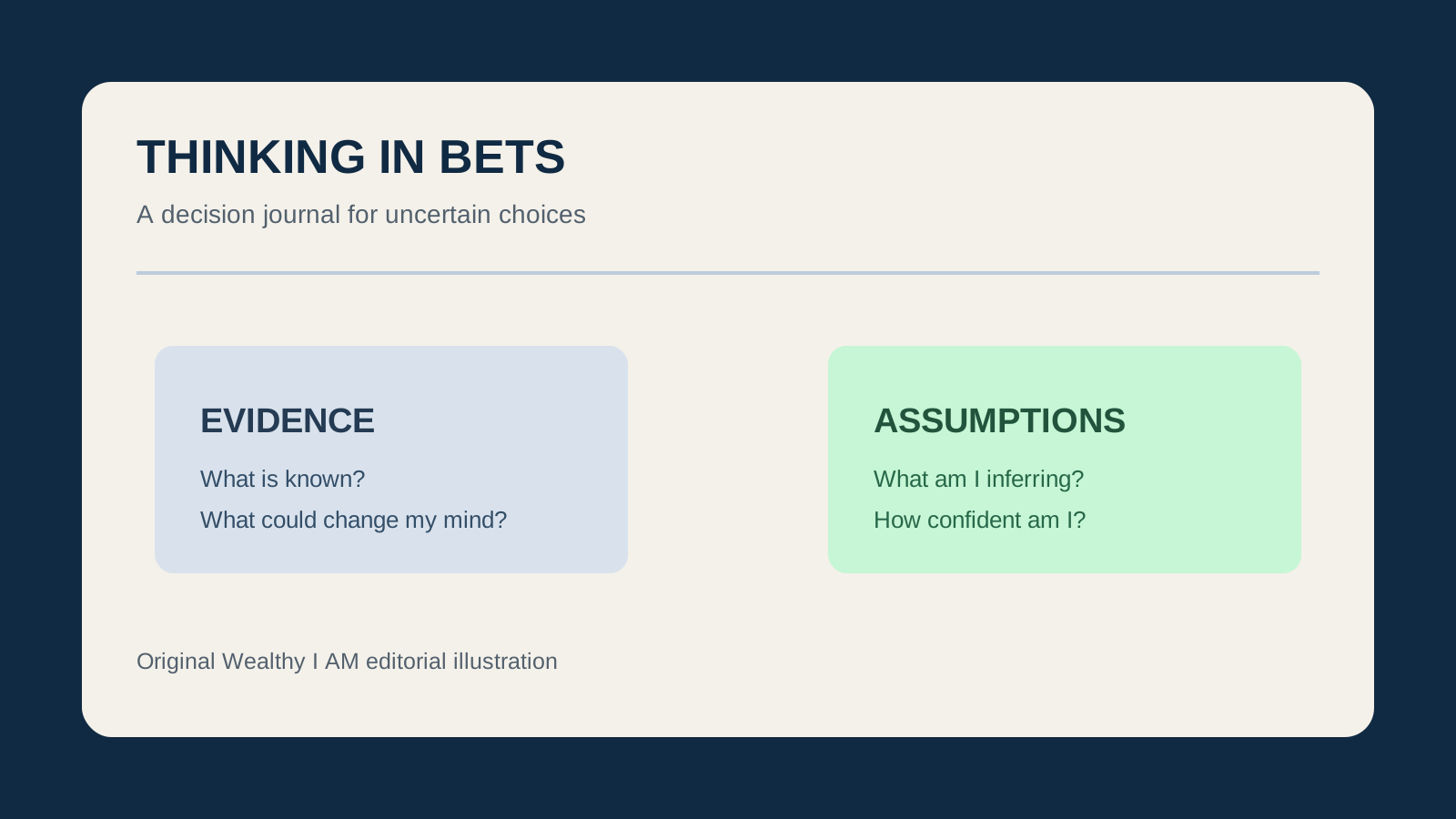
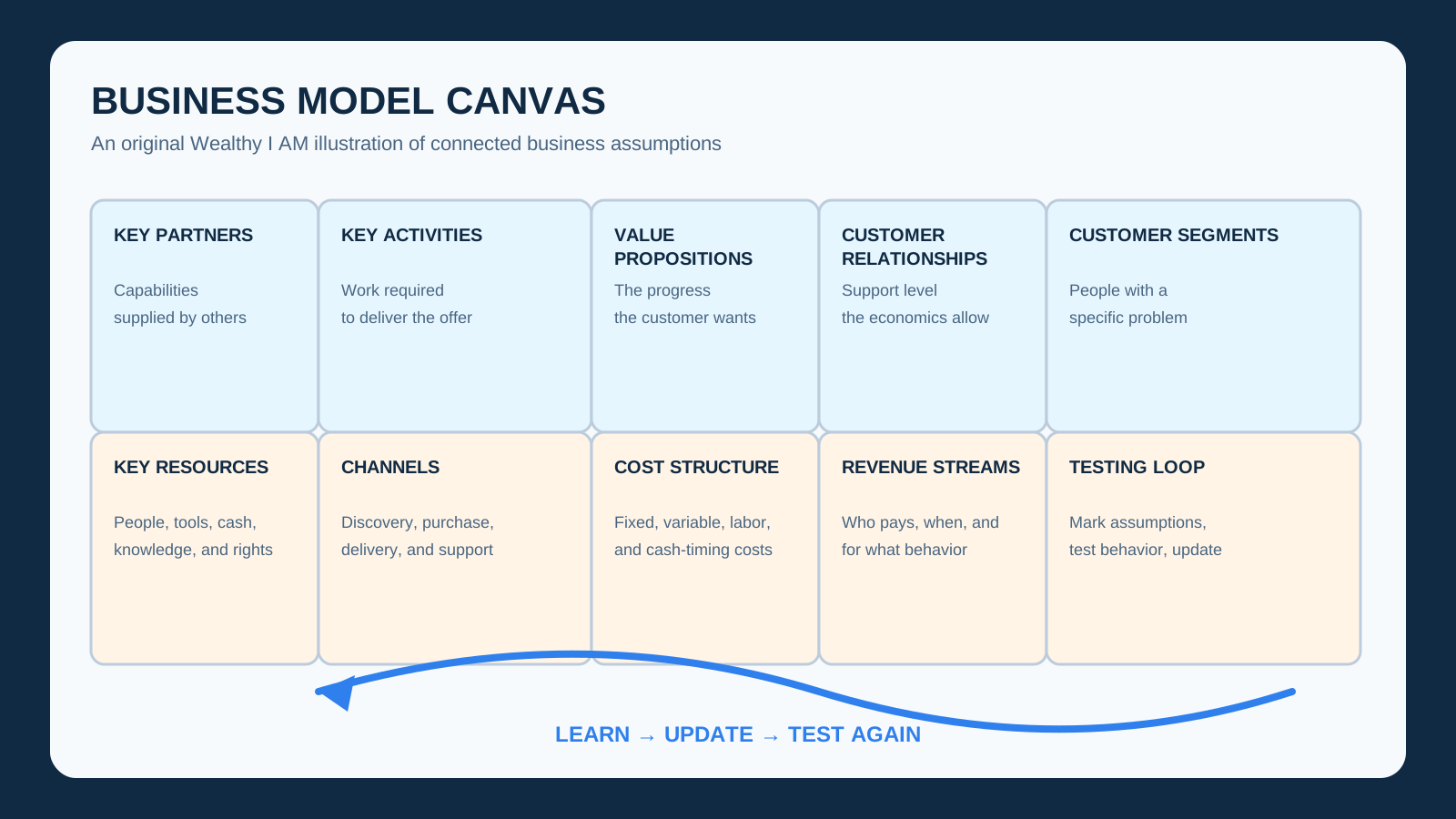
- List your assumptions. Write what must be true for your plan to work. Examples include customer demand, price, conversion rate, investment return, available time, and operating cost. An assumption that is visible can be tested.
- Fire a bullet. Run the cheapest experiment that produces useful evidence. Ask real customers to pay, measure actual behavior, or test a small version of the offer. Do not confuse compliments with proof.
- Calibrate. Compare the evidence with your expectation. Change the price, audience, product, or process while the experiment is still small. Keep a written record so emotion does not rewrite the results.
- Commit only after evidence. If the test works and the downside is understood, increase resources gradually. A larger commitment should be a consequence of learning, not a response to impatience.
- Build a reserve. Keep financial and operational slack appropriate to your situation. Emergency savings, diversified revenue, documentation, and backup suppliers all create options when luck turns.
- Review the return on luck. When something goes well, ask what preparation made it useful. When something goes badly, ask what boundary or reserve would have reduced the damage. Turn both outcomes into a rule.
A practical example
Suppose a designer wants to replace freelance projects with a productized service. A reckless approach would be to quit immediately, hire staff, and build a complex platform. A disciplined approach starts with a bullet: interview potential customers, sell a small pilot, document delivery time, and measure whether the price leaves a margin. If the pilot works, the designer can fire a larger cannonball—standardize the service, improve marketing, and add capacity—without risking the entire household budget.
The 20 Mile March then becomes a weekly operating rhythm: a set number of outreach conversations, one process improvement, and a monthly cash contribution. Productive paranoia adds a reserve and a plan for a slow quarter. The business is not guaranteed to win, but it is less dependent on one lucky break.
What to be careful about
Research about companies does not produce a mechanical formula for personal finance. A steady march must fit your health, family, market, and responsibilities. Nor should productive paranoia become anxiety or an excuse never to act. The point of preparation is to make intelligent action possible. Use small experiments, protect essential cash, and seek qualified advice for investment, tax, or legal decisions.
Bottom line
Great by Choice offers a calm answer to an unstable world. Do not wait for certainty. Set a sustainable pace, test ideas cheaply, prepare for bad outcomes, and scale what the evidence supports. Wealth grows more reliably when disciplined choices make favorable luck useful and unfavorable luck survivable.
Sources and credits
- Amazon.com product page — Great by Choice, Jim Collins and Morten T. Hansen, ISBN 9780062120991
- Jim Collins official book page
- Morten Hansen book page
- Cover credit: Amazon.com product image for the matched print edition.