Building wealth through a business sounds exciting from the outside. Inside the work, however, leaders face choices that do not come with a clean answer: whether to change direction, how to handle a missed target, when to hire, and how to lead when confidence is low. The Hard Thing About Hard Things is valuable because it starts there—not with motivational slogans, but with the messy operating reality behind durable companies.
Written by Ben Horowitz, cofounder of Andreessen Horowitz and former technology executive, the book draws on the author’s experience founding, running, selling, and investing in technology companies. First published in 2014, it is a practical leadership guide for entrepreneurs and managers who must make consequential decisions with incomplete information. It does not promise that business becomes easy. Instead, it shows how to build the judgment, habits, and operating discipline needed to keep moving when it is hard.
Book facts
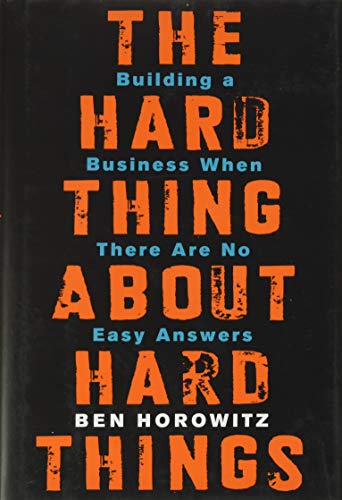
- Title: The Hard Thing About Hard Things: Building a Business When There Are No Easy Answers
- Author: Ben Horowitz
- First published: 2014
- Focus: Entrepreneurship, leadership, hiring, management, crisis decisions, and company building
The central lesson: leadership is judgment under pressure
Horowitz’s central idea is that business leadership is not mainly about knowing the right answer in advance. It is about learning to make the best available decision, communicate it clearly, and accept responsibility for the result. A founder may have to choose between two unattractive options, tell a talented person that the relationship is no longer working, or keep a team focused during a crisis. These moments reveal the quality of leadership more than a polished strategy presentation does.
This matters for wealth building because a company creates value only when its ideas become reliable products, satisfied customers, healthy cash flow, and a capable team. The book’s lessons are therefore practical: better leadership protects scarce time and capital, reduces avoidable confusion, and increases the odds that useful work compounds.
Seven practical lessons from the book
1. Name the real problem before choosing a solution
When results weaken, leaders often reach for a familiar fix: more marketing, another hire, a new feature, or a motivational speech. Horowitz’s approach begins with diagnosis. Is the problem product quality, distribution, pricing, cash, talent, execution, or a change in the market? Treating symptoms as causes wastes resources.
Try this: write the problem in one sentence, list the evidence, and identify what would prove your diagnosis wrong. Do not approve a major initiative until the team can explain which constraint it is meant to remove.
2. Make decisions with imperfect information
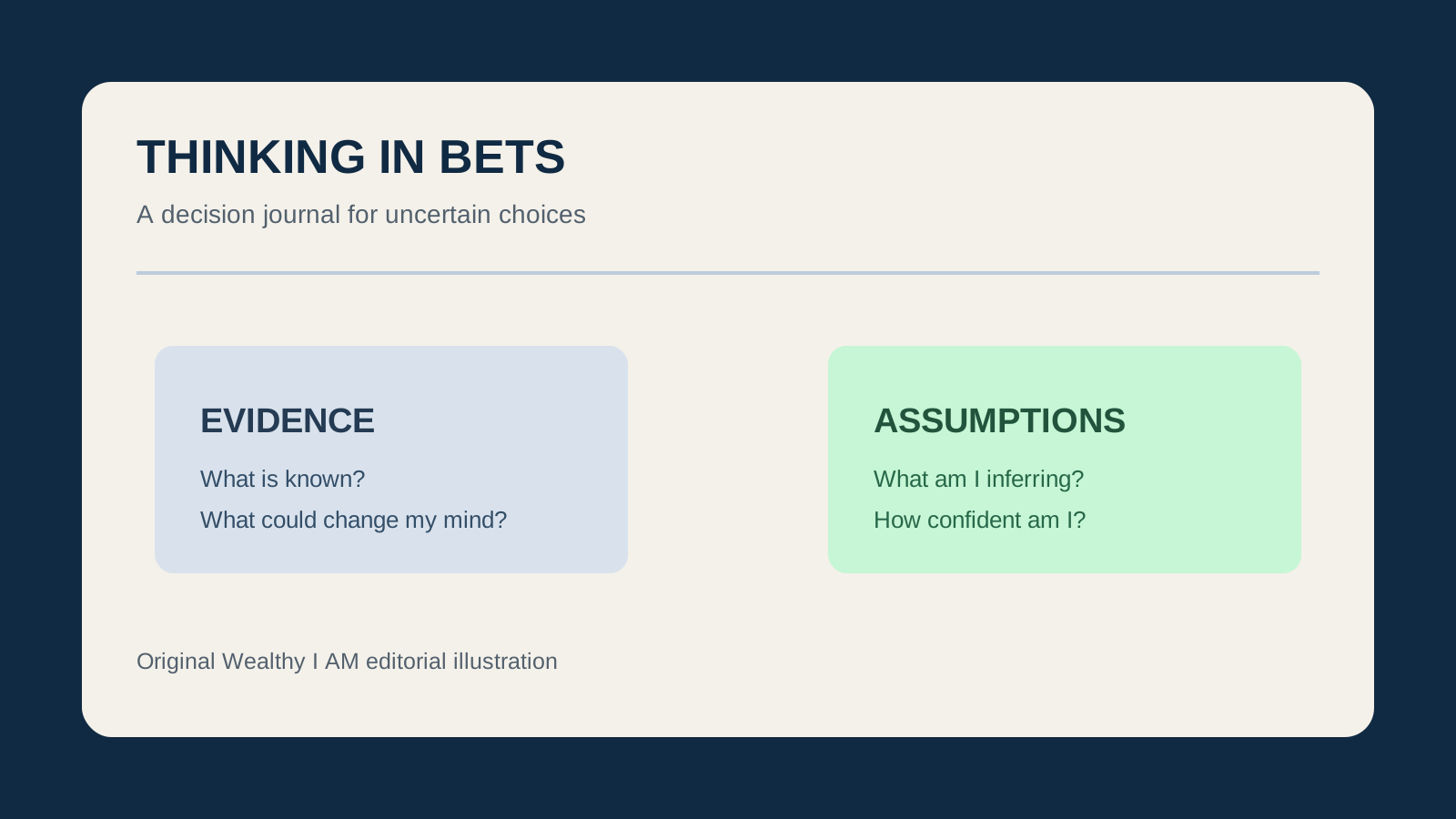
Waiting for certainty is itself a decision, and it often allows a bad trend to grow more expensive. The book encourages leaders to gather the most decision-relevant facts, set a time boundary, and act. A good decision can still produce a poor outcome; a poor decision can occasionally get lucky. Evaluate the process, not only the result.
Try this: define the decision, the deadline, the two or three facts that matter most, and the point at which you will review the choice. This creates speed without pretending risk has disappeared.
3. Build a wartime and peacetime operating rhythm
Companies need different behaviors when they are growing steadily than when survival is threatened. In a difficult period, priorities must narrow, communication must become more direct, and leaders must spend time where the constraint is greatest. In a stable period, the organization can invest in systems, experimentation, and long-term capability.
Try this: state which mode your business is in. If resources are tight, choose one or two essential outcomes for the next month and pause work that does not support them.
4. Hire for the job you actually need
A title is not a solution. Hiring becomes expensive when a company recruits for prestige or assumes one person can solve several unrelated problems. Define the outcomes, decisions, and relationships the role requires. Then assess whether the candidate has demonstrated those abilities in a comparable context.
Try this: write a scorecard with three to five measurable outcomes for the first six months. During interviews, ask for specific examples rather than accepting broad claims about talent or culture fit.
5. Give feedback that helps people improve
Kindness and candor are not opposites. Avoiding a difficult conversation can leave a teammate confused and a business exposed. Useful feedback describes the behavior, explains its effect, and identifies the change required. It should be timely enough that the person can act on it.
Try this: use the structure “When X happened, the result was Y; next time, I need Z.” Invite the other person’s view, but do not make the expectation so vague that nothing changes.
6. Communicate the context, not just the task
People execute better when they understand why a priority matters, what trade-offs are being made, and how success will be judged. Sharing context also allows decisions to happen closer to the work rather than forcing every question back to the founder.
Try this: before delegating, explain the goal, the constraint, the non-negotiables, and the decision rights. Ask the teammate to repeat the plan in their own words.
7. Turn principles into repeatable systems
Heroic effort can rescue a company once, but it is not a business model. Wealth is built more reliably when a team can deliver value repeatedly without depending on one person’s memory or energy. Document the important handoffs, review the numbers, and improve the process after each meaningful failure.
Try this: choose one recurring problem—missed follow-ups, unclear ownership, late invoices, or inconsistent customer onboarding. Map the current process, remove one bottleneck, assign an owner, and review the result weekly.
A simple 30-day implementation plan
- Week 1 — Diagnose: identify the company’s most expensive constraint and collect evidence from customers, cash-flow reports, delivery data, and the team.
- Week 2 — Focus: choose one outcome that matters most, define what will stop or wait, and publish the decision so everyone can align.
- Week 3 — Strengthen the team: clarify roles, give one overdue piece of feedback, and create a scorecard for the most important open position.
- Week 4 — Systemize: document one repeatable workflow, establish a weekly review, and record what the business learned from the month.
For an individual professional, the same plan works at a smaller scale. Diagnose the bottleneck in your work, narrow your priority, request specific feedback, and create a routine that makes the valuable behavior easier to repeat.
What to remember—and what to question
The book’s honesty is its strength. It does not suggest that confidence, passion, or a clever idea can replace operations. It also recognizes that difficult personnel decisions are part of a leader’s responsibility. At the same time, Horowitz’s examples come largely from technology businesses and high-growth environments. Readers should adapt the principles rather than copy every tactic. A bootstrapped local business, nonprofit, or solo practice may need a different pace, risk tolerance, and definition of success.
The durable takeaway is not “always move faster” or “always be tough.” It is to face reality, make the next responsible decision, communicate with clarity, and build systems that protect people and resources. That is how leadership becomes an asset instead of a bottleneck.
Bottom line
The Hard Thing About Hard Things is a strong choice for founders, managers, and professionals who want a candid guide to the parts of business that are rarely covered in optimistic startup stories. Its lessons connect directly to wealth creation: diagnose before spending, decide before opportunities close, hire for outcomes, develop people, and make valuable work repeatable. The business will still contain hard problems—but you can become better at meeting them.
Sources and credit
- HarperCollins: The Hard Thing About Hard Things by Ben Horowitz
- Amazon.com product page: The Hard Thing About Hard Things, ISBN-13 9780062273208
- Google Books bibliographic record
- Cover image credit: matched Amazon.com product listing for the Ben Horowitz edition cited above.