Building wealth is not only about earning more or choosing better investments. It also depends on whether you can lead yourself, align other people, and execute when conditions are unclear. A promising plan that nobody understands—or nobody owns—rarely becomes a durable result.
Extreme Ownership: How U.S. Navy SEALs Lead and Win applies lessons from combat leadership to business and everyday life. Jocko Willink and Leif Babin draw on their experience leading SEAL Team Three’s Task Unit Bruiser during the Battle of Ramadi, then translate those experiences into principles for accountability, communication, decision-making, and team performance. The book’s language is direct, but its practical message is broader than military life: outcomes improve when leaders take responsibility and make it easier for their teams to act.
For a wealth-building reader, that message matters. A business, career, or personal financial plan compounds only when clear decisions become consistent action. Here are seven lessons from the book that can be applied without copying the battlefield context.
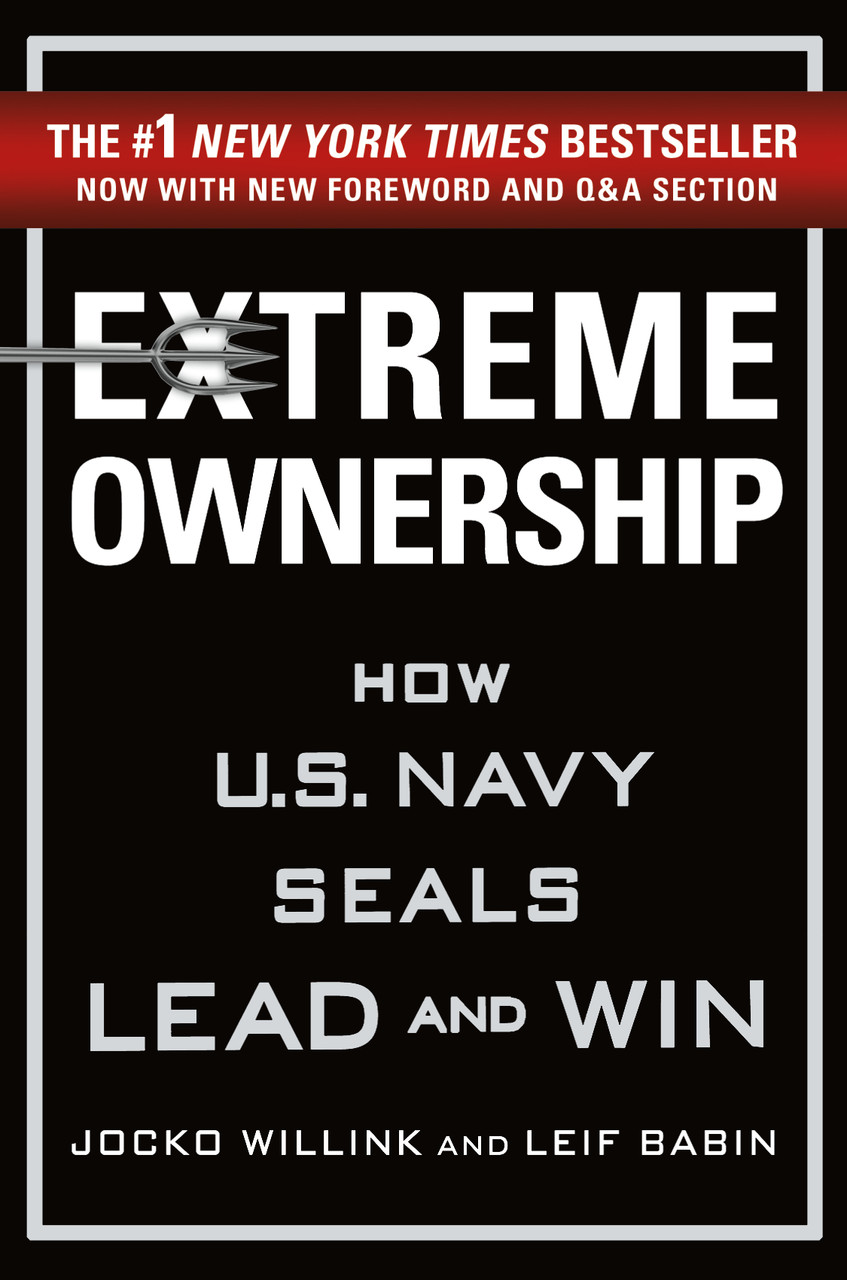
Book facts
- Title: Extreme Ownership: How U.S. Navy SEALs Lead and Win
- Authors: Jocko Willink and Leif Babin
- Original publication: 2015; updated edition published in 2017
- Core themes: accountability, discipline, communication, prioritization, decentralized leadership, and execution
1. Own the outcome before explaining the circumstances
The book’s central idea is that leaders should take complete responsibility for the performance of their team. That does not mean pretending every variable is under your control. It means starting with the question, “What could I have clarified, changed, or done sooner?” rather than looking for someone to blame.
Applied to wealth, this turns vague frustration into useful diagnosis. If savings are inconsistent, review the system before criticizing your willpower. If a business misses a target, inspect the offer, the process, and the communication. Ownership creates a path to improvement because it places the next move within reach.
2. Lead with the mission, not the ego
Willink and Babin repeatedly distinguish mission-focused leadership from personal pride. A leader who protects a preferred idea or reputation can keep a team moving in the wrong direction. The better question is what result the group must accomplish and which approach gives it the best chance.
For an entrepreneur, the mission might be solving a specific customer problem profitably. For an investor, it might be preserving purchasing power over decades. For a professional, it might be developing a scarce skill that creates more value. Write that mission in one sentence, then use it to filter opportunities that are exciting but strategically irrelevant.
3. Simplify, then prioritize and execute
Complex environments produce too many simultaneous problems. The authors’ answer is to identify the highest-priority issue, focus available resources on it, execute, and then reassess. This is not an excuse to ignore important risks; it is a way to prevent a long list from paralyzing action.
A practical version is a weekly wealth review. Choose one outcome that matters most: eliminate a high-cost debt, finish a revenue-producing project, automate an investment contribution, or speak with a key customer. Define the next physical action and schedule it. Once that bottleneck moves, select the next priority.
4. Make the plan understandable at every level
One of the book’s strongest operational lessons is that leaders must explain the “why,” the objective, and the boundaries clearly. When people do not understand the larger plan, they cannot make good decisions when circumstances change.
Use the same standard in your own finances and business. A budget should explain what each major category is meant to accomplish. A team should know the customer, deadline, success measure, and decision rights. If you cannot explain the plan in plain language, it may not be ready for execution.
5. Give people ownership and support
Extreme ownership does not mean one person makes every decision. The book pairs accountability with decentralized command: leaders provide context and intent, then allow capable people to act within clear limits. Micromanagement slows a team and prevents future leaders from developing.
In business, document repeatable processes and assign outcomes rather than hovering over every task. In personal finance, build systems that reduce dependence on daily motivation: automatic transfers, spending rules, and a written investment policy. A good system gives you freedom because it distributes responsibility to routines you can trust.
6. Discipline creates optionality
The authors connect disciplined habits with the ability to perform under pressure. Discipline is not dramatic; it is the repeated choice to prepare, communicate, and do the important work even when enthusiasm is absent.
Wealth grows through the same quiet consistency. Keep a cash reserve, pay attention to fees and taxes, develop skills, follow through on promises, and review results on a regular schedule. These actions may look ordinary, but they create options: the ability to change jobs, withstand a setback, invest during uncertainty, or pursue a valuable opportunity without panic.
7. Build a culture where truth travels quickly
Teams cannot solve problems they hide. The book emphasizes honest communication, admitting mistakes, and surfacing bad news early. A leader’s reaction teaches people whether transparency is safe.
Make that principle personal. Track net worth, cash flow, customer retention, or project progress without editing the uncomfortable numbers. Ask for feedback that could disprove your assumptions. The goal is not self-criticism; it is faster learning. Clear information improves decisions, and better decisions protect capital.
A seven-day implementation plan
- Day 1: Write one mission for your current wealth goal.
- Day 2: Name one result you have been blaming on circumstances and list three actions within your control.
- Day 3: Choose the single biggest bottleneck and schedule the next action.
- Day 4: Explain your plan to a trusted person in three sentences. Rewrite anything unclear.
- Day 5: Automate one supportive behavior, such as saving, debt repayment, or a weekly review.
- Day 6: Invite candid feedback from a customer, colleague, or partner.
- Day 7: Review what happened, own the result, and choose the next priority.
Bottom line
Extreme Ownership is not a personal-finance manual, and military metaphors should be adapted thoughtfully rather than copied literally. Its useful contribution is a demanding but practical standard: take responsibility, communicate the mission, simplify the next move, and build teams and systems that can execute. Those habits do not guarantee wealth, but they improve the quality of decisions that wealth depends on.
Sources and credit
- Macmillan publisher page — title, authors, edition, ISBN, and book overview.
- Amazon.com product page — matched U.S. edition/product reference.
- Burkes Books bibliographic listing — author and ISBN cross-check.
- Cover image credit: matched U.S. edition cover for ISBN 9781250183866; used for identification and editorial illustration.