Most investors begin with a ticker, a chart, or a headline. Common Stocks and Uncommon Profits begins somewhere more useful: with the business. Philip A. Fisher argues that an investor should understand how a company makes money, why its opportunity can last, and whether its leaders can turn opportunity into durable results.
That approach matters for wealth building because a stock is a small ownership interest in a real enterprise, not merely a number on a screen. Fisher invites readers to replace excitement with investigation, and short term prediction with long term judgment. The ideas below are educational, not individualized investment advice.
What the book is about
Fisher focuses on buying outstanding companies with the potential to grow for many years. He is less interested in mechanical formulas than in the quality of the business and the quality of the research behind an investment decision. His famous scuttlebutt method means gathering informed opinions from customers, suppliers, competitors, former employees, and other industry participants, while testing those impressions against financial evidence.
The book explains when to buy, when to sell, and why an investor should develop a personal philosophy rather than copy the crowd. Fisher does not promise certainty. He offers a disciplined way to improve the odds of recognizing a strong business before the market fully appreciates it.
Seven practical lessons from Fisher
1. Study the business before studying the stock
Begin with the company products, customers, industry, and economics. Ask what problem it solves, why customers choose it, and what could make them leave. A rising price may attract attention, but it cannot explain whether the company deserves long term ownership.
Action step: write a one page business description in plain English. If you cannot explain how the company earns revenue and what protects its profits, put the investment on a watchlist instead of buying.
2. Look for a long runway for sales growth
Fisher wants more than a single successful product. He looks for products or services with room to expand, management committed to continued development, and a market that can grow without quickly exhausting itself. Growth is valuable when it can be reinvested productively, not merely when a company reports a large percentage increase for one year.
Action step: identify the company next three sources of growth. Consider new customers, new products, geographic expansion, and increased use by existing customers. Then ask what evidence supports each possibility.
3. Treat management quality as an investment variable
Numbers describe the past; leaders decide what happens next. Fisher pays close attention to management integrity, openness, research culture, sales execution, employee relationships, and the ability to develop capable successors. A business with attractive products can still disappoint if leaders allocate capital poorly or hide problems.
Action step: read several annual letters and compare promises with outcomes. Look for clear explanations of setbacks, sensible measures of progress, and evidence that the company invests in people and innovation.
4. Examine margins and the path to better margins
A worthwhile profit margin gives a business room to handle competition, reinvest, and survive surprises. Fisher also asks whether management is improving margins through better processes, pricing, scale, or product mix. Sales growth that never produces healthy economics is not automatically wealth creation.
Action step: compare gross margin, operating margin, and free cash flow over several years. Investigate both improvement and deterioration. The goal is to understand the operating engine behind the investment.
5. Use informed observation, not crowd opinion
Fisher scuttlebutt idea reminds us that useful information often lives close to the business. A customer may reveal why a product is sticky; a supplier may describe bargaining power; a competitor may expose a weakness. This is not a license to trade on confidential information. It is a prompt to learn from lawful, public, ordinary industry conversations.
Action step: interview people who use or serve the product, ask neutral questions, and record what you learn. Compare anecdotes with filings and avoid treating one enthusiastic opinion as proof.
6. Leave room for mistakes
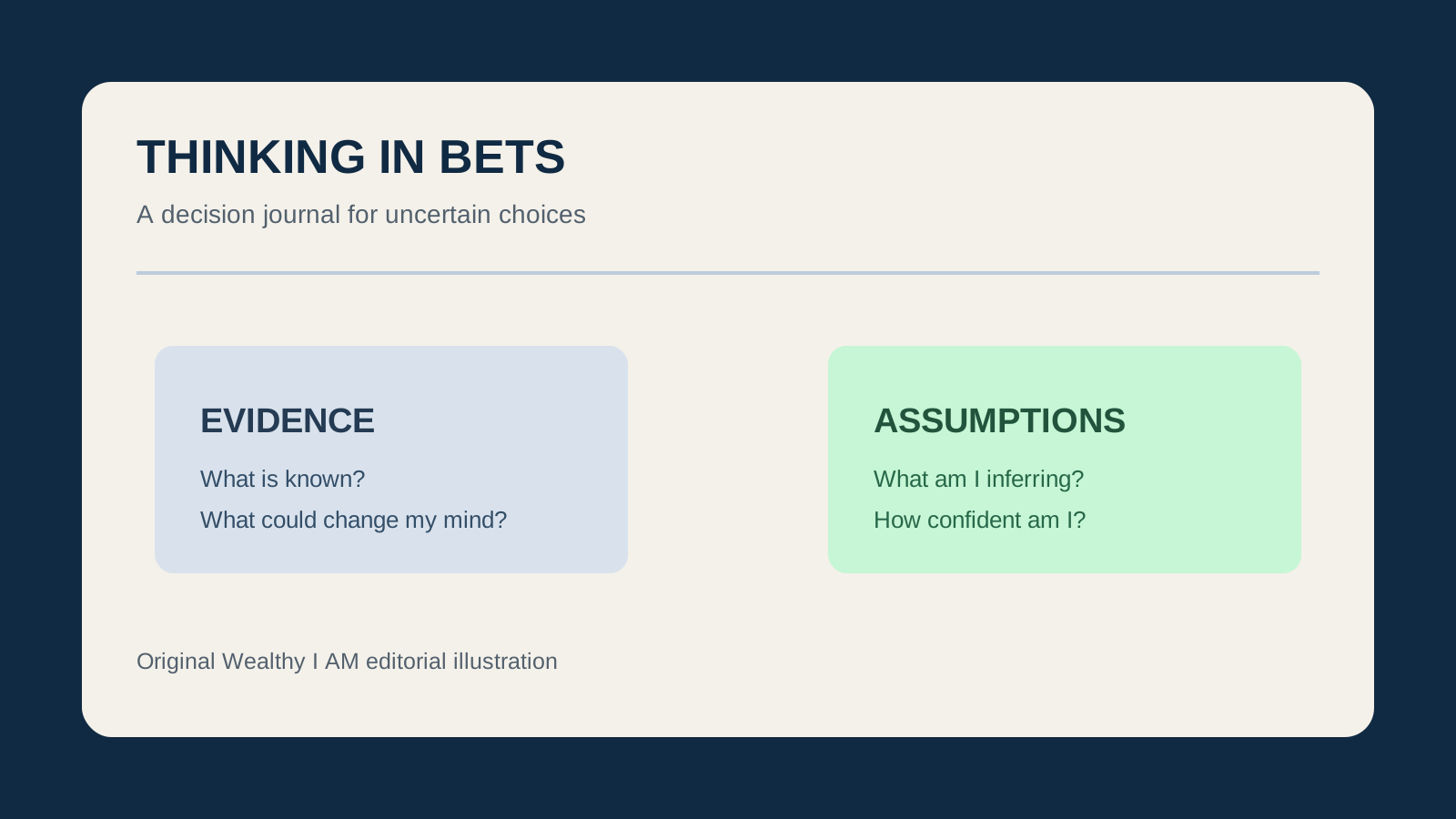
No analysis is perfect. Forecasts can miss recessions, new competitors, regulation, fraud, or technological change. A margin of safety is the practical habit of avoiding assumptions so optimistic that one error destroys the thesis. Diversification still matters, especially when knowledge is limited.
Action step: write down three ways your thesis could be wrong before you invest. Define the evidence that would change your mind, and decide how much capital is appropriate if uncertainty remains high.
7. Know why you would sell
Fisher rejects selling an exceptional company simply because the price has risen or because an investor wants to take profits. He favors selling when the original analysis is wrong, the business no longer meets the standard, management deteriorates, or a clearly superior opportunity justifies the change. This requires a written thesis, not a mood.
Action step: create a quarterly review checklist: Is the competitive position stronger or weaker? Are margins and cash flow behaving as expected? Has management earned trust? Has valuation become unreasonable relative to the business?
Key terms in simple language
- Scuttlebutt: lawful, informed research gathered from people who understand an industry.
- Profit margin: the portion of revenue left after specified costs.
- Growth stock: a company expected to increase sales and profits meaningfully over time.
- Investment thesis: the reasons you believe an asset is attractive and the facts that would disprove those reasons.
- Permanent loss of capital: a lasting reduction in investment value rather than a temporary market decline.
What to be careful about
Fisher method is demanding. Individual investors may not be able to interview senior executives or collect the same depth of industry information. Research can also create overconfidence: the more detailed the story, the easier it is to forget that the future remains uncertain. A great company can be a poor investment when purchased at an excessive price.
Readers should avoid turning a growth stock framework into a command to concentrate recklessly. A diversified, low cost index fund may be the most suitable core holding for many people. Fisher lasting contribution is not a guaranteed stock list; it is a standard for thinking carefully about what you own.
A simple 30 day practice
- Week 1: choose one familiar company and describe its business, customers, competitors, and risks.
- Week 2: read its latest annual report and three prior reports; note trends in sales, margins, cash flow, debt, and share count.
- Week 3: gather lawful industry perspectives and compare them with management claims.
- Week 4: write the thesis, valuation range, disconfirming evidence, and position size rule. Do nothing until you can state both the opportunity and the risks clearly.
Bottom line
Common Stocks and Uncommon Profits teaches patient ownership of understandable businesses. Study the company, test the quality of its growth, judge its leaders, protect yourself from being wrong, and think independently. Those habits will not eliminate market risk, but they can make investing more deliberate, and deliberate decisions are a stronger foundation for long term wealth than speculation.
Sources and credits
- Wiley publisher page: Common Stocks and Uncommon Profits and Other Writings
- Amazon.com matched product page, ISBN 9780060321604
- Encyclopaedia Britannica: Philip A. Fisher
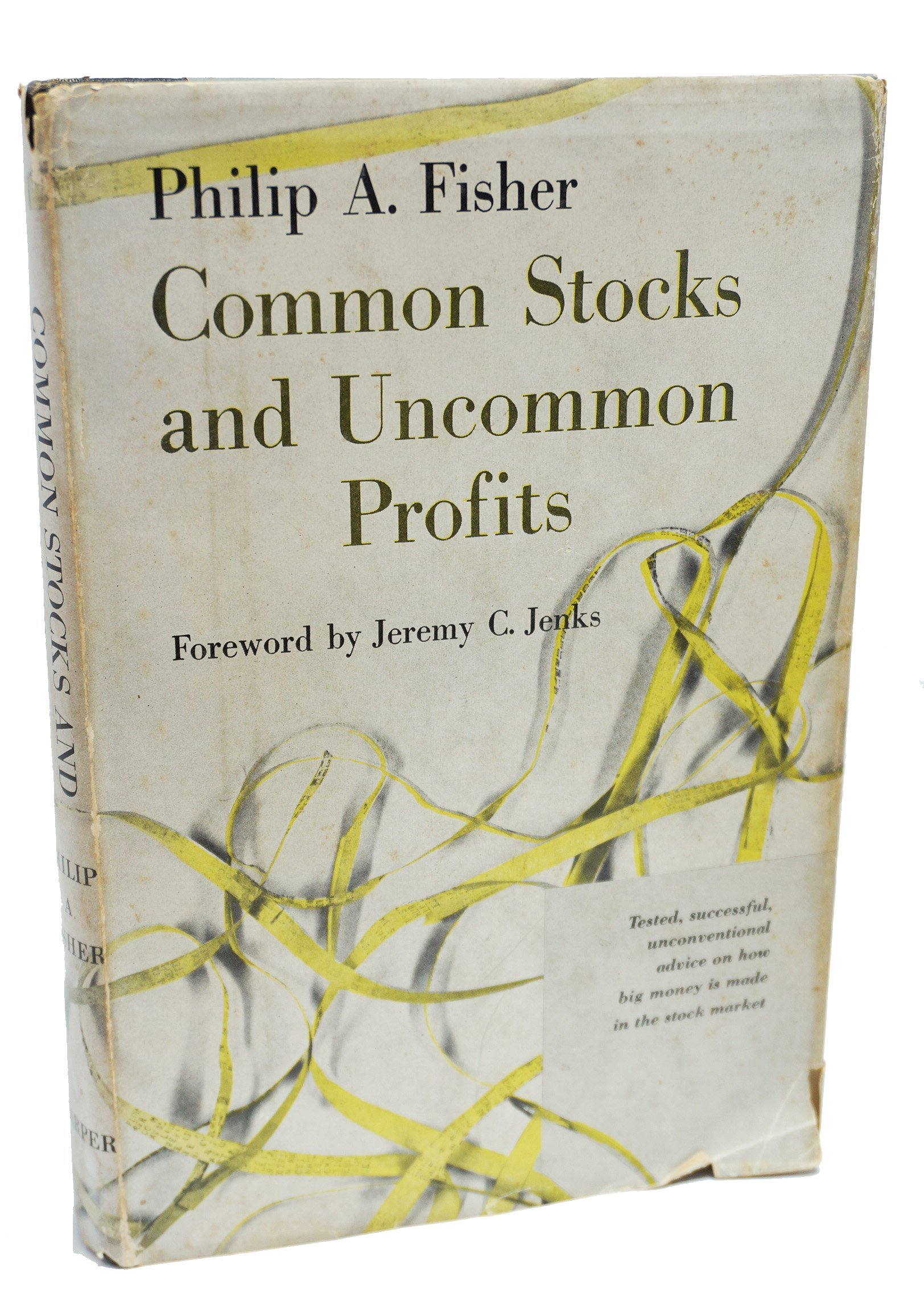
- Cover credit: Amazon.com product image for ISBN 9780060321604, downloaded from the matched listing and uploaded for this article.