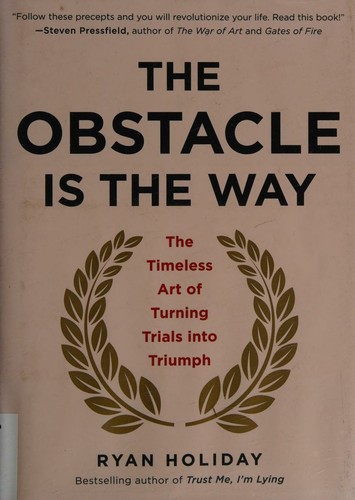
The Obstacle Is the Way by Ryan Holiday presents an ancient idea with modern usefulness: a difficult situation is not only something to endure; it can also become the material for progress. Drawing on Stoic philosophy and examples from history, Holiday organizes the response to adversity around three disciplines—perception, action, and will.
That message is especially relevant to wealth building. A job loss, failed launch, weak sales month, expensive mistake, or market decline can feel like proof that progress has stopped. But the event itself is only part of the story. The other part is how clearly you interpret it, what useful action you take next, and how steadily you continue when the outcome is not immediately visible.
What the book is about
Holiday’s framework is rooted in Stoicism, a philosophy that emphasizes judgment, purposeful action, self-control, and resilience. The book does not claim that every setback is secretly good or that pain should be ignored. Instead, it asks readers to separate what happened from the story they immediately attach to it.
Perception determines what you notice and what you believe is possible. Action turns a situation into a sequence of deliberate moves. Will is the capacity to persist, adapt, and maintain character when circumstances remain outside your control. Together, these disciplines turn adversity from a dead end into a problem to work on.
Lesson 1: Separate facts from the first emotional story
When something goes wrong, the mind often adds a sweeping conclusion: “I always fail,” “There is no opportunity,” or “Everyone else is ahead.” Those conclusions may feel true, but they are interpretations rather than verified facts. A clearer response starts with a short inventory.
Write down what actually happened, what it cost, what remains available, and what is still uncertain. If a small business loses a client, the facts might be a lower monthly revenue number and one open delivery slot. The story might be that the business is doomed. Keeping those separate creates room for better decisions.
Lesson 2: Look for the useful part of the problem
An obstacle often reveals information. A rejected offer may show that the customer does not understand the value. A missed savings target may expose a recurring expense. A failed interview may point to a skill or communication gap. This does not make the setback pleasant, but it can make it useful.
Ask: What did this event teach me? Which assumption did it challenge? What opportunity is visible now that was not visible before? The goal is not forced optimism. The goal is accurate learning.
Lesson 3: Turn a large problem into the next physical action
“Build wealth” is a meaningful direction but a poor next action. “Review the last 60 days of spending and cancel one unused subscription” is actionable. “Grow the business” is vague. “Call five past customers and ask what problem they would pay to solve next” creates movement.
Holiday’s emphasis on action is an antidote to rumination. Choose the smallest step that produces information, reduces risk, creates value, or restores control. Then do it before designing an elaborate recovery plan.
Lesson 4: Use constraints as a source of focus
Limited money, time, or staff can force useful choices. A founder without a large advertising budget may need a better referral process. A professional with little free time may need one high-value skill rather than five unrelated courses. A household managing debt may need to protect cash flow before thinking about sophisticated investments.
Constraints are not automatically advantages and can be genuinely painful. But treating them as design requirements can reveal a simpler path and stop scarce resources from being scattered.
Lesson 5: Practice disciplined persistence, not stubborn repetition
Persistence does not mean doing the same thing forever. It means staying committed to the objective while remaining willing to change the method. If a product is not selling, repeat promotion may not be courage; it may be avoidance. Interview customers, revise the offer, test a narrower audience, or change the channel.
For personal finance, disciplined persistence can mean continuing automated investing while adjusting contributions after a job change, or returning to a debt plan after an emergency expense instead of treating one detour as total failure.
Lesson 6: Build a response before the crisis arrives
Resilience becomes easier when it is partly designed in advance. An emergency fund, appropriate insurance, a current résumé, diversified income skills, and a written investment policy reduce decisions required during stress.
Create an if-then plan. If income falls, what expenses pause first? If markets decline, what rules govern buying or selling? If a major client leaves, how quickly will you contact prospects? Planning cannot remove uncertainty, but it can prevent panic from becoming the decision-maker.
Lesson 7: Protect your character while pursuing results
Wealth is not only a number. The way you respond to pressure affects trust, relationships, and future opportunities. A setback can tempt people to exaggerate, blame, cut ethical corners, or make a reckless bet to recover quickly. Holiday’s Stoic perspective keeps attention on controllable choices: honesty, preparation, courage, fairness, and restraint.
Those qualities are economically useful. Customers return to businesses they trust. Teams follow leaders who take responsibility. Investors make better long-term decisions when they do not need to defend an ego-driven prediction.
A practical seven-day reset
- Day 1: Describe the obstacle in one neutral sentence.
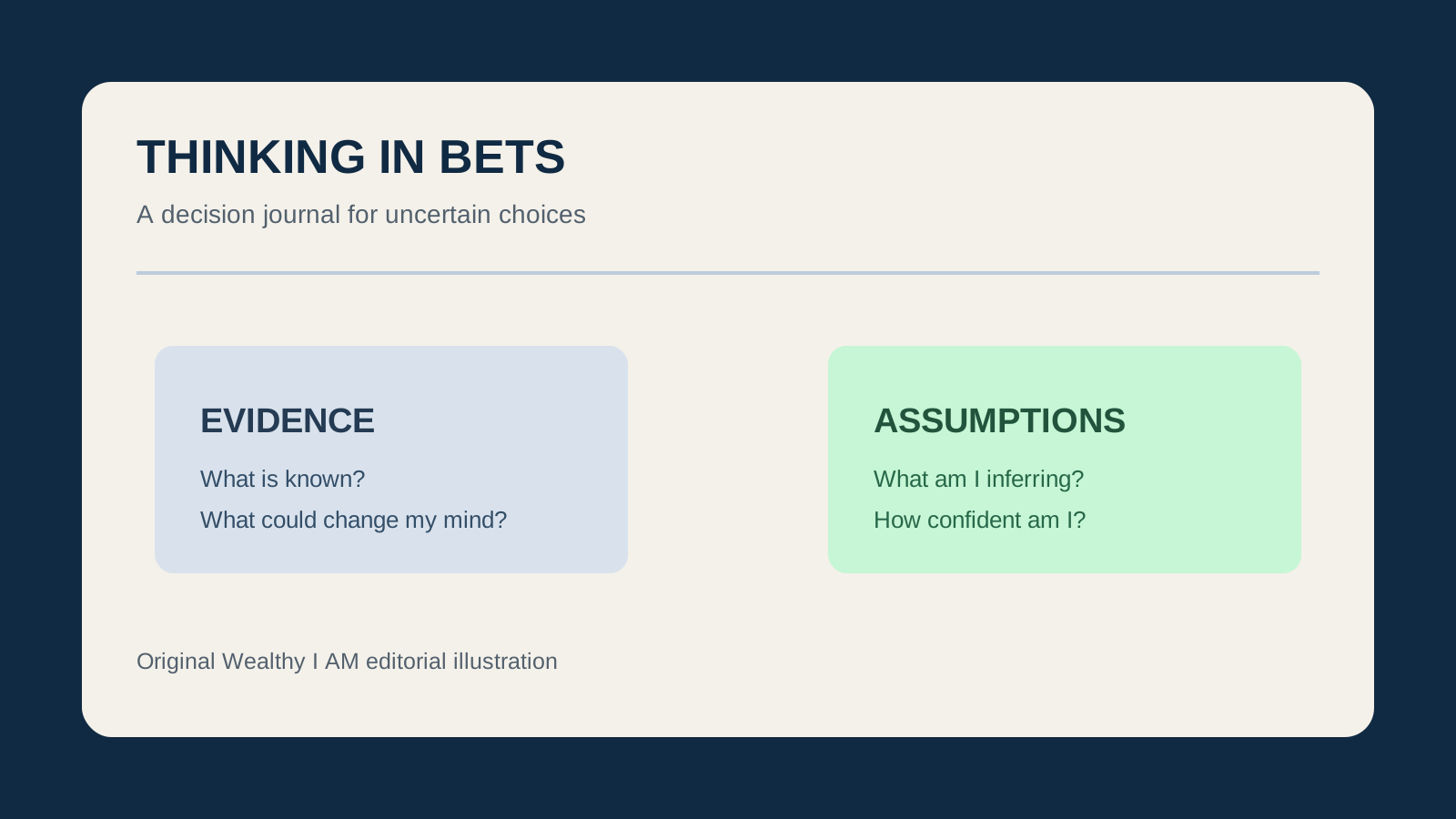
- Day 2: List facts, assumptions, and unanswered questions separately.
- Day 3: Identify one lesson or capability the situation revealed.
- Day 4: Choose one action that creates information or value within 48 hours.
- Day 5: Remove one expense, commitment, or distraction that weakens your response.
- Day 6: Write an if-then plan for the likeliest complication.
- Day 7: Review the evidence and choose the next seven-day experiment.
Applying the idea to investing and business
In investing, the obstacle may be volatility, an imperfect forecast, or the temptation to act on headlines. The practical response is not to predict every move. It is to match risk to your time horizon, keep a cash reserve for near-term needs, diversify appropriately, control costs, and follow rules you can live with during a downturn.
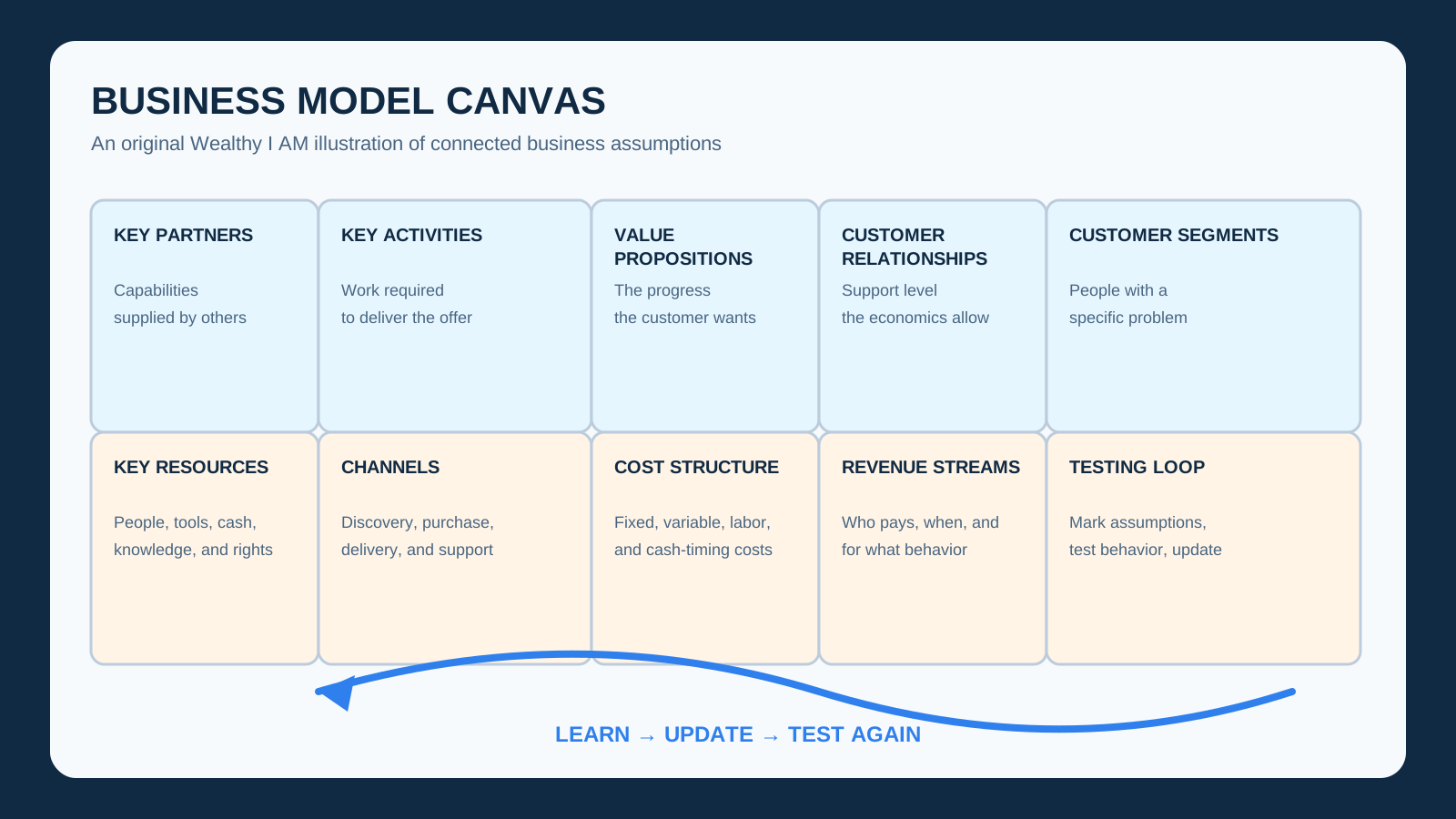
In business, the obstacle may be limited resources or intense competition. Diagnose the bottleneck: demand, pricing, delivery, retention, or cash conversion. Then select a narrow response and measure it. A focused experiment can teach more than a year of generalized motivational activity.
What to keep in perspective
The book’s message should not romanticize suffering or blame people for circumstances they did not choose. Some obstacles require support, rest, professional advice, or structural change. Resilience is not pretending everything is controllable. It is making the best available choice while acknowledging what is not.
Bottom line
The Obstacle Is the Way offers a durable method for meeting uncertainty: see the situation clearly, act on what can be influenced, and continue with flexibility and character. For wealth builders, that means converting setbacks into information, protecting downside, and taking the next useful step instead of waiting for perfect conditions. The obstacle may not disappear, but your capacity to create value can grow because you learned how to work with reality.
Sources and credits
- Amazon.com product page — The Obstacle Is the Way by Ryan Holiday, Portfolio edition, ISBN 9781591846352
- Google Books record supplied for title and author verification
- Publishers Weekly bibliographic record
- Cover credit: Open Library cover image corresponding to ISBN 9781591846352; Amazon link above is the verified product page.