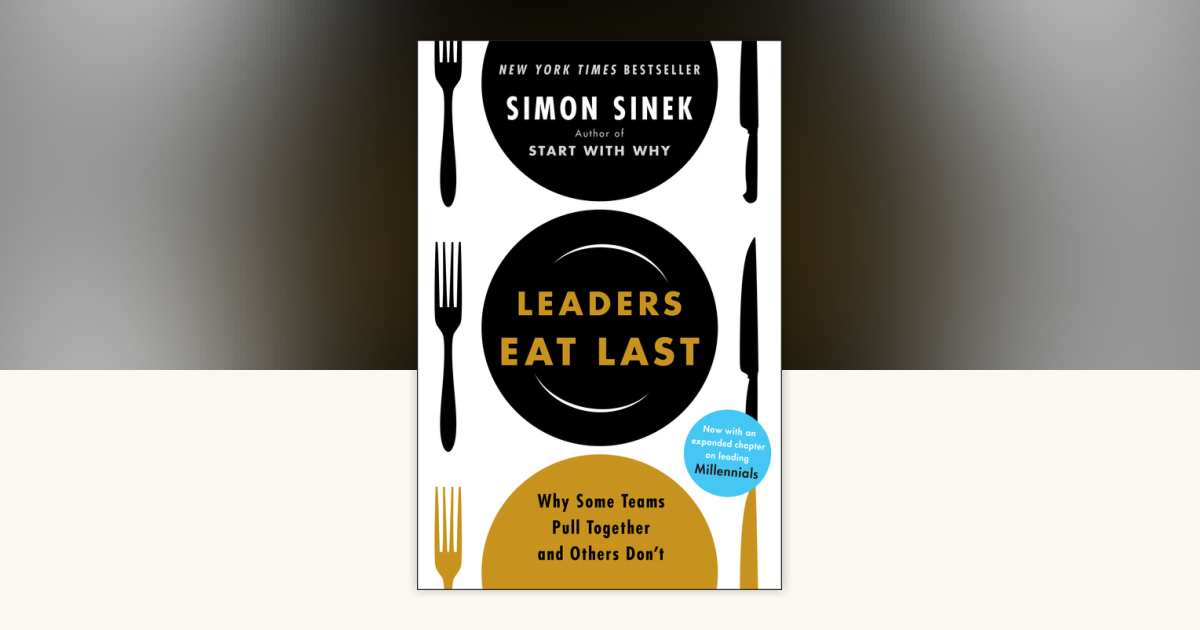
What makes one team resilient while another fragments under pressure? In Leaders Eat Last: Why Some Teams Pull Together and Others Don’t, Simon Sinek argues that the answer is not simply talent, incentives, or an impressive strategy. People do their best work when they feel protected, valued, and connected to a purpose larger than internal competition.
That idea matters to wealth building because durable wealth is usually created through people: customers, colleagues, partners, and teams. A leader who creates trust can make decisions faster, retain capable people, reduce costly rework, and build an organization that produces value beyond the leader’s personal effort. The book’s central challenge is simple: are you using authority to protect your position, or are you using leadership to protect the people in your care?
The Circle of Safety
Sinek uses the phrase “Circle of Safety” for an environment in which people are protected from unnecessary internal threats while they face external challenges together. Inside the circle, team members can ask questions, report risks, admit mistakes, and collaborate without constantly defending themselves from one another.
This does not mean lowering standards or avoiding accountability. Psychological safety makes high standards more achievable because people can surface problems early. When bad news is hidden, leaders make decisions using fiction. When bad news can travel quickly, the organization can respond while the cost of correction is still manageable.
Four practical lessons from the book
1. Put responsibility before privilege
The title comes from the Marine Corps practice described in the book: officers eat last. The senior person accepts a visible inconvenience so junior people receive care first. Sinek presents this as a symbol of a broader obligation: leadership is stewardship, not a trophy.
In business, “eating last” can mean taking responsibility when a launch fails, sharing credit when it succeeds, protecting a team from unreasonable noise, or investing in training before asking for more output. It does not mean neglecting your own needs. It means remembering that authority creates duties as well as benefits.
2. Replace internal competition with shared protection
When people fear their coworkers or manager, they conserve information. They optimize for appearances, defend territory, and wait for someone else to make the first move. That behavior can look like professionalism on a dashboard while quietly damaging execution.
Leaders can reverse the pattern by making cooperation visible. Reward the person who helps another team meet a deadline. Ask for cross-functional input before final decisions. In reviews, examine the system that produced an error instead of searching only for someone to blame. The goal is not consequence-free work; it is learning and responsibility without humiliation.
3. Remember the human beings behind the numbers
Sinek warns that abstraction can weaken empathy. A target, headcount, conversion rate, or expense line is useful information, but it represents real people and real consequences. If leaders see only the metric, they can make technically efficient decisions that destroy trust, quality, or long-term value.
Bring the human context back into important choices. Talk to customers who experienced the problem. Ask employees what a process feels like at the front line. Connect financial outcomes to the behavior that caused them. This creates better judgment: numbers tell you what changed, while human stories often help explain why.
4. Build loyalty through consistent care
Trust is not produced by a single inspirational speech. It is built through repeated evidence. Do leaders keep commitments? Do they explain decisions? Do they listen when a concern is raised? Do they defend people fairly when pressure arrives? Small answers accumulate into a culture.
Consistency is especially important for growing companies. A founder may be able to personally reassure everyone at ten people, but not at fifty or five hundred. Systems must carry the promise: clear priorities, honest feedback, fair workload expectations, transparent decisions, and regular opportunities to raise risks.
A step-by-step leadership practice
Step 1: Map the threats inside your team
Ask three questions anonymously: What makes it difficult to speak honestly here? Where do handoffs break down? What problem are we tolerating because raising it feels costly? Group the answers into themes and choose one internal threat to reduce this month. Do not ask for candor and then punish the first person who provides it.
Step 2: Define what protection means
Write a short team agreement. It might include protecting focus time, escalating customer risks quickly, disagreeing directly rather than through gossip, and giving credit accurately. Make the agreement behavioral. “Respect people” is a value; “no interruptions during a first explanation” is an observable practice.
Step 3: Create a reliable listening loop
Hold a brief weekly check-in with two prompts: “What is putting our goal at risk?” and “What support would make the next step easier?” Record owners and actions. Close the loop the following week by explaining what happened. Listening without follow-through teaches people that speaking up is pointless.
Step 4: Use vulnerability to speed learning
When a project is uncertain, say what you know, what you do not know, and what experiment will reduce uncertainty. Invite a specific person to challenge the assumption. This is disciplined vulnerability: it turns uncertainty into a shared problem rather than a private fear.
Step 5: Connect purpose to money decisions
Purpose should influence resource allocation. Which customers are you committed to serving? What quality standard will you refuse to compromise? Which revenue opportunities would create hidden costs in trust or reputation? When purpose guides trade-offs, a business can pursue profitable growth without becoming captive to every short-term opportunity.
Step 6: Measure the compounding effects
Track indicators that reveal whether trust is improving: employee retention, customer complaints, unresolved risks, rework, decision cycle time, and the number of issues identified before launch. Pair metrics with conversations. A culture that protects people should also improve the speed and quality of execution.
How trust becomes a wealth asset
Trust has an economic effect. It lowers the friction of coordination. People share information sooner, make commitments more confidently, and spend less energy on self-protection. Customers are more likely to return when the organization behaves consistently. Capable employees are more likely to stay when they believe leadership will treat them fairly.
Those benefits compound into operating leverage. Better coordination creates better service; better service strengthens relationships; stronger relationships support revenue; reliable revenue gives leaders more room to invest in systems, talent, and innovation. The result is not merely a pleasant workplace. It is an organization with more resilience and a stronger capacity to create durable value.
Use the lesson without misusing it
“People first” is not a license for vague expectations, favoritism, or permanent underperformance. Care and accountability belong together. Leaders should protect people from unnecessary fear while being clear about standards, roles, deadlines, and consequences.
Nor should culture become emotional theater. A team is not safe because it uses the right words. It is safe when people can tell the truth, challenge a plan, learn from a mistake, and still be treated with dignity. Watch behavior, not branding.
Bottom line
Leaders Eat Last reframes leadership as a daily act of service. Build a Circle of Safety, make risk-reporting welcome, connect decisions to real people, and let purpose shape trade-offs. These practices do more than improve morale. They protect the time, trust, attention, and relationships from which productive teams—and lasting wealth—are built.
Sources and credits
- Simon Sinek’s official book page — author context and book premise.
- Penguin Random House edition page — publisher details and matched ISBN 9781591848011.
- Amazon.com product page — matched product listing and retail reference.
- Cover credit: Penguin Random House image for the matched Portfolio paperback edition; the cover links to the corresponding Amazon.com product page.