Quick answer
Based on the book’s public description, The Financial Diet is positioned as an accessible introduction to budgeting, credit, investments, overspending, student debt, and entry-level income. This article is a source-bounded guide to that public framing—not a chapter-by-chapter summary or a claim that every routine below comes from the book.
Who this is for: Beginners who feel intimidated by money language and want a careful starting point. The practical checklists are Wealthy I AM editorial applications, not financial advice or methods attributed to Fagan.
Scope note: a source-bounded guide
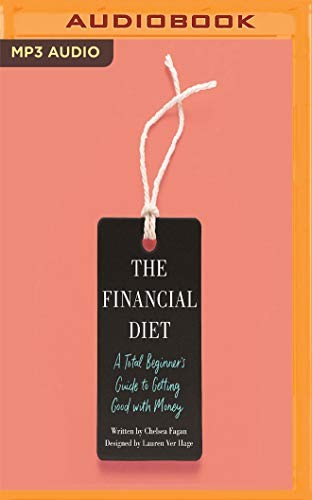
The Financial Diet, by Chelsea Fagan, is presented in its public book description as an accessible introduction for people who do not naturally care about personal finance. That description names budgeting, investments, credit, student debt, entry-level salaries, and an “overspending detox” among the book’s concerns. Those details support a useful picture of the book’s intended audience and subject area.
They do not, by themselves, establish every argument, example, chapter structure, or method in the complete book. This article is therefore deliberately source-bounded: it explains what the public description supports and offers Wealthy I AM applications inspired by those topics. The applications are editorial extensions, not systems prescribed by Fagan. Readers wanting a complete chapter-by-chapter summary should consult the book itself or an authorized preview.
What the public description establishes
1. Begin with the basics instead of waiting to become a finance enthusiast
The description is aimed at readers who may avoid personal finance, including people dealing with overspending, student debt, or an entry-level salary. Its promise of practical tools suggests a beginner-first entry point rather than a demand that readers already understand investing terminology.
That is a modest claim, but it is valuable. A person cannot use a financial tool that feels too complicated or irrelevant to learn. The first useful question is not whether a reader has optimized every decision; it is whether the reader can see enough of the numbers to make the next decision deliberately.
A Wealthy I AM application: Review the last 30 days of bank and card transactions. Group them into housing, utilities, transport, food, debt payments, saving, personal spending, and irregular costs. Do not treat these categories as Fagan’s prescribed method; they are an editorial way to extend the description’s beginner budgeting topic. Identify the two areas creating the most pressure and make one change that can survive an ordinary week.
2. Put overspending into view without turning the exercise into shame
The phrase “overspending detox” appears in the public description, so it is fair to say that the book addresses spending behavior as well as abstract financial knowledge. The description does not provide enough evidence to claim a particular psychological explanation or a specific behavior-change system. We should not present one here as if it came from the book.
A practical interpretation is that a beginner may need to observe spending before attempting a total overhaul. That interpretation belongs to this article, not to a quoted passage from Fagan.
A Wealthy I AM application: For two weeks, record each unplanned purchase, the situation surrounding it, and whether it solved a real need. This duration and these prompts are our editorial framework, not a book instruction. At the end, choose one small friction to test—such as a waiting period or removing a saved card—and keep one affordable pleasure in the plan. The goal is information and a sustainable choice, not punishment.
3. Learn enough about credit and investments to ask better questions
The public description explicitly names credit and investments. Those subjects belong to different decisions: credit affects borrowing and repayment, while investing concerns money placed at risk for a longer time horizon. The description supports saying that both are within the book’s introductory scope; it does not support attributing a particular investment allocation, debt method, or product recommendation to Fagan.
For a beginner, separating the questions is useful. What does each debt cost? What are the minimum payments and fees? Which money must remain available? What risks and local rules apply before an investment account or product is chosen? The answers depend on personal circumstances and jurisdiction.
A Wealthy I AM application: Make a one-page inventory listing each debt’s balance, interest rate, minimum payment, and due date, followed separately by savings and investments. This inventory is an editorial extension of the credit-and-investments topics, not a method verified from the book. Use it to identify the most urgent gap, while accounting for essential expenses and the risk that an overly aggressive repayment plan could lead to new borrowing. Check current local guidance before making a consequential decision.
4. Use the beginner framing as an invitation to continue learning
The available description supports a beginner-oriented reading of The Financial Diet. It does not establish broader whole-book judgments—for example, claims about caregiving, health, unstable income, compensation conversations, or a particular income-building experiment. Those issues can materially affect a person’s finances, but they should not be labeled a core lesson of Fagan’s book without book-specific evidence.
A Wealthy I AM application: Treat the introduction to budgeting, credit, or investments as a prompt for one low-risk learning step: gather your numbers, write down unfamiliar terms, or find a current government or consumer-protection source relevant to your location. Do not infer that Fagan prescribes a seven-day, 30-day, or 90-day program. The point of this extension is to turn an introductory topic into a question you can investigate responsibly.
Who this source-bounded guide may help
Readers who feel intimidated by money language or need a starting point for budgeting, credit, debt, and investing may find the book’s public framing approachable. It may also help begin a conversation between partners or friends who have avoided the subject, although that is an application of the framing rather than a verified promise of the book.
The public description cannot tell us whether the complete book addresses every circumstance a reader faces. It cannot replace current local information or qualified help for complex taxes, insolvency, disability, business finances, immigration-related obligations, retirement rules, or regulated investments. Low wages, high housing costs, illness, and insecure employment can limit choices in ways that a beginner guide cannot solve.
Financial-education disclaimer: This article is general educational information, not financial, tax, legal, insurance, or investment advice. Rules and products vary by country and change over time. Check current local sources and seek qualified advice before making consequential decisions.
A cautious way to start
For today, gather real numbers rather than making promises. Then choose one question connected to the book’s publicly described topics: What does my current spending actually show? Which credit obligation needs attention? What do I need to learn before considering an investment? Keep any checklist or time period you create clearly in the category of personal experimentation, not book doctrine.
The strongest evidence-based takeaway is limited but practical: The Financial Diet is publicly positioned as a beginner-friendly entry point into personal finance, including budgeting, credit, investments, overspending, student debt, and entry-level income. Its public description is not enough to support a comprehensive summary of the author’s complete framework. Read the book for that fuller account, and use current, situation-specific sources for decisions with real financial consequences.
Sources and scope
- Open Library, work record for The Financial Diet, including the public book-jacket description and subject classification: https://openlibrary.org/works/OL20450939W.json
- Open Library, edition/search record confirming Chelsea Fagan as author and 2018 publication data: https://openlibrary.org/search.json?q=The+Financial+Diet+Chelsea+Fagan
- The Financial Diet, “Who We Are,” author biography for Chelsea Fagan: https://thefinancialdiet.com/who-we-are/
These sources verify bibliographic identity, author context, intended beginner scope, and the topics named in the public description. They do not verify chapter-level claims or a complete account of the book’s arguments. The applications and wording in this article are the writer’s synthesis; they are not quotations or claims that the book prescribes the specific routines listed here.