Search intent: Readers looking for The Little Book of Valuation want a practical way to judge what a business may be worth without treating an uncertain forecast as fact.
A stock price is visible in seconds, but a business creates value over years. That contrast creates a costly mistake: confusing a good company with a good purchase price.
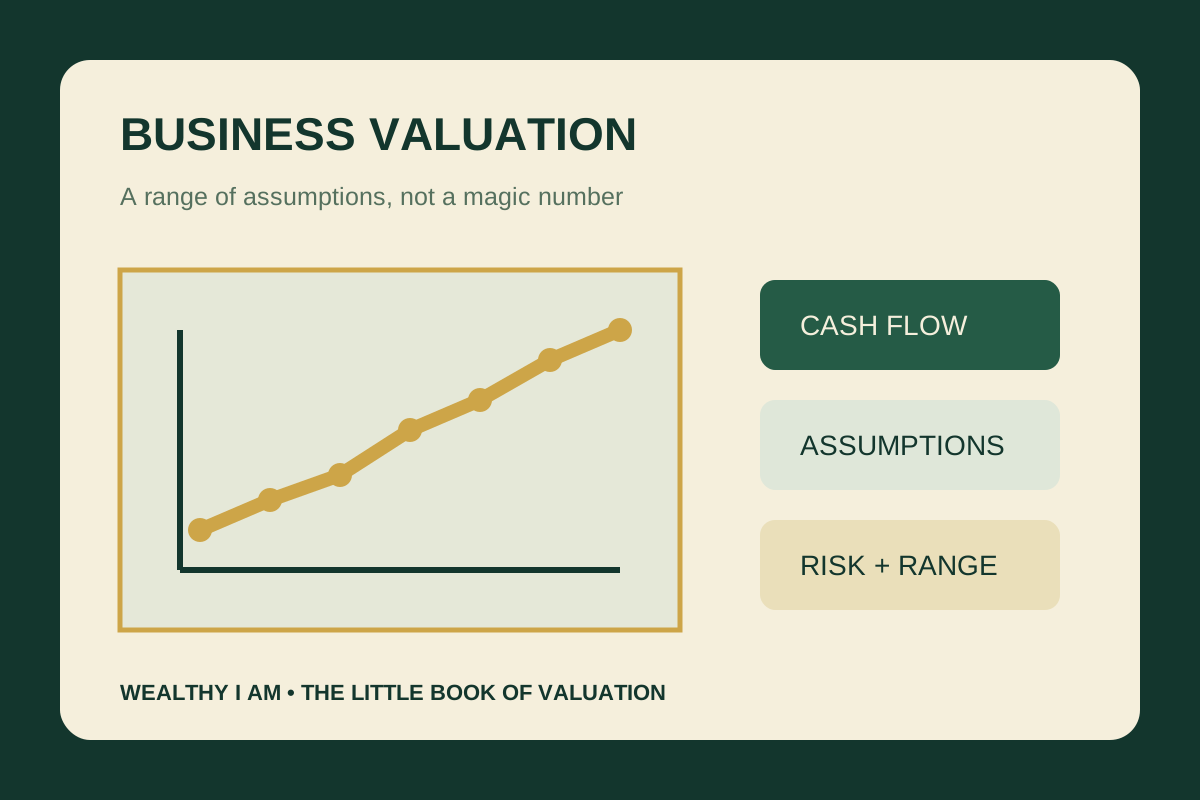
The answer in brief: a useful valuation is a range built from a company’s business model, cash flows, growth costs, comparable companies and risks. The most important work is not producing a precise number; it is making the assumptions visible and testing what could prove them wrong.
In this article, Wealthy I AM applies the broad ideas associated with Aswath Damodaran’s The Little Book of Valuation. This is an original application, not a chapter-by-chapter reconstruction or a claim that Damodaran presents this exact numbered framework.
Why business valuation matters before you buy a stock
Price and value can diverge, so investors need a process for comparing them. A strong company can be a poor investment if its price assumes perfect execution. A struggling company can remain expensive if the market has not priced in its problems.
The overlooked insight is that valuation is less about predicting the future than revealing what the current price already assumes. That is why the same company can look attractive to one investor and expensive to another: their growth, margin, risk and reinvestment assumptions differ.
What The Little Book of Valuation teaches about business worth
Start with the business, not the ticker
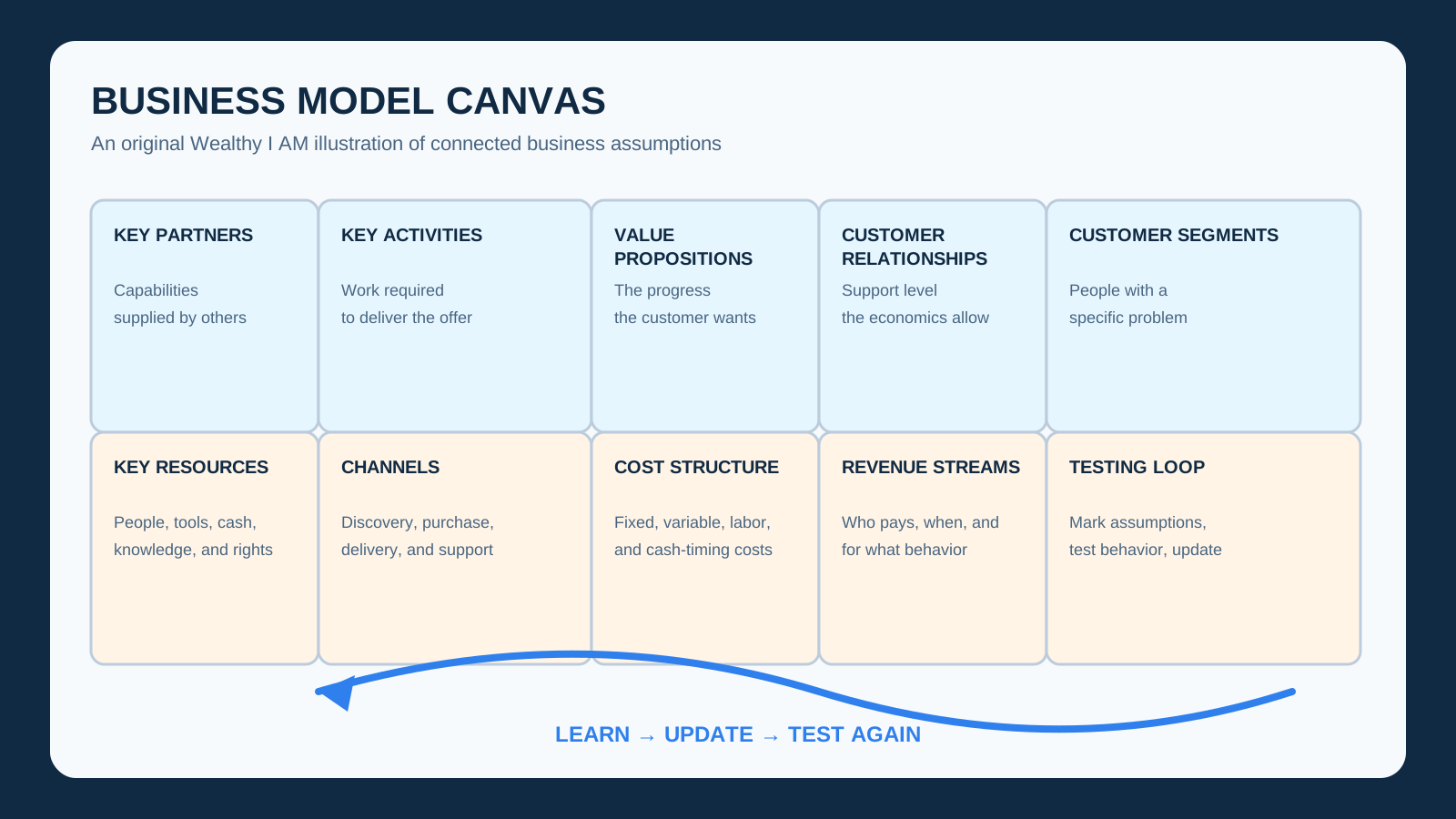
Describe who pays, what they buy, why they choose it, how the company earns revenue and which costs matter most. Write five plain-language sentences covering the customer, product, revenue source, largest cost and biggest risk. Mark each sentence fact, assumption or question.
Forecast cash flow instead of admiring revenue
Revenue is not value by itself. Ask what happens to margins, taxes, working capital, reinvestment and financing as sales grow. Use conservative, central and optimistic cases so the conclusion does not depend on one confident forecast.
Remember that growth has a cost
Expansion may require people, inventory, equipment, technology or marketing. Growth creates value only when the returns from those investments justify the capital consumed. Ask how much reinvestment each additional unit of growth requires.
Use valuation multiples as context, not verdicts
Price-to-earnings, sales and cash-flow multiples can help compare businesses, but only when the companies have genuinely similar growth, margins, debt, risk and reinvestment needs. A cheap multiple may signal a problem rather than an opportunity.
Put risk inside the estimate
Customer concentration, competition, regulation, debt, cyclicality and management dependence affect value. A range is more honest than a single target when uncertainty is material. A margin of safety reduces room for error; it does not guarantee a profit.
Stress-test the assumptions that matter most
Identify the two or three inputs that change the result most. Then test slower growth, lower margins or higher reinvestment. If the conclusion collapses after a modest change, the investment may be fragile.
Search for evidence that could prove you wrong
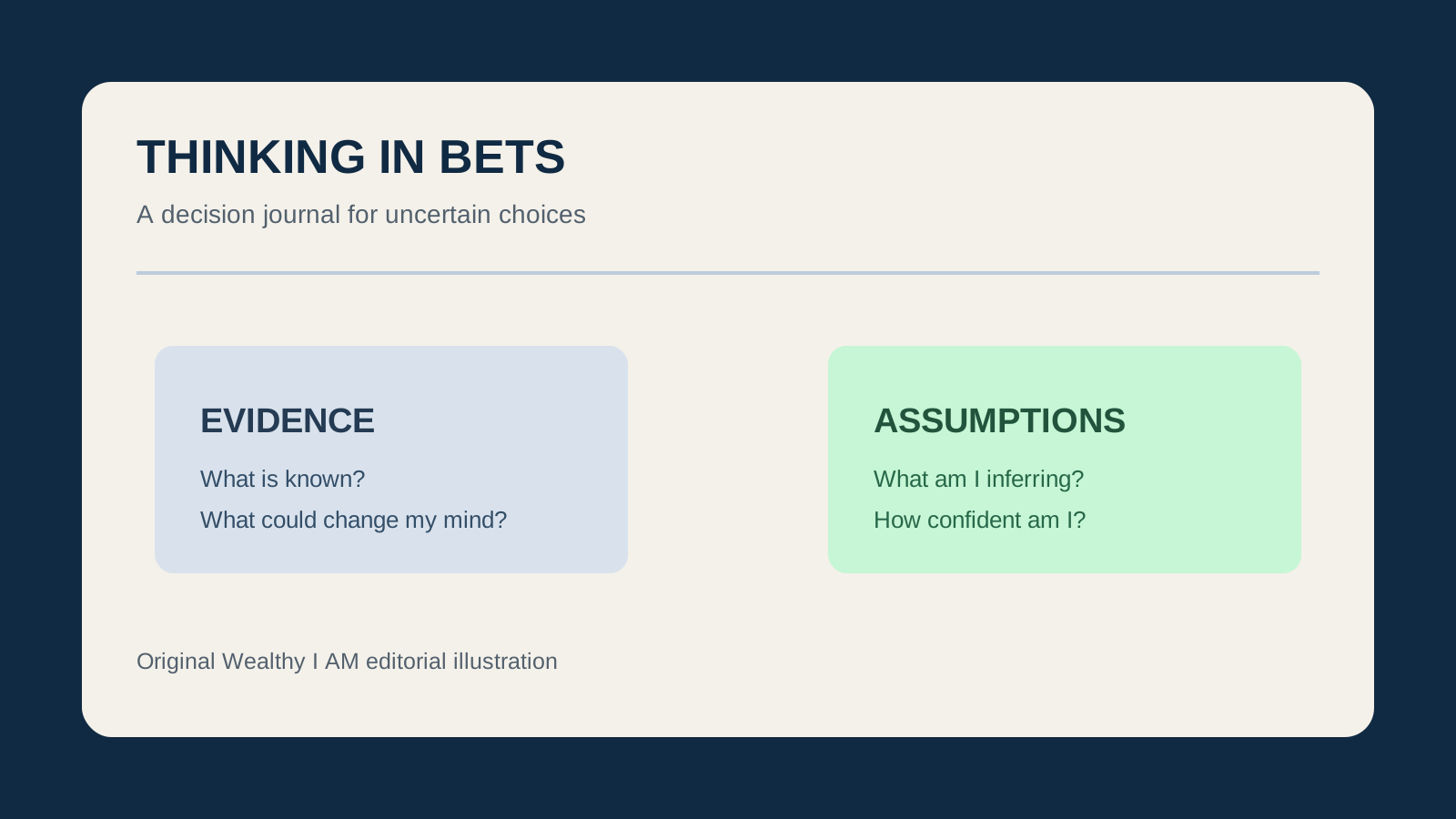
Before investing, write what would change your mind: weaker retention, falling pricing power, rising capital needs, declining returns or a stronger competitor. This prevents analysis from becoming a defence of a story you already believe.
How to apply these valuation ideas step by step
- Describe the business: write the five-sentence business note.
- List the drivers: record growth, margins, reinvestment and risks.
- Build three scenarios: conservative, central and optimistic.
- Choose fair comparisons: explain why each comparable company belongs.
- Stress-test the result: weaken the assumptions with the greatest influence.
- Set disconfirming evidence: decide what would make you revisit the thesis.
- Compare price with the range: treat the output as an estimate, never a promise.
[Internal link: beginner’s guide to understanding company financial statements]
Mistakes to avoid when valuing a company
- Starting with a chart instead of the business economics.
- Using one perfect forecast instead of scenarios.
- Rewarding revenue growth without checking reinvestment.
- Comparing unlike companies because their multiples look cheap.
- Ignoring evidence that challenges the investment thesis.
- Confusing general education with personalised investment advice.
Frequently asked questions about The Little Book of Valuation
Is the book suitable for beginners?
It can be, especially when a beginner applies the ideas to one understandable company instead of starting with an abstract spreadsheet.
What is the central valuation lesson?
Make assumptions explicit. The estimate becomes more useful when you know what drives it and what would change your mind.
Should investors use cash-flow valuation or multiples?
Both can be useful. Cash-flow analysis makes assumptions visible, while multiples provide market context. Neither method removes uncertainty.
Can valuation predict a stock’s future price?
No. It is an estimate under uncertainty and cannot guarantee profit, timing or protection from loss.
What should I do first?
Choose one company you understand and write the business note before searching for a precise target price.
Conclusion: use valuation to improve your questions
The Little Book of Valuation is most useful when it changes the questions you ask: how does the business earn money, what must be true for growth to create value, which assumptions matter most, and what evidence could prove you wrong?
Next step: choose one understandable company, write the business note and list the three assumptions that would most change your conclusion.
This article is general education, not personalised investment, tax or legal advice. No book or valuation method guarantees profit or wealth.