A manager can be busy, well-liked, and impressive while avoiding the work their team most needs from them. That creates a costly problem: activity looks like leadership, but unresolved priorities, unclear standards, and weak accountability quietly reduce the value a team can create.
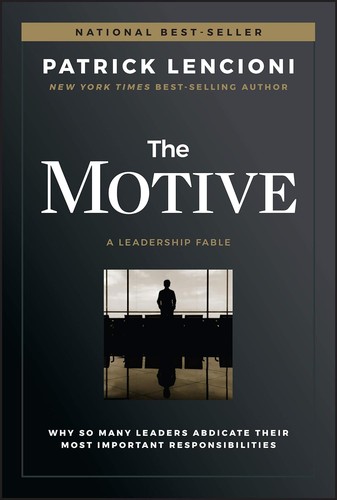
That is the leadership problem explored in The Motive: Why So Many Leaders Abdicate Their Most Important Responsibilities by Patrick M. Lencioni. The book’s central premise is that leaders can approach leadership for different reasons, and that the motive matters because the role contains responsibilities many people would rather avoid.
This article is a practical interpretation of that broad premise, not a chapter-by-chapter summary. The five lessons below are original Wealthy I AM synthesis and application; they are not presented as the book’s exact numbered framework. The available publisher and catalog sources verify the book’s identity and broad leadership focus, but they do not establish every detail of the full text.
Who this is for
This article is for founders, managers, team leads, and professionals deciding whether leadership is the right responsibility for them. It connects leadership quality with the value a team can create, but it does not promise business results or substitute for context-specific management judgment.
The book’s broad idea in one sentence
Leadership is not mainly a status upgrade; it is a set of demanding responsibilities that must be accepted for the benefit of the team.
That is the broad premise this article uses as its starting point. The applications that follow translate that premise into operating questions; they should not be read as a reconstruction of Lencioni’s exact chapter structure or a claim that the book presents these five headings in this order.
That distinction changes the question from “Do I want the title?” to “Am I willing to do the work the title requires?” A leader may gain authority, income, or recognition, but those outcomes are not the same as leading well. A title can grant access to decisions while leaving the difficult obligations untouched.
1. Separate the benefits of leadership from the work of leadership
One reason people pursue management is that it can offer greater pay, influence, autonomy, or prestige. Those benefits are not inherently wrong. The danger appears when the benefits become the motive and the responsibilities become optional.
Leadership often includes uncomfortable work: clarifying priorities, giving direct feedback, addressing poor performance, making trade-offs, and helping other people succeed instead of proving personal competence. These tasks can be less gratifying than producing an individual contribution that is visible and easily measured.
The useful test is not whether you enjoy every management task. It is whether you accept that the team’s needs outrank the leader’s preferred image of the job. If you want authority without accountability, the mismatch will eventually show up in missed commitments, avoidable conflict, or decisions that nobody owns.
Try this: Write two columns. In the first, list what you want from a leadership role. In the second, list the recurring obligations your team would reasonably expect in exchange. If the first column is detailed and the second is vague, investigate the motive before accepting more authority.
2. Treat management as a service, not a reward
A service orientation does not mean a leader says yes to everything or removes every obstacle for everyone. It means the leader uses authority to create the conditions in which the team can do responsible, high-quality work.
That may involve setting a clear direction, allocating scarce resources, removing unnecessary confusion, making decisions at the right level, and holding people to agreed standards. It also means resisting the temptation to become the hero who solves every problem personally. If a manager keeps taking work back, the team may become dependent rather than capable.
This is especially relevant to wealth creation in a business. A company’s output does not come only from the founder’s effort. It also comes from systems, judgment, customer value, and the coordinated work of other people. A leader who strengthens capability can increase the organization’s capacity; a leader who centralizes every decision may become the bottleneck.
Try this: Ask each direct report, “What is one obstacle I can help remove, and what is one decision you should own?” Do not treat the answers as automatic instructions. Use them to distinguish support from unnecessary control.
3. Put difficult conversations on the calendar
Avoidance is attractive because it creates short-term comfort. A manager may postpone feedback, soften a necessary decision, or hope a recurring problem resolves itself. The cost is usually paid later, when the issue is more expensive and more personal.
A difficult conversation is not the same as an aggressive conversation. The goal is clarity: describe the observable issue, explain its effect, listen for relevant context, and agree on the next standard or action. The leader should avoid mind-reading, exaggerated labels, and promises about motives that cannot be verified.
This approach protects both performance and dignity. It gives a capable person a chance to correct course, and it prevents a team from treating an unaddressed problem as the real standard. It also reduces the hidden tax of uncertainty: people spend time guessing what matters, whether expectations are real, and whether poor work will be tolerated.
Try this: For one postponed conversation, write four sentences: what happened, why it matters, what standard is needed next, and what question you need to ask. Schedule the conversation, then document the agreed follow-up without turning the note into a character judgment.
4. Make priorities and standards visible
Teams cannot execute a leader’s private intentions. If the priority exists only in the manager’s head, people will substitute their own interpretations. The result can be a great deal of motion without progress on the work that matters most.
A visible priority does not need to be complicated. It can state the outcome, the time horizon, the owner, the constraints, and the next review point. Standards should be equally concrete. “Be more proactive” is difficult to act on; “raise a delivery risk by Wednesday with two possible responses” is easier to understand and review.
This is an original application of the book’s responsibility-centered premise, not a claim that it presents this exact template. The template is valuable because it turns leadership from a performance into an operating practice. It also makes disagreements easier to surface before they become expensive.
Try this: Create a one-page team agreement with three sections: current priority, decision rights, and review rhythm. Keep it short enough to use in a meeting. Update it when the work changes rather than allowing old priorities to become invisible obligations.
5. Measure leadership by what the team can do without you
A leader’s personal busyness can be misleading. Being the person who answers every question may feel like indispensability, but it can signal that knowledge, decisions, or confidence are not spreading through the team.
A stronger measure is whether people understand the goal, make appropriate decisions, raise problems early, and improve their work over time. This does not mean the leader becomes uninvolved. It means involvement is directed toward coaching, context, judgment, and accountability rather than constant rescue.
The test should be gradual and safe. Some decisions require senior review because the financial, legal, customer, or operational consequences are significant. Delegation is not abandonment, and a leader should not transfer responsibility without the information and authority needed to carry it.
Try this: Choose one recurring decision and document the boundaries: what the owner may decide, what information they must review, when escalation is required, and how the decision will be evaluated. Afterward, review the reasoning, not only the outcome. A poor result can come from a sound decision under uncertainty, while a good result can come from luck.
A low-risk leadership audit
You do not need to reorganize a company to apply these ideas. Run a thirty-minute audit on paper:
- List the benefits you associate with leadership.
- List the responsibilities your team most needs from you.
- Identify one conversation or decision you are avoiding.
- Write the current priority in one observable sentence.
- Choose one decision that could be delegated with clear boundaries.
- Set a review date and record what evidence would show improvement.
This is a reflection exercise, not a prediction of team performance. It can reveal whether the leader is spending time on visible activity while neglecting the obligations that create clarity and capability.
What the book does not remove
A leadership motive cannot overcome every structural problem. Teams still need adequate resources, competent people, realistic goals, sound processes, and a workable business model. External conditions, market changes, regulation, customer behavior, and plain luck can affect results.
Leadership principles also require adaptation. A small business, a regulated organization, a volunteer group, and a global company do not have identical decision rights or risk controls. Direct feedback should account for power differences, local law, employment policies, accessibility, and the possibility that a performance issue reflects unclear systems rather than individual effort.
The book’s message should not be turned into a moral test that blames every struggling leader. A person may need training, a different role, better support, or a candid decision to stop managing. Recognizing a mismatch is a responsible management action, not automatic failure.
The I AM takeaway
The most useful shift is from “What will leadership give me?” to “What responsibilities will I consistently accept for the people and outcomes entrusted to me?” The first question is about status. The second is about stewardship.
For your next step, select one obligation you have been postponing and make it concrete: one conversation, one priority, one decision boundary, or one review date. Keep the scope small enough to do this week. Leadership becomes credible through repeated behavior, not through the title alone.
This article is general education, not individualized business, employment, legal, tax, or financial advice. Consider your organization’s policies, obligations, and circumstances, and seek qualified professional guidance where appropriate.
Sources and evidence boundary
- O’Reilly, The Motive by Patrick M. Lencioni: https://www.oreilly.com/library/view/the-motive/9781119600459/
- Porchlight Books, The Motive listing: https://www.porchlightbooks.com/products/motive-patrick-m-lencioni-9781119600459
These sources verify the book’s identity, author, and broad subject. The five lessons, audit, templates, and practical applications are original Wealthy I AM synthesis. They are not quotations and are not presented as the book’s exact numbered framework. Current employment rules, organizational policies, financial claims, and sector-specific requirements must be checked separately before action.