Starting a new role can feel like being handed a moving machine with no instruction manual. The expectations are high, the relationships are unfamiliar, and every early decision sends a signal about how you will lead. In The First 90 Days: Proven Strategies for Getting Up to Speed Faster and Smarter, Michael D. Watkins presents leadership transition as a skill—not a test of personality or a period to simply survive.
The book’s central idea is practical: your early months matter because they shape credibility, relationships, and the speed at which you begin creating value. That applies to a new manager, an entrepreneur taking over a business, or anyone stepping into greater responsibility. The lessons below turn Watkins’s transition framework into a simple action plan for leading well and building lasting value.
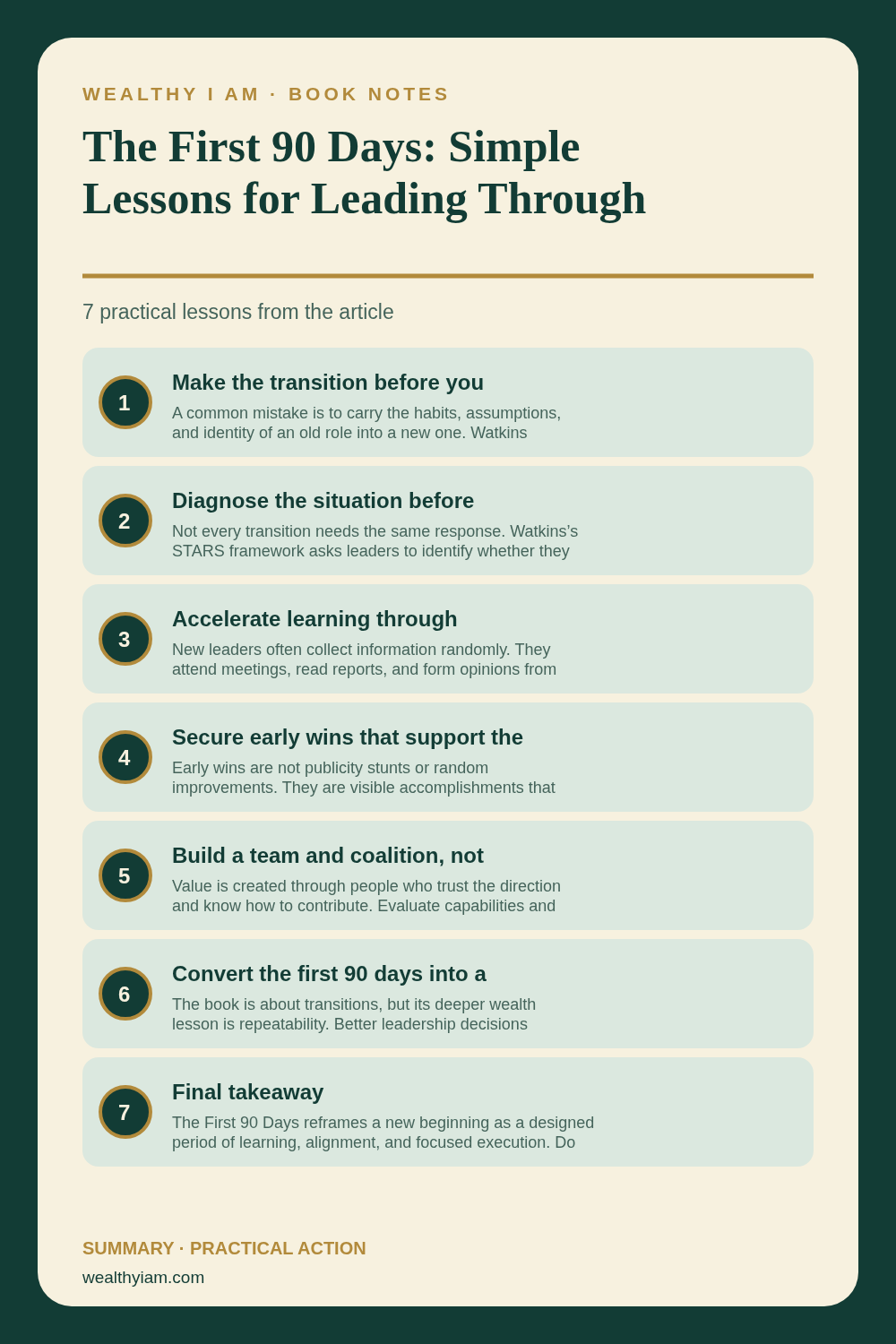
1. Make the transition before you make the plan
A common mistake is to carry the habits, assumptions, and identity of an old role into a new one. Watkins calls the first move “promoting yourself”: mentally accepting that the job has changed and that yesterday’s definition of success may no longer apply.
Write down three things you must stop doing, three responsibilities you now own, and three behaviors your new role requires. If you were a top individual contributor who has become a manager, for example, personally solving every problem may now limit your team. Your value comes from setting direction, developing people, and improving the system.
Action: Create a one-page “new role agreement” describing your purpose, decision rights, key relationships, and the outcomes you are responsible for. Share it with your manager and revise it after the first week.
2. Diagnose the situation before choosing the strategy
Not every transition needs the same response. Watkins’s STARS framework asks leaders to identify whether they are entering a start-up, turnaround, accelerated-growth situation, realignment, or a sustaining-success environment. Each situation changes what should happen first.
A turnaround may demand quick stabilization and hard choices. A successful unit may need careful preservation rather than dramatic change. A growing company may require systems and people before expansion becomes chaotic. The lesson is not to label your situation perfectly; it is to avoid applying a favorite solution without understanding the facts.
Action: Assess four areas: results, people, processes, and external conditions. Mark each as strong, weak, improving, or uncertain. Then write the two risks that could hurt performance most and the two opportunities that deserve attention now.
3. Accelerate learning through structured listening
New leaders often collect information randomly. They attend meetings, read reports, and form opinions from whichever voices are loudest. A better approach is to build a learning agenda. Decide what you need to know about customers, economics, culture, operations, strategy, and stakeholder expectations.
Use interviews to test assumptions rather than to announce conclusions. Ask what is working, what repeatedly breaks, what customers value, which decisions are delayed, and what the organization should never lose. Listen for patterns across conversations. One complaint may be noise; the same concern from several groups is evidence.
Action: Schedule 15–20 conversations in the first few weeks. Keep a fact-and-assumption log with three columns: what I know, what I think, and what I need to verify. This simple distinction protects you from mistaking confidence for understanding.
4. Secure early wins that support the long game
Early wins are not publicity stunts or random improvements. They are visible accomplishments that matter to stakeholders and demonstrate how you intend to operate. The strongest wins solve a real problem, can be delivered credibly, and create momentum for larger priorities.
Choose wins carefully. A small improvement to a broken customer handoff may be more valuable than a flashy new initiative. A clear weekly dashboard can restore confidence when a team lacks visibility. The point is to show progress without promising more than the organization can deliver.
Action: Select one quick win for customers, one for the team, and one for operational clarity. Give each an owner, deadline, measure, and definition of done. Avoid launching more projects until these commitments are complete.
5. Align expectations and negotiate the resources for success
Many leadership failures begin with unspoken expectations. A manager may assume the new leader will protect existing revenue; the leader may believe transformation is expected. Both can work hard while moving in different directions.
Negotiating success means clarifying priorities, measures, constraints, support, and trade-offs. Ask your manager: What must be true after 90 days? Which outcomes matter most? What decisions can I make independently? Where will you actively support me? What should I not spend time on?
Action: Turn the answers into a short scorecard. Include three outcomes, the resources required, the risks to monitor, and the date for review. Revisit it regularly; alignment is a process, not a one-time conversation.
6. Build a team and coalition, not just a personal reputation
Value is created through people who trust the direction and know how to contribute. Evaluate capabilities and character, but do not rush to reorganize simply to appear decisive. First understand who delivers results, who has influence, where capacity is missing, and which relationships are essential to progress.
Coalitions matter because authority is rarely enough. Partners in finance, sales, operations, technology, or the wider community can either accelerate or quietly block your priorities. Give them a reason to care, involve them early, and make the mutual benefit clear.
Action: Map stakeholders by influence and impact. For each important person, write the outcome you need, the value you can offer, and the next conversation required. Build trust through consistent follow-through rather than constant self-promotion.
7. Convert the first 90 days into a repeatable wealth habit
The book is about transitions, but its deeper wealth lesson is repeatability. Better leadership decisions improve teams, businesses, earning power, and the durability of the value you create. A transition plan becomes powerful when it is reviewed, measured, and refined instead of forgotten after the first quarter.
At day 30, review what you learned and where assumptions changed. At day 60, check whether early wins are producing momentum and whether the team has clarity. At day 90, assess results, relationships, and the next strategic horizon. Keep the scorecard, lessons, and decisions in one place so the next transition starts with more wisdom than the last.
Action: Set a monthly leadership review with three questions: What created value? What created friction? What will I change next month? Small improvements in judgment compound just as surely as small improvements in saving and investing.
Final takeaway
The First 90 Days reframes a new beginning as a designed period of learning, alignment, and focused execution. Do not rush to prove yourself through activity. Diagnose the situation, listen deeply, secure meaningful early wins, align expectations, and build the relationships that make progress possible.
Whether your goal is to lead a team, grow a company, or increase your long-term earning power, the practical message is the same: create clarity early, make promises you can keep, and use each transition to become more capable. That is how a demanding first quarter becomes a foundation for durable wealth.
Sources and credits
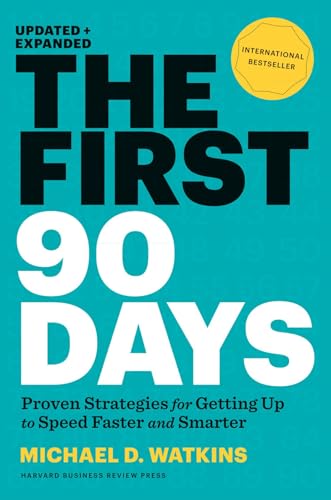
- Watkins, Michael D. The First 90 Days: Proven Strategies for Getting Up to Speed Faster and Smarter, Updated and Expanded. Harvard Business Review Press, 2013. Amazon.com product page.
- Harvard Business Review Press: The First 90 Days, Updated and Expanded.
- Cover image: matched Amazon.com edition, ISBN-13 9781422188613. Used for identification and editorial reference.
Wealthy I AM Action Card
Wealthy I AM Pinterest Copy
TITLE
The First 90 Days: Simple Lessons for Leading Through Transition and Building Value
DESCRIPTION
Practical transition lessons from Michael D. Watkins for leaders building credibility, teams, and long-term.
KEYWORDS
The First 90 Days book summary, First Days lessons, personal development, wealth building, productivity books
ALT TEXT
Wealthy I AM visual summary of The First 90 Days: Simple Lessons for Leading Through Transition and Building Value
ARTICLE URL
https://nappot.com/first-90-days-simple-lessons-leading-through-transition-building-value/