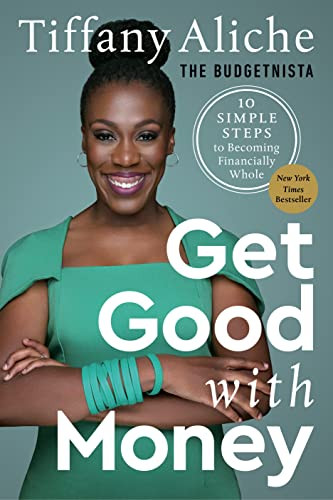
Money advice often feels either too complicated or too judgmental. Get Good with Money: Ten Simple Steps to Becoming Financially Whole takes a different approach. Tiffany “The Budgetnista” Aliche presents financial wholeness as a practical combination of skills: knowing where your money goes, protecting yourself from setbacks, increasing your earning power, and putting your resources to work over time.
Published in 2021, the book is organized as a sequence rather than a single investing trick. Its promise is not instant wealth. It is a calmer, more complete relationship with money—one built on awareness, systems, and choices that support both present stability and future opportunity.
The core idea: financial wholeness
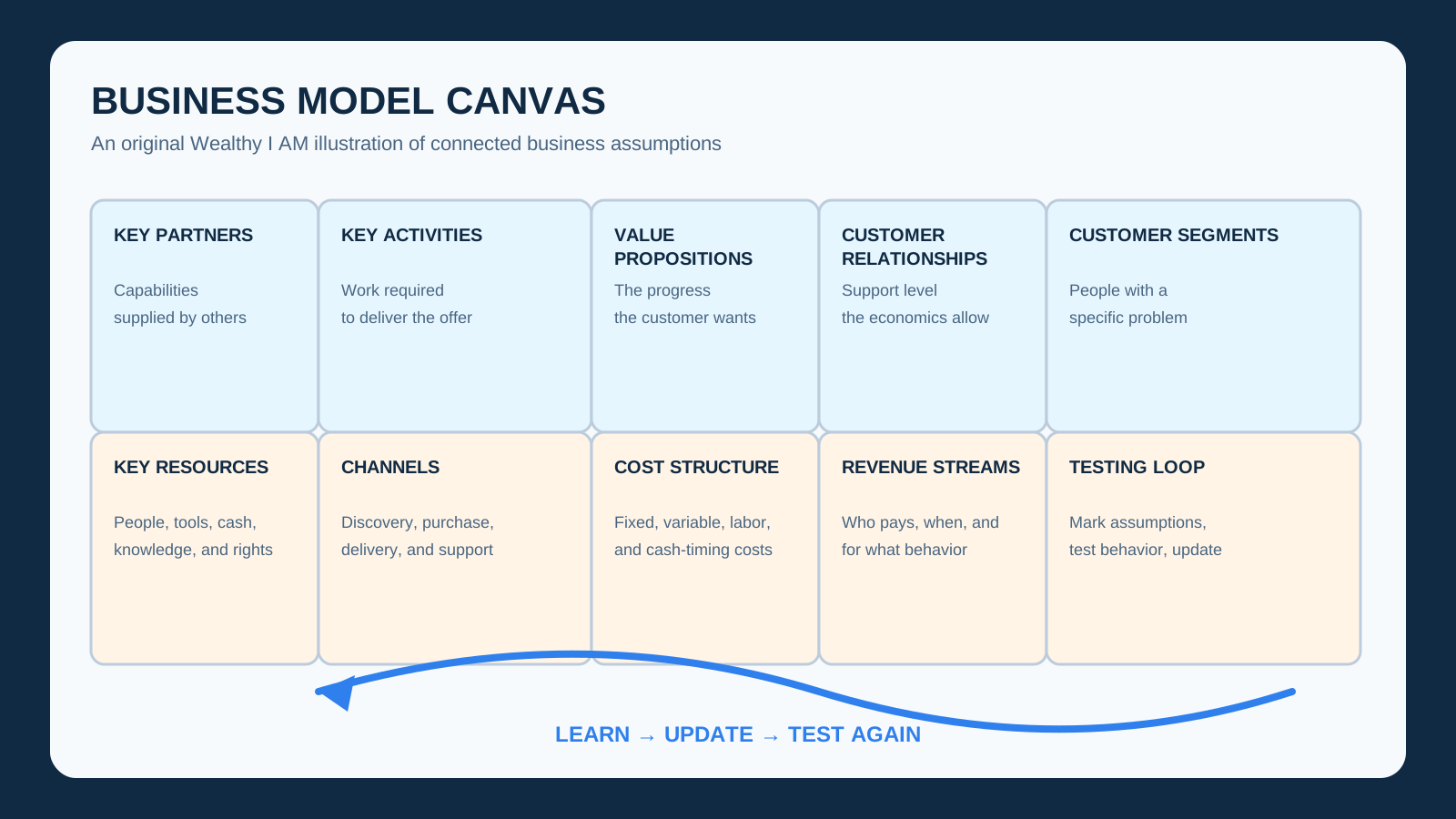
Aliche’s framework treats money as a whole system. Budgeting matters, but a budget alone cannot solve every problem. Debt, credit, savings, income, investing, insurance, and estate planning affect one another. The useful question is not simply “Am I good at saving?” but “Which part of my financial life needs attention next?”
This is an empowering shift. Financial progress becomes a set of learnable behaviors, not a personality test. You can start with the area creating the most risk, build one reliable habit, and then move to the next layer.
Five lessons worth carrying forward
1. Get clear before you get ambitious
The first step is visibility. Track income, fixed bills, flexible spending, debts, account balances, and recurring subscriptions. A clear snapshot may be uncomfortable, but uncertainty is expensive: it makes it harder to choose priorities and easier for small leaks to become permanent.
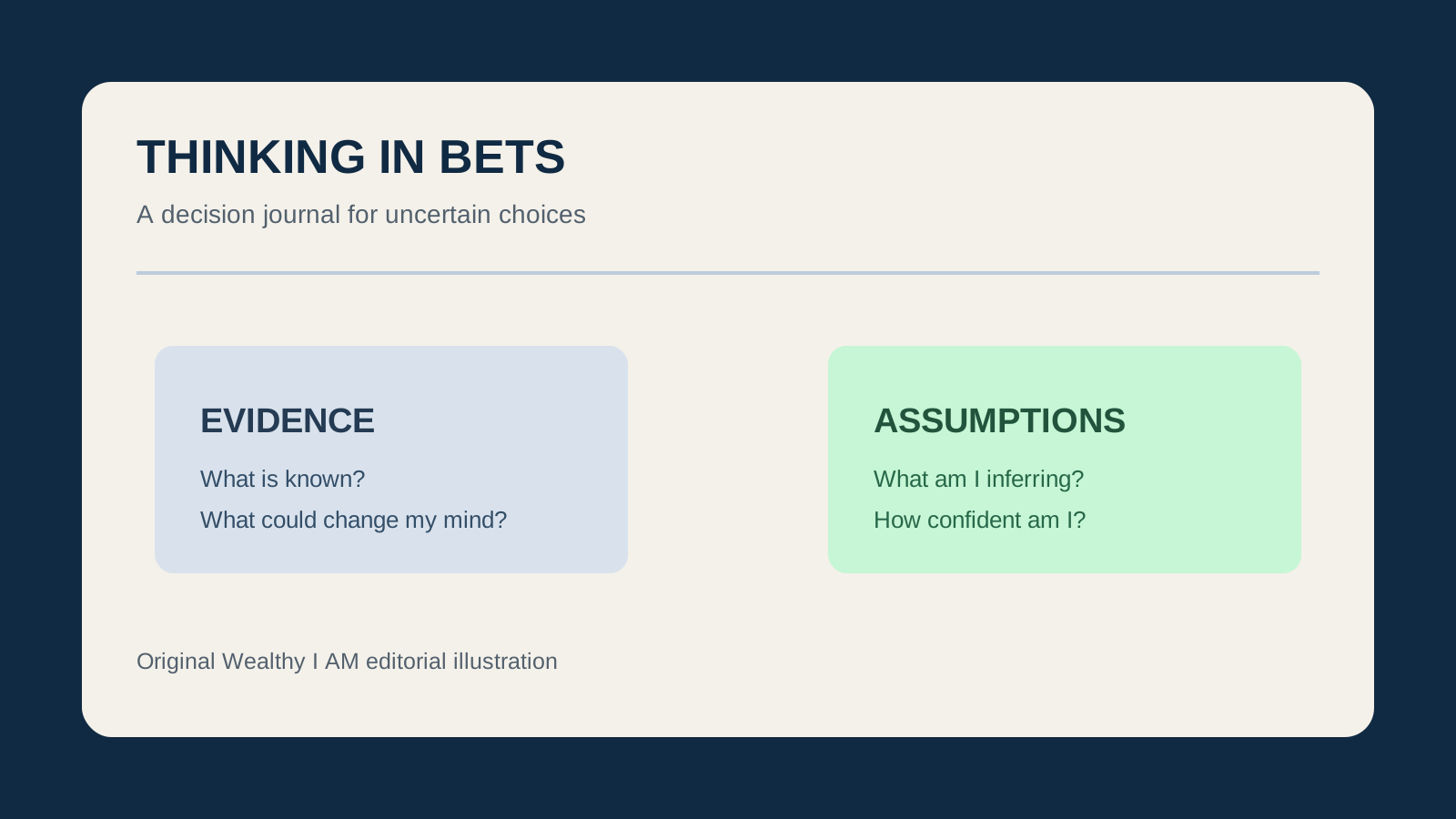
A useful money review should answer three questions: What comes in? What must go out? What is each dollar supposed to do? Clarity turns vague stress into a list of decisions.
2. Build a spending plan that reflects real life
Aliche does not present budgeting as punishment. The point is to give spending a job while leaving room for values, joy, and imperfection. A plan that ignores irregular expenses will fail even when your intentions are good, so include annual bills, maintenance, gifts, and other predictable surprises.
Start with a one-month plan. Separate essentials, priorities, and optional spending. Then review what actually happened without shame. The goal is a feedback loop, not a perfect forecast.
3. Make your safety net visible
Emergency savings creates options. It can keep a broken appliance, job interruption, or medical bill from immediately becoming high-cost debt. Begin with a small starter reserve if necessary, then build toward an amount appropriate to your household, income stability, and obligations.
Keep short-term reserves accessible and distinct from long-term investments. Automating a transfer after payday makes the habit less dependent on willpower.
4. Treat debt and credit as tools to manage
The book separates the emotional weight of debt from the practical work of reducing it. List each balance, interest rate, minimum payment, and due date. Protect minimum payments first, then choose a payoff strategy you can sustain—such as focusing on the highest interest rate or gaining momentum with the smallest balance.
Credit is also part of the picture. Paying on time, checking reports for errors, limiting unnecessary applications, and understanding utilization can improve financial flexibility. Credit is not a measure of personal worth; it is a system with rules you can learn.
5. Increase capacity, then invest with purpose
Cutting waste has limits. Earning more can widen the gap between income and expenses, especially when paired with a plan for saving and investing. Consider skills to develop, responsibilities to negotiate, services to offer, or opportunities to change roles.
Investing comes after the foundation is becoming stable, not because investing is unimportant, but because the right order reduces the chance that a short-term emergency will force a long-term decision. Learn the basics of diversification, fees, risk, time horizon, and tax-advantaged accounts. Match the strategy to the goal instead of chasing whatever is currently exciting.
Step by step: apply the book in 30 days
- Days 1–3 — Gather the facts. Download statements, list debts, identify recurring charges, and calculate average monthly take-home income.
- Days 4–7 — Name the priorities. Choose one immediate risk, one stability goal, and one future goal. Examples include catching up on bills, building a starter reserve, and beginning retirement contributions.
- Week 2 — Give every dollar a role. Create a realistic spending plan, including irregular expenses. Cancel or renegotiate one low-value recurring cost, then redirect that amount deliberately.
- Week 3 — Install protection. Automate savings, confirm beneficiaries where appropriate, review insurance gaps, and check your credit reports through legitimate official channels.
- Week 4 — Build the next income and investing move. Schedule two hours for a skill, proposal, application, or conversation that could increase income. If your foundation allows it, set or increase an automated diversified investment contribution.
At the end of the month, hold a short review. What improved? What was unrealistic? What single adjustment will make next month easier? Repeating this review is more valuable than designing a complex system you will abandon.
What the book does especially well
Aliche makes personal finance approachable without pretending that every reader has the same income, family structure, or starting point. The sequence is practical, and the idea of financial wholeness prevents readers from over-focusing on one metric while ignoring protection, earning, or behavior.
The book is also a reminder that money skills are connected to dignity. A plan should help you make choices with less panic, not give you another reason to feel behind.
A balanced reading
This is a strong foundation, not individualized financial, tax, legal, or investment advice. The exact emergency-fund target, debt strategy, insurance needs, and investment choices depend on circumstances. Readers should verify current rules and consult qualified professionals when a decision is complex or high stakes.
Bottom line
Get Good with Money is most useful when read as a sequence of small upgrades. First see the whole picture. Then stabilize cash flow, reduce avoidable risk, strengthen earning power, and invest consistently for defined goals. Financial wholeness is not a finish line; it is the practice of making money serve a life you actually want.
Sources and credits
- Publisher page: Get Good with Money
- Amazon.com product page (ASIN B08DMWLNGC)
- Author’s official site
- Cover credit: matched Rodale Books edition cover, displayed for identification and review purposes.