Purple Cow: Transform Your Business by Being Remarkable by Seth Godin begins with an image that is hard to forget: a field full of ordinary cows would become interesting the moment one of them was purple. The metaphor is simple, but the business point is demanding. In crowded markets, being competent and familiar is often not enough to earn attention. A product, service, or idea must be meaningfully different—and useful enough—to make people notice and talk about it.
That lesson matters to anyone building wealth through a business, a career, or a creative project. More promotion cannot reliably rescue an ordinary offer. Distinctive value, clear positioning, and a willingness to serve a specific group can create the attention that turns into customers, referrals, and durable revenue. Godin’s book is not a promise of instant success; it is an invitation to design something worth choosing.
The central idea: remarkable beats merely visible
Godin argues that traditional advertising is losing power because people are surrounded by messages. They skip, filter, ignore, or forget most of them. The old approach—make an average product and buy enough attention—becomes increasingly expensive when customers have abundant choices and abundant information.
His alternative is to put the “purple cow” into the product itself. Remarkability does not mean being strange for its own sake. It means creating a noticeable feature, experience, point of view, or result that matters to a particular audience. A remarkable offer gives early customers a reason to pay attention and a story they can pass to others.
This requires a shift in priorities: marketing is not only what happens after a product is finished. Product design, customer experience, pricing, packaging, distribution, and service all communicate what makes the business worth remembering.
Practical lessons from Purple Cow
1. Stop trying to please everyone
An offer designed for everybody usually sounds generic to each person. The first practical move is to choose a smaller group with a clear problem, preference, or identity. Specificity gives you room to make a stronger promise than a broad competitor can make.
Write one sentence: “This is for ___ who want ___ but struggle with ___.” If you cannot complete it without vague words, your market may still be too broad. A narrow starting point is not a permanent limitation; it is a way to learn faster and earn a reputation with people who care.
2. Build the difference before promoting it
Ask what a customer would notice in the first five minutes of using your offer. Is it faster, simpler, more personal, more transparent, more beautiful, more specialized, or more effective for a specific situation? “High quality” is important but rarely distinctive on its own. Turn quality into a concrete experience people can describe.
For a service, that might be a clear fixed-price package, an unusually fast first result, or a useful follow-up system. For a product, it might be a focused design that solves one frustrating problem better than a collection of average features.
3. Design for the right early adopters
Not every customer wants novelty. Early adopters are more willing to try something new, discuss it, and tolerate the rough edges of an evolving offer. They can help a small business cross the gap between invisibility and credibility.
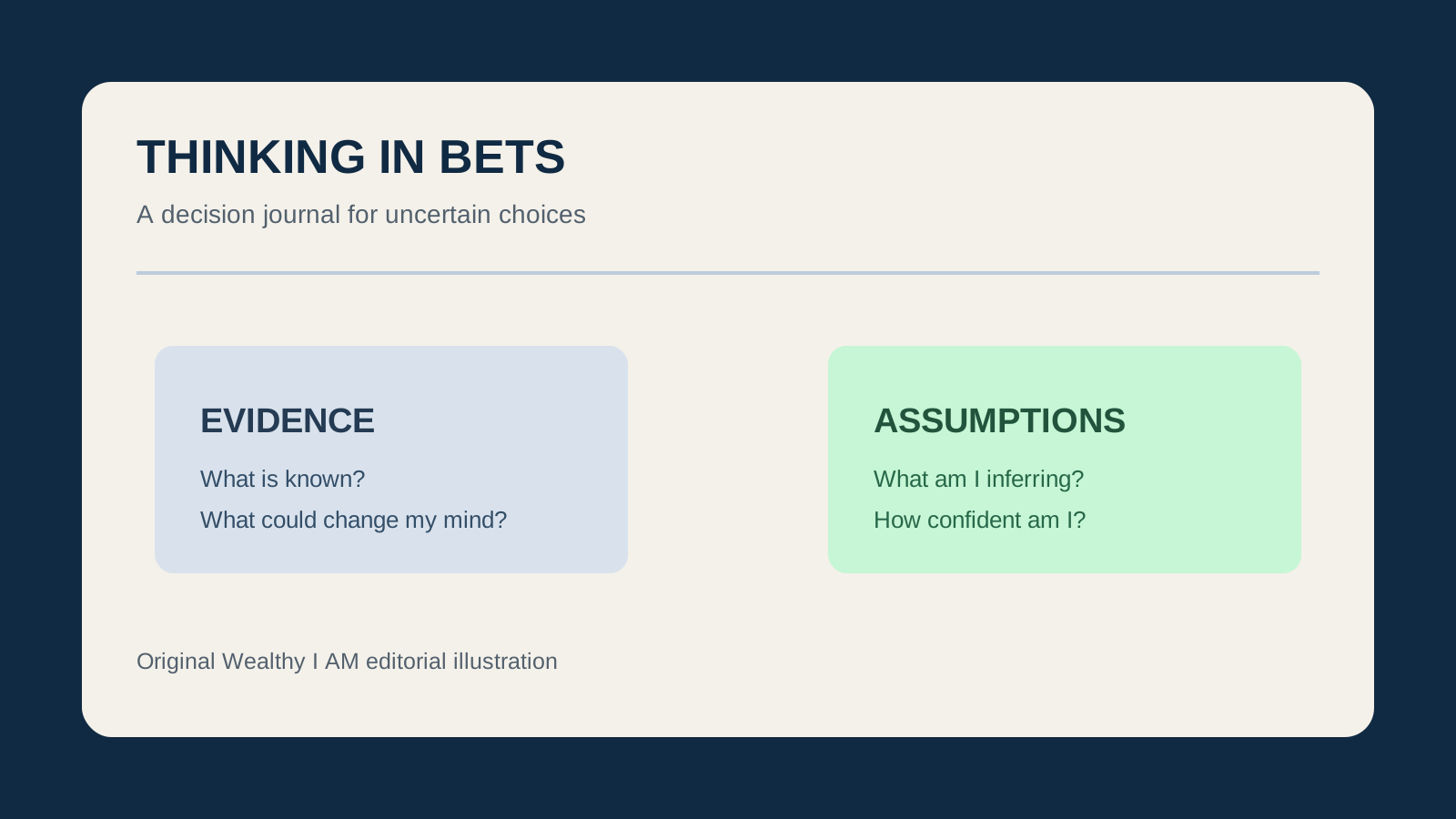
Find communities where people already discuss the problem you solve. Listen for the language they use, offer a small pilot, and treat feedback as evidence. Do not confuse enthusiasm with demand: the strongest signal is behavior such as a purchase, referral, repeat use, or a serious commitment to a trial.
4. Make word of mouth easier
People share stories, not specifications. Give customers a simple way to explain what you do and why it helped them. A memorable result, a useful comparison, a distinctive process, or a generous surprise can become a natural conversation starter.
Never depend on customers to invent your message from nothing. Explain the problem, the difference, and the outcome in plain language. Then invite honest recommendations instead of pressuring people to promote you.
5. Take a calculated risk
Remarkable work often feels risky because it rejects the safest-looking consensus. But risk should be managed, not worshiped. Test the unusual idea with a limited audience, a small budget, or a time-boxed experiment before committing the business’s survival.
Set a learning budget and a success measure in advance. For example, spend a fixed amount to test a new offer with twenty qualified prospects; measure conversations, paid trials, retention, and contribution margin. A failed experiment can still create valuable information if the downside was contained.
6. Do not copy the visible winner
By the time an unusual strategy becomes obvious, the opportunity may be crowded. Copying a successful company’s surface features rarely reproduces the conditions that made it successful. Study the underlying customer problem and look for an underserved angle that fits your own capabilities.
Your advantage may come from a combination that looks ordinary in isolation: industry knowledge plus teaching skill, design plus operational reliability, or local trust plus a digital channel. Distinctiveness is often created by choosing a combination others have overlooked.
7. Keep improving after attention arrives
Being noticed is only the beginning. If the experience does not deliver, attention turns into disappointment. Track what customers value, what they abandon, and what they recommend. Improve the core promise before adding decorative extras.
For wealth building, this is crucial. Revenue from a launch is not the same as durable wealth. Durable wealth comes from repeatable value, healthy margins, customer trust, retained earnings, and an offer that remains relevant.
A step-by-step “remarkable offer” exercise
- Choose one audience: Name a specific group you understand and can reach without exhausting your resources.
- List the ordinary options: Describe what customers currently buy, including the compromises they accept.
- Find one meaningful edge: Pick a single improvement that would make the result noticeably better for this audience. Avoid a long feature list.
- Write the promise: State the customer, problem, distinctive approach, and expected result in one clear paragraph.
- Build a small test: Create the simplest paid pilot, sample, landing page, or service package that can produce real behavior.
- Invite specific feedback: Ask what was most useful, confusing, memorable, and worth paying for. Watch actions as carefully as words.
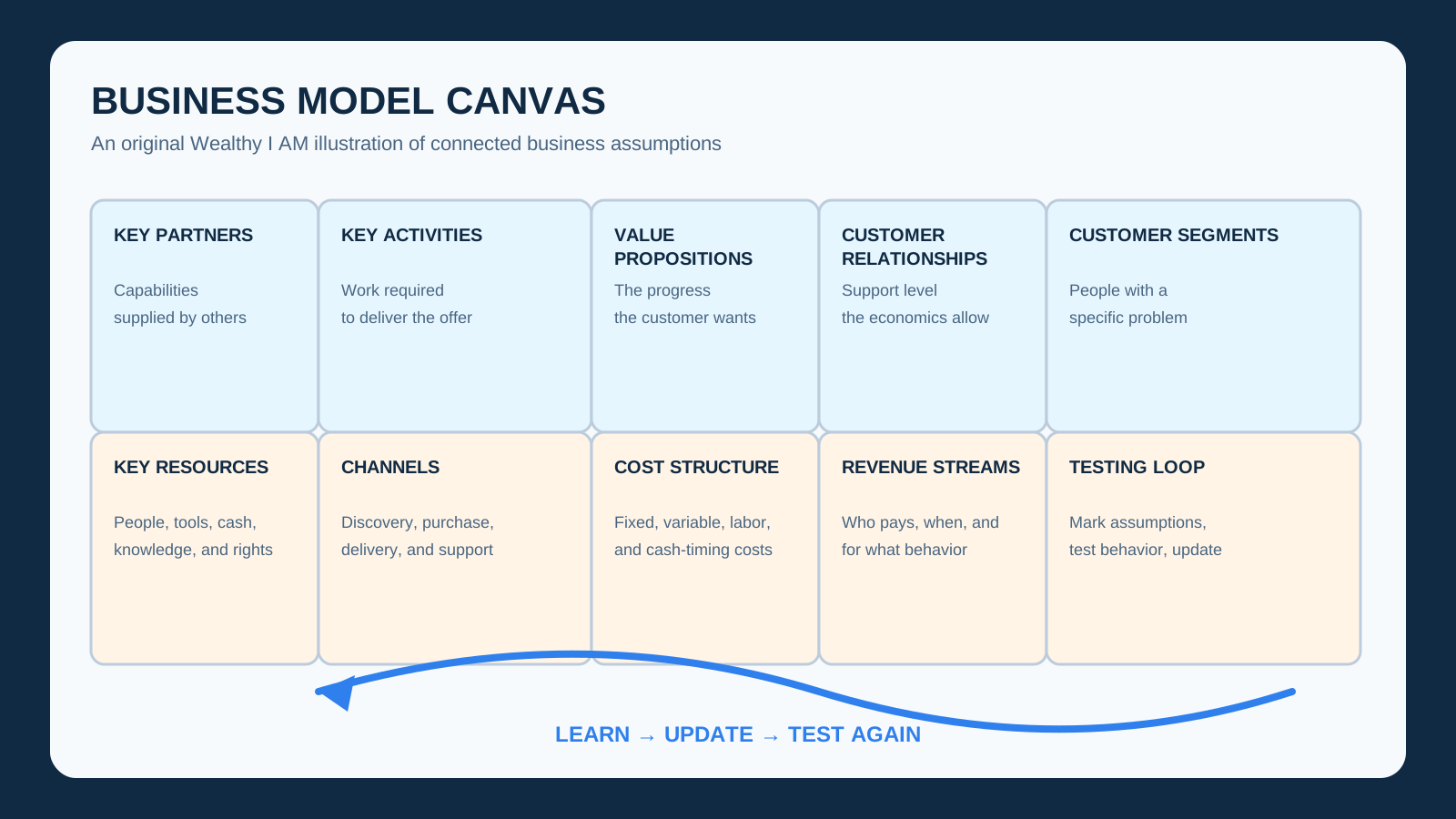
- Measure the economics: Record price, direct costs, time, conversion, repeat demand, referrals, and cash impact. Keep the idea only if it can become a healthy business.
- Refine and document: Improve the offer, write down the process, and make the result easier to deliver consistently.
How to apply the book without chasing gimmicks
Remarkability is not permission to exaggerate, deceive, or manufacture controversy. A loud promise that produces a weak result damages trust and creates expensive refunds or reputation problems. The durable version of Godin’s lesson is honest differentiation: do something noticeably useful for a group that can recognize the value.
It is also worth pairing this marketing idea with financial discipline. Keep fixed costs manageable, protect a cash reserve, separate business and personal money, and understand the taxes and legal duties that apply to your work. A remarkable idea still needs pricing, delivery, and risk management.
Bottom line
Purple Cow challenges the comfortable belief that consistent effort and more advertising will automatically make a business visible. Godin’s more powerful question is: what are you building that deserves attention? Choose a focused audience, create a concrete difference, test it with real customers, and measure whether attention becomes profitable value. That process can turn an overlooked idea into a trusted business—and give wealth building a stronger foundation than imitation ever could.
Sources and credits
- Amazon.com product page — Purple Cow by Seth Godin, ISBN 9781591840213
- Penguin Random House publisher page — Purple Cow, New Edition
- Google Books bibliographic record for the matched 2003 edition
- Cover credit: Google Books image for the matched edition; the article links to the corresponding Amazon.com product page.