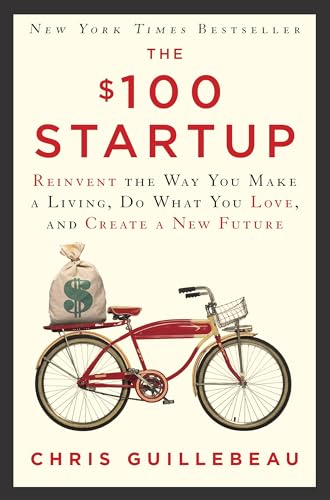
The $100 Startup by Chris Guillebeau challenges the belief that building a useful business requires a large investment, an impressive résumé, or permission from someone else. Its examples show ordinary people turning skills, interests, and experience into modest but meaningful income streams.
The book is not a promise that every business can begin with exactly one hundred dollars, nor is it an argument for ignoring risk. Its more durable message is to begin with a real customer problem, make a clear offer, and test whether people will pay before spending heavily. That approach can help a wealth builder protect cash while creating more control over income and time.
The central idea: value creates the opportunity
Guillebeau’s research focuses on people who built businesses from relatively small investments. The common thread is not a magical idea. It is the overlap between something a person can do, a specific group of people who needs help, and a practical way to exchange that help for money.
This is a useful wealth lesson because it shifts attention from startup theater to economics. A logo, elaborate website, and business cards may be helpful later, but none proves demand. A paying customer does. The first objective is therefore not to look like a company; it is to create a small result that someone values enough to buy.
Lesson 1: Start with assets you already possess
Many aspiring entrepreneurs search for a completely original idea and overlook their existing advantages. Your assets may include a professional skill, a hobby, a network, local knowledge, a painful problem you have already solved, or the ability to explain something clearly.
Make a three-column inventory. In the first, list things you can do reliably. In the second, list questions people regularly ask you or tasks they avoid. In the third, list groups you understand well. Look for combinations. A skill becomes more valuable when it is attached to a clearly understood customer and a specific outcome.
Lesson 2: Find the intersection of skill and demand
Passion alone is not a business model. People pay for outcomes: saved time, reduced stress, increased revenue, better health, convenience, confidence, or access to a desired experience. Ask potential customers what they currently do, what the problem costs them, and what they have already tried.
Do not ask only whether they like your idea. Ask about their behavior. Have they spent money on a workaround? How urgent is the problem? What would improve if it disappeared? Evidence from real behavior is more useful than compliments.
Lesson 3: Package a simple, concrete offer
A vague promise is difficult to buy. Turn your ability into a defined package with a customer, deliverable, timeline, and price. For example: “I help independent restaurants create a four-week email campaign that brings back past customers.” The offer is easier to understand than “I do marketing.”
Start with one result instead of a long menu of services. Narrowness makes delivery easier to improve and gives you a clearer way to explain your value. Once the first offer works, you can add related options based on what customers actually request.
Lesson 4: Sell before you build too much
One of the book’s strongest practical lessons is that action beats excessive preparation. Before buying equipment or building a large product, invite a small number of qualified prospects to purchase a pilot. A deposit, paid trial, or scheduled project gives you better information than months of private planning.
This is not an excuse to deliver poor work. It is a way to keep the first version small enough to learn from. State exactly what is included, what it costs, and when the customer receives it. Then deliver carefully and ask what would make the result more valuable.
Lesson 5: Price for value and sustainability
Low startup cost does not mean low price. If an offer saves a business ten hours, prevents an expensive mistake, or helps create revenue, pricing should reflect the result and the effort required to deliver it. Underpricing can create a business that appears busy but cannot pay its owner fairly.
Calculate direct costs, taxes, payment fees, preparation time, delivery time, customer support, and a reserve for slow periods. Then choose a price that leaves room for profit. Profit is not greed; it is the fuel that lets a small business survive, improve, and serve customers consistently.
Lesson 6: Keep the model lean, but not careless
Lean means avoiding unnecessary fixed costs and complexity. It does not mean refusing every useful investment. Spend when the expense improves the customer result, reduces a meaningful risk, or frees time for higher-value work. Delay expenses that merely make the business look more established.
Track a few numbers every week: cash on hand, revenue, direct costs, hours worked, leads, conversion rate, and repeat purchases. These figures reveal whether you are building income or simply creating activity. Keep personal and business money separate, set aside taxes, and maintain an emergency reserve.
Lesson 7: Build a business around freedom and purpose
Guillebeau’s case studies are not all chasing the same definition of success. Some people want to replace a job; others want flexible hours, travel, meaningful work, or enough income to support a particular life. Define your version before growth defines it for you.
Write down a “freedom target”: the monthly profit you need, the hours you want to work, the customers you prefer, and the activities you will protect. This target helps you reject attractive opportunities that would make the business less healthy. More revenue is useful only when it improves the life the revenue is meant to support.
A practical 30-day plan
- Days 1–3: list your assets. Write ten skills, experiences, interests, or relationships that could help someone.
- Days 4–7: choose a customer. Speak with five people in one group and document the problems they already spend time or money solving.
- Week 2: create one offer. Describe a single outcome, price, delivery date, boundaries, and payment method in one page.
- Week 3: seek paid pilots. Contact ten qualified prospects. Treat objections as research, but do not confuse polite interest with demand.
- Week 4: deliver and review. Complete the work, request specific feedback, calculate the true margin, and improve the offer before adding complexity.
What to remember
The book’s low-cost approach works best when paired with responsibility. Some businesses require licensing, insurance, specialized equipment, or professional advice. “Start small” never means ignore legal duties, customer safety, taxes, or promises. It means learn at a scale where mistakes are affordable and improvements are fast.
The $100 Startup ultimately presents entrepreneurship as a practical exchange: help a particular person achieve a result, get paid fairly, and use the income to build a more independent life. Wealth can begin with a large investment, but it can also begin with attention to a small problem, a useful offer, and the courage to test it in the real world.
Sources and credits
- Penguin Random House: The $100 Startup by Chris Guillebeau — publisher description and bibliographic details
- Chris Guillebeau: official book page
- Amazon.com product page for the matched Crown Currency hardcover, ISBN 9780307951526
- Cover credit: Amazon.com product image for the matched ISBN 9780307951526 hardcover edition.