Marketing is often treated as a loud contest of features, budgets, and clever campaigns. The 22 Immutable Laws of Marketing takes a sharper view: before customers compare products, they form a position in their minds. Al Ries and Jack Trout argue that durable growth comes from owning a clear idea, entering a category intelligently, and resisting the temptation to mean everything to everyone.
For a founder, creator, or professional building financial security, that is a wealth lesson as much as a marketing lesson. A differentiated reputation can make your work easier to notice, easier to remember, and easier to value. The book’s “laws” are not scientific laws, and some examples reflect the media landscape of the early 1990s. But its central question remains useful: What single idea can your customer associate with you?

Book facts
- Book: The 22 Immutable Laws of Marketing: Exposed and Explained by the World’s Two Leading Marketing Experts
- Authors: Al Ries and Jack Trout
- Original publication: 1993
- Verified U.S. product: HarperBusiness paperback, ISBN 0887306667; the Amazon listing uses the subtitle “Violate Them at Your Own Risk!”
- Core subjects: Positioning, category creation, perception, focus, competition, timing, and marketing resources.
The central idea: marketing happens in the mind
Ries and Trout distinguish between what a company believes it sells and what a customer believes the company represents. A business may describe itself with a long list of services, but the market usually remembers a shorter association. The practical implication is not to manipulate people; it is to make your value easy to understand.
This matters for wealth creation because attention is scarce. If nobody can quickly explain why your offer is different, referrals weaken, sales take longer, and your marketing becomes dependent on constant promotion. Positioning gives effort a direction.
Seven practical lessons from the book
1. Choose a category before you write a slogan
The authors’ law of leadership says being first in a category can be more powerful than arriving later with a technically superior product. If you cannot be first in an existing category, create a narrower one that you can credibly lead. A consultant might be one of many business consultants, or the first consultant for a specific type of independent retailer facing a specific problem.
Action: Write three category statements beginning “I help ___ with ___.” Pick the narrowest version that still describes a real, valuable market.
2. Own one word or idea
A strong position is compact. The law of focus encourages a business to associate itself with a single word in the prospect’s mind: speed, simplicity, privacy, reliability, or another meaningful benefit. The word must be believable and supported by the customer experience.
Action: Ask five customers what they would say you are best known for. If the answers differ, choose the association you want to earn and make it visible in your homepage, offer, and proof.
3. Treat perception as part of the product
The law of perception does not mean facts are irrelevant. It means buyers interpret facts through a prior frame. Two similar offers can feel very different when one is clear, trusted, and consistently presented. A good product with confusing positioning may lose to a simpler product that customers understand.
Action: Review your first impression: headline, pricing language, testimonials, visual identity, and onboarding. Remove claims that sound interchangeable with competitors.
4. Narrowing can increase your reach
The law of sacrifice says focus requires saying no. Trying to serve every audience, offer every feature, or occupy every price point creates a blurry brand. Narrowing feels risky because it appears to reduce opportunity, but it can make the right customers feel seen and make delivery more efficient.
Action: List the customer, problem, and service you will not pursue for the next 90 days. Use the saved time to improve the offer for the people you can serve best.
5. Build a new category when competition is crowded
Category design is one of the book’s most useful entrepreneurial ideas. Instead of asking how to beat ten established competitors at their own game, ask what meaningful comparison customers are not yet making. A new category should describe a real difference, not just add a fashionable label.
Action: Interview ten potential buyers. Note the phrases they use to describe their problem. Look for a recurring need that existing categories fail to express, then test a plain-language category name.
6. Respect timing, resources, and consistency
Good positioning still needs execution. The laws of timing and resources remind readers that a message requires enough runway, distribution, and repetition to become familiar. This is a useful guard against spending every dollar on a launch while neglecting follow-up, customer service, or cash reserves.
Action: Set a modest 90-day marketing budget, a repeatable publishing or outreach rhythm, and one metric tied to business value—qualified conversations, trials, conversions, or retained customers.
7. Let a weakness become credible differentiation
The law of candor suggests that admitting a genuine weakness can make a later strength more believable. Customers are skeptical of perfection. Honest boundaries can create trust when they clarify who the offer is and is not for.
Action: Name one limitation plainly, then explain the trade-off that makes your offer stronger for a particular customer. Do not manufacture a flaw; use candor only when it is true.
A simple positioning exercise
- Describe the customer: Choose one audience with a problem you understand.
- Name the old alternative: What do they use or do today?
- State the difference: What outcome or experience do you provide that is genuinely distinct?
- Prove it: Gather a case study, demonstration, metric, or customer quote.
- Repeat consistently: Use the same core idea across your offer, content, conversations, and follow-up.
- Review quarterly: Keep the position if customers recognize it and the economics work; adjust only when evidence demands it.
What to be careful about
The book is intentionally provocative. Its rules can be valuable as strategic prompts, but they should not replace customer research, ethical judgment, product quality, or financial discipline. “Being first” is not a license to make an unsupported claim, and a memorable position cannot rescue an offer that fails to deliver.
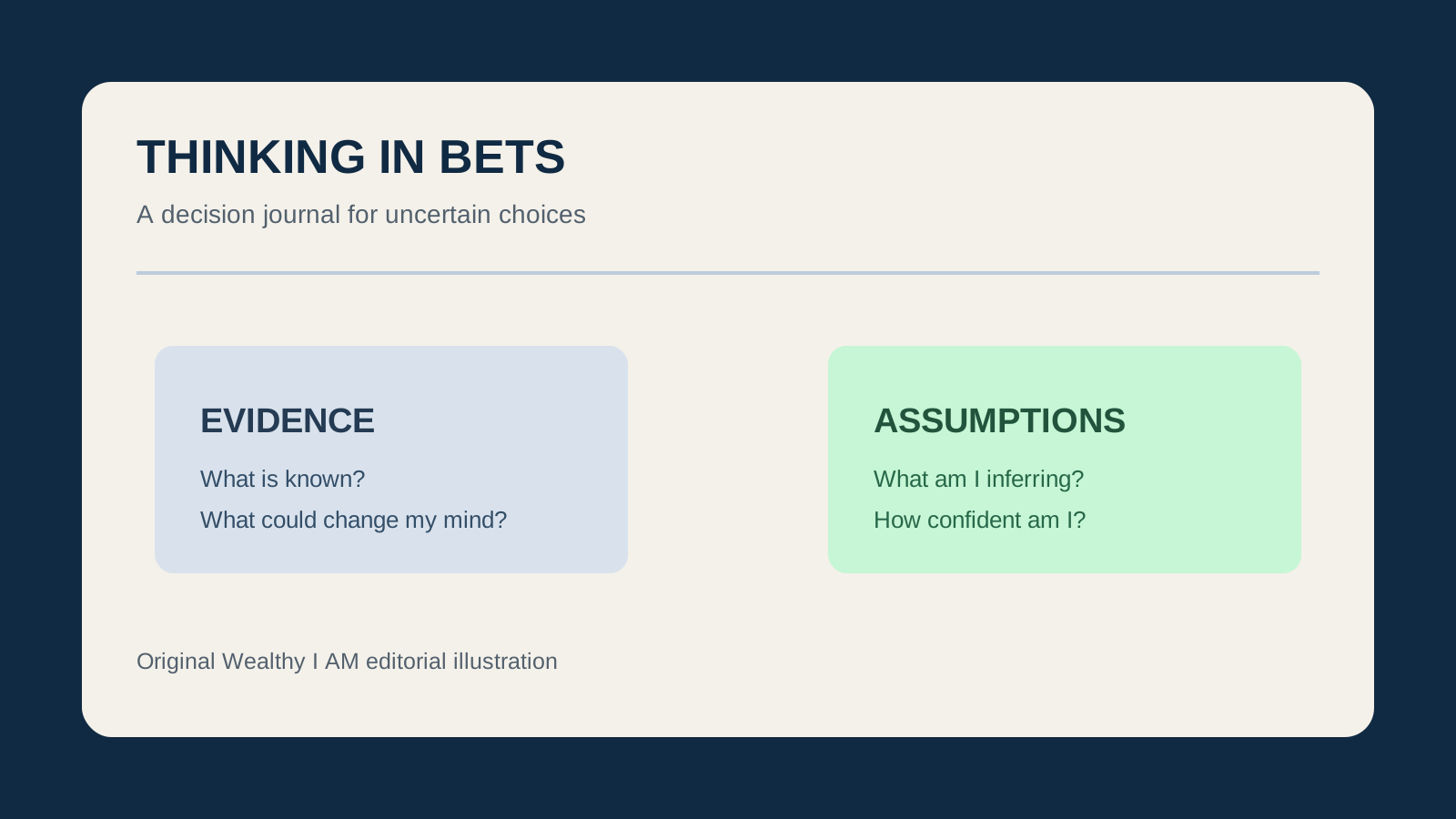
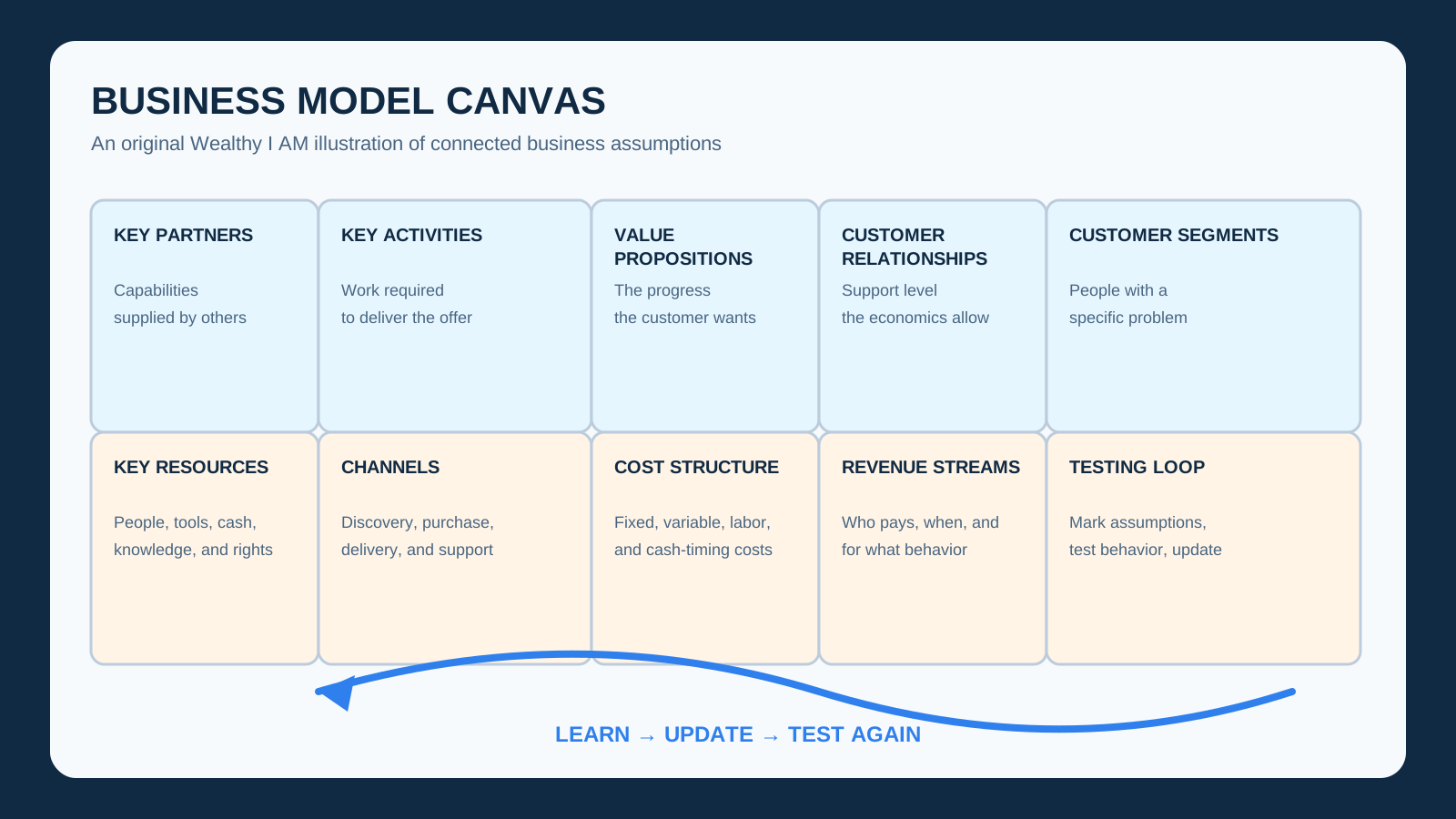
Some of the book’s company examples are dated, and markets today can be tested quickly through digital channels. Use the principles as hypotheses: observe what customers understand, what they pay for, and what they remember. Let evidence refine the positioning.
Bottom line
The 22 Immutable Laws of Marketing is a concise reminder that business value is not created only inside the product. It is also created in the clarity of the promise, the category you choose, the reputation you build, and the consistency with which you deliver. For wealth builders, the practical takeaway is simple: become known for a valuable difference, serve a specific customer well, and invest resources where trust and demand can compound.
Sources & credit
- HarperCollins publisher page — bibliographic and publisher reference.
- Amazon.com product page — verified U.S. paperback listing, ISBN 0887306667, and matched product reference.
- Amazon-hosted cover image — matched cover image credit to the publisher/rightsholder.