Building wealth through investing is less about finding a perfect prediction and more about making fewer serious mistakes. In The Most Important Thing: Uncommon Sense for the Thoughtful Investor, Howard Marks explains why sound investing depends on judgment, risk awareness, patience, and the ability to think beyond the obvious. His central lesson is not a stock tip; it is a way to reason when markets are emotional and uncertain.
Marks draws on decades in investment management to explore how price relates to value, why risk is more than volatility, how cycles shape opportunity, and why defensive discipline often matters more than bold forecasts. The book is especially useful for readers who want a calmer framework for protecting capital and compounding it over time.
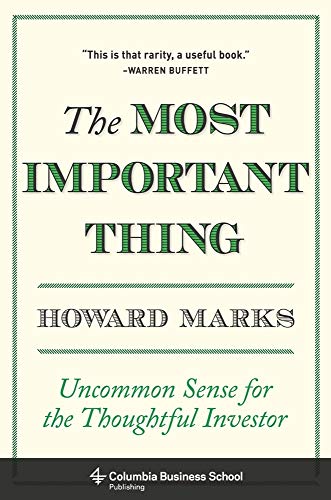
Book facts
- Title: The Most Important Thing: Uncommon Sense for the Thoughtful Investor
- Author: Howard Marks
- First published: 2011
- Publisher: Columbia Business School Publishing, an imprint of Columbia University Press
- Core subjects: second-level thinking, value, risk, market cycles, contrarianism, and patient opportunism
What Howard Marks means by “the most important thing”
The title is deliberately provocative. Marks examines one essential investing idea after another: thinking differently, understanding value, recognizing risk, studying cycles, and controlling emotion. Rather than reduce investing to one magic formula, he argues that successful decisions usually come from combining several forms of good judgment. The investor’s job is to build a process that remains useful when the future cannot be known with certainty.
That makes the book valuable beyond the stock market. Entrepreneurs allocating cash, professionals deciding where to focus, and families weighing financial risk all face the same underlying problem: limited information and uncertain outcomes. A thoughtful process cannot remove uncertainty, but it can improve the quality of choices made inside it.
Five practical lessons from the book
1. Practice second-level thinking
First-level thinking says, “This is a good company, so its stock should rise.” Second-level thinking asks, “What does the market already expect, what is the price assuming, and what could make that expectation wrong?” The difference is not complexity for its own sake. It is the discipline of considering the other side of an attractive story.
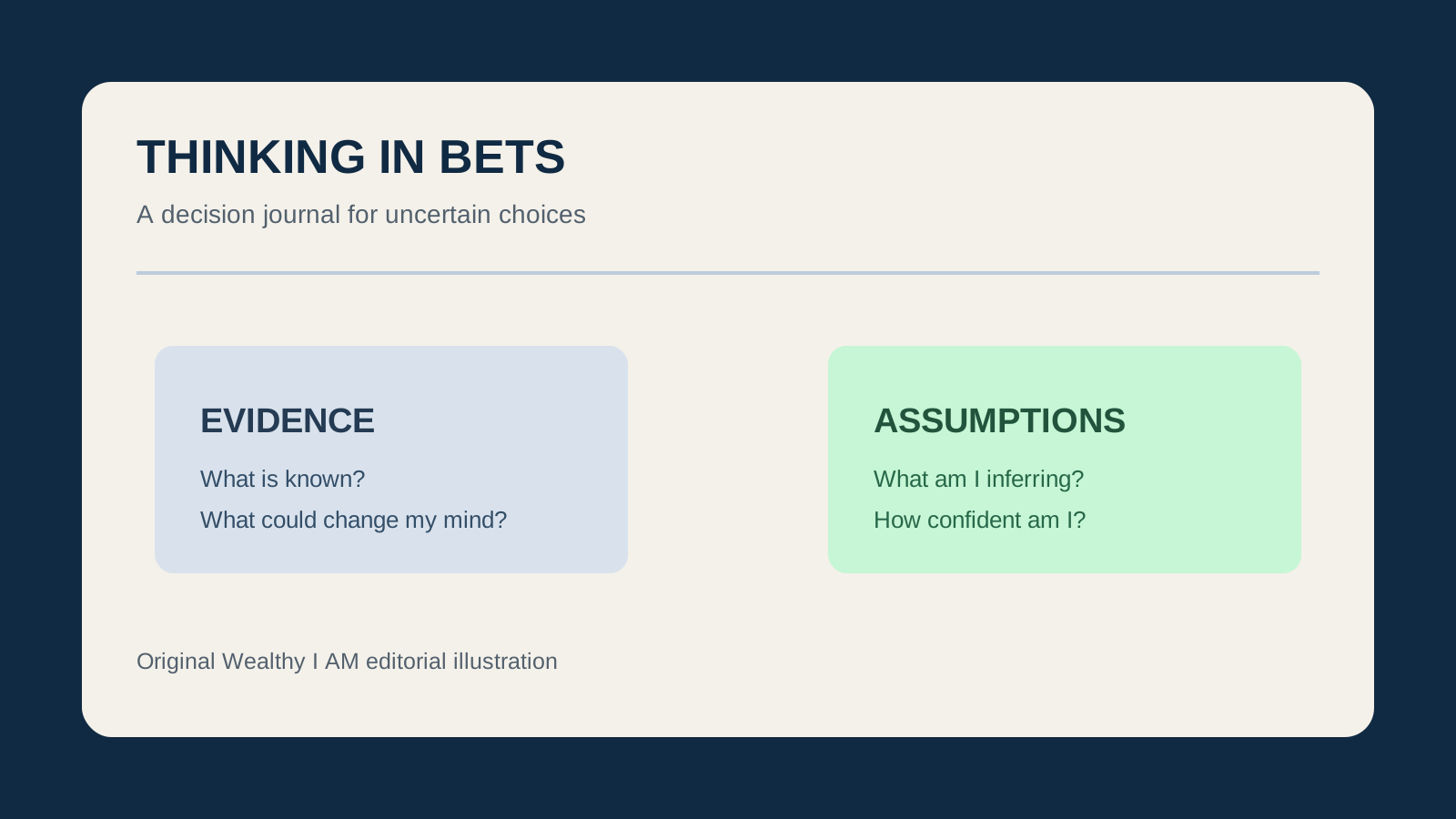
Try it: Before buying an investment, write down the popular thesis, the assumptions already reflected in the price, and at least two ways the outcome could differ. If you cannot explain both the opportunity and the consensus view, your research is incomplete.
2. Separate price from value
A rising price does not automatically prove that an asset has become more valuable, and a falling price does not automatically make it cheap. Marks repeatedly returns to the relationship between what something is worth and what you must pay for it. Value estimates are imperfect, but the habit of asking “What am I receiving for this price?” is a powerful defense against excitement.
Try it: Describe an investment’s earning power, balance-sheet strength, competitive position, and plausible range of outcomes before looking only at its recent chart. Then compare that assessment with the price and your margin for error.
3. Treat risk as the possibility of permanent loss
Volatility is visible, so investors often use it as a shortcut for risk. Marks distinguishes movement from the deeper danger: losing capital permanently or earning far less than needed. A stable-looking asset can be risky when its price assumes unrealistic growth; a volatile asset can be less dangerous when its value and balance sheet provide protection.
Try it: For every major financial decision, identify the downside scenario, the conditions that could cause it, and how much of your plan depends on avoiding it. A position that would damage your life if it failed is too large, regardless of how confident you feel.
4. Learn where you are in the cycle
Markets swing between optimism and pessimism. Credit becomes easy, then tight; investors become eager to take risk, then desperate to avoid it. Marks does not present cycle awareness as a reliable short-term timing system. Instead, it is a way to adjust expectations and exposure. When enthusiasm is extreme, future returns may be less attractive and risks easier to ignore. When fear dominates, bargains may become more available—but they still require analysis.
Try it: Keep a simple quarterly note describing valuation, credit conditions, investor mood, and your own emotional state. The goal is not to predict the next turning point. It is to notice when your assumptions are being shaped by the crowd.
5. Build a margin of safety through patience
Patient opportunism means being willing to wait until the relationship between price and value is favorable. This is harder than it sounds because inactivity can feel like failure in a constantly moving market. Yet refusing to act is sometimes the most intelligent decision. Cash, diversification, and a willingness to pass can preserve the ability to act when better opportunities appear.
Try it: Define your minimum conditions for an investment before you research individual names. If nothing qualifies, keep learning and protect your capital. A watchlist is useful only when it does not pressure you into buying.
A step-by-step reading-to-action plan
- Write your investing objective. State the time horizon, required return, liquidity needs, and amount of loss you can genuinely tolerate.
- Create an evidence sheet. Record the asset’s value drivers, price, debt, competition, and the assumptions behind your expected return.
- Run a disconfirming review. Look specifically for facts that challenge your thesis. Ask what a skeptical but informed investor would say.
- Size for uncertainty. Keep any single decision small enough that being wrong will not destroy your plan.
- Set review rules. Revisit the thesis when facts change, not simply because a price moves. Document whether the original reasoning was sound.
What to keep in perspective
This is a philosophy book, not personalized financial advice or a promise of returns. Marks’s frameworks require judgment, and even careful investors can be wrong. Readers should adapt the ideas to their goals, tax situation, time horizon, and need for professional advice. The practical benefit is the process: slowing down, distinguishing uncertainty from ignorance, and refusing to confuse confidence with knowledge.
Bottom line
The Most Important Thing teaches that wealth is built not only by finding upside, but also by controlling avoidable downside. Think one level deeper than the headline, study value rather than price alone, recognize the cycle, and leave room for error. Those habits will not make markets predictable. They can make your decisions more resilient—and resilience is one of the quiet engines of long-term wealth.
Sources and credits
- Columbia University Press: The Most Important Thing — bibliographic details and publisher description.
- Amazon.com product page — matched hardcover/product reference.
- FinNotes: The Most Important Thing — publication and topic reference.
- Cover image credit: Amazon product image for the Howard Marks edition identified above.
Related reading: For a fuller beginner roadmap, see Investing Basics.
Wealthy I AM Action Card
Wealthy I AM Pinterest Copy
TITLE
The Most Important Thing: Practical Lessons on Risk, Value, and Long-Term Wealth
DESCRIPTION
Howard Marks offers practical lessons on risk, value, cycles, patience, and the judgment required to build long-term.
KEYWORDS
The Most Important Thing book summary, Most Important Thing lessons, personal development, wealth building, productivity books
ALT TEXT
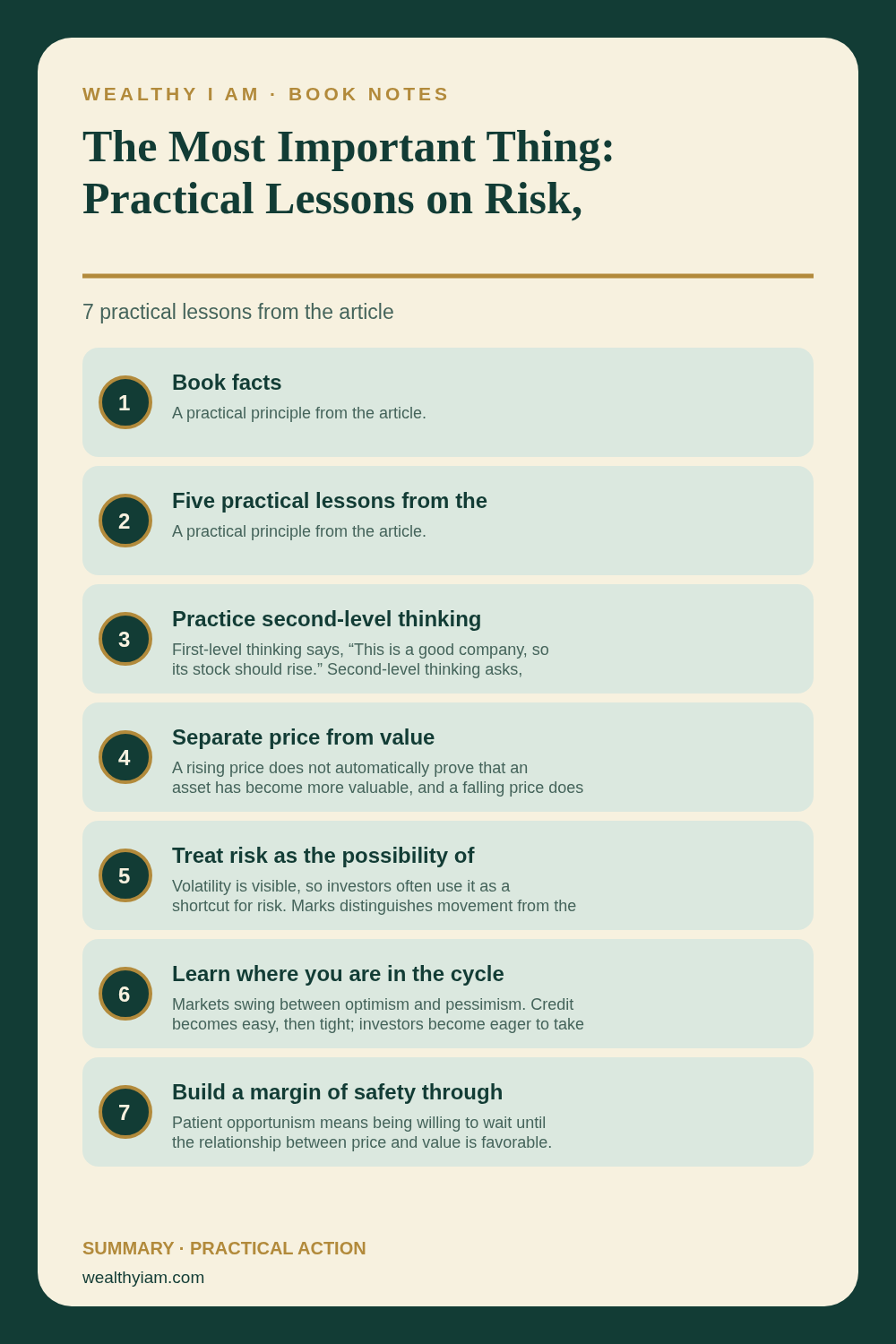
Wealthy I AM visual summary of The Most Important Thing: Practical Lessons on Risk, Value, and Long-Term Wealth
ARTICLE URL
https://nappot.com/the-most-important-thing-practical-lessons-risk-value-long-term-wealth/