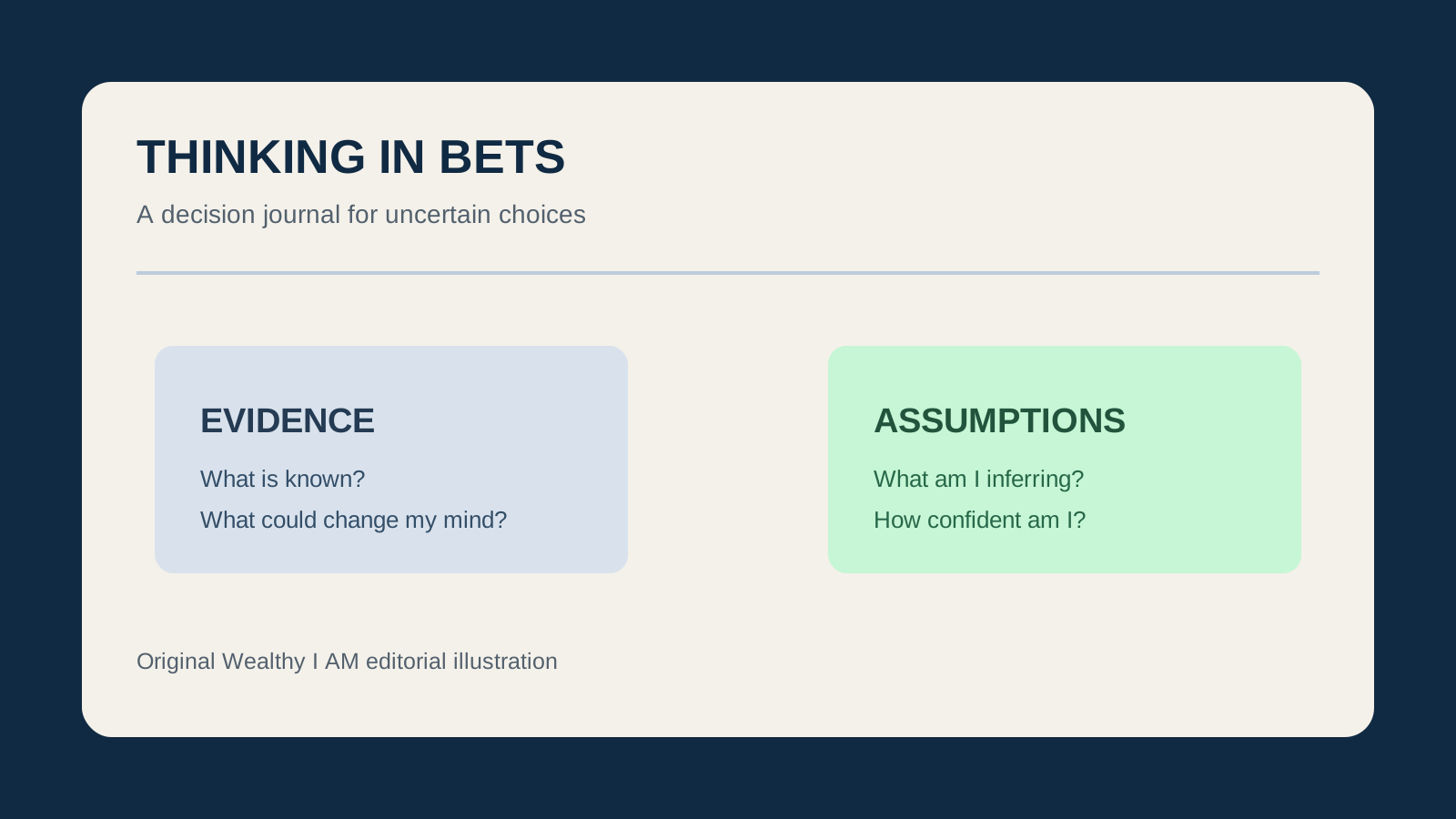
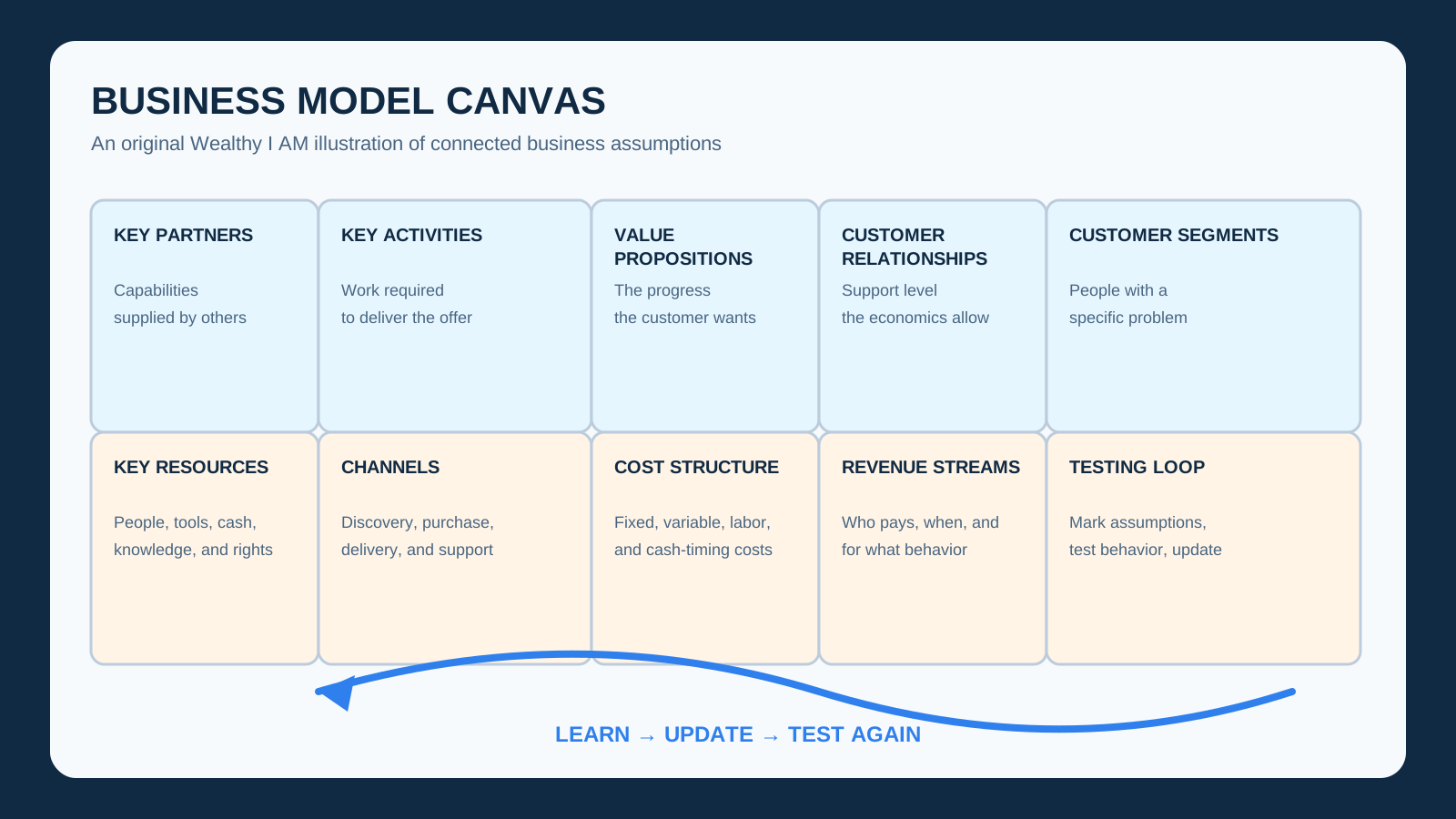
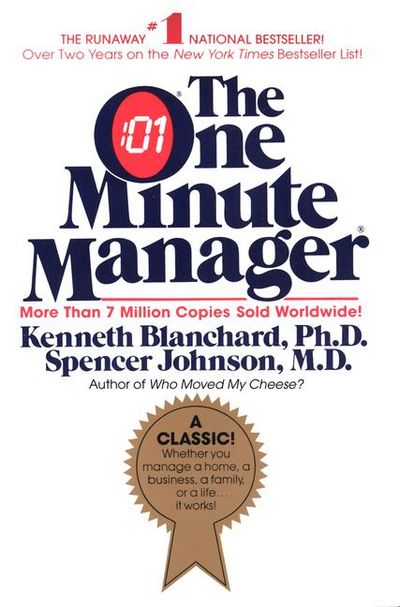
The One Minute Manager by Kenneth H. Blanchard and Spencer Johnson is a short business parable with a practical message: people perform better when they know what matters, receive timely recognition, and are corrected clearly when work misses the mark. The book’s simplicity is its strength. It turns management from a vague personality contest into a repeatable set of conversations.
That lesson extends beyond the office. Clear goals, useful feedback, and respectful accountability help a founder serve customers, a professional grow income, and a household make steady progress toward financial freedom. Wealth is rarely built by motivation alone; it is built by directing effort toward valuable outcomes and learning quickly from results.
The book’s central framework
The authors present three management practices through an easily read story. First, set One Minute Goals: agree on what success looks like and write it in plain language. Second, use One Minute Praisings: notice effective behavior promptly and explain specifically what worked. Third, use a One Minute Reprimand when performance falls short: address the behavior quickly, make the standard clear, and preserve the person’s dignity.
The point is not that every conversation must literally take sixty seconds. The point is that feedback should be focused, timely, and understandable. Delayed annual reviews and ambiguous expectations make improvement harder for everyone.
Why this matters for wealth
Money follows value, and value is easier to create when effort is coordinated. In a business, unclear priorities lead to rework, missed sales, and frustrated customers. In a career, a person who does not know which results matter may stay busy without becoming more valuable. At home, vague intentions such as “save more” rarely compete well with automatic spending.
The book offers a useful operating rhythm: define the result, act, inspect the evidence, reinforce what works, and correct what does not. Applied consistently, that rhythm can improve the quality of work and the decisions that compound into greater income, stronger businesses, and better financial habits.
Five practical lessons
1. Clarity is a form of respect
People cannot reliably hit a target they cannot see. A good goal names the outcome, the standard, and the deadline. “Improve marketing” is unclear. “Generate 20 qualified sales conversations by the last day of the month using two tested offers” gives a person something concrete to execute.
Clarity also protects relationships. When expectations are explicit, feedback can address the agreed result rather than becoming a personal judgment.
2. Put goals where they can be reviewed
A goal hidden in a meeting or inbox is easy to forget. Keep a short written list visible. For personal wealth, this might include a monthly savings amount, a debt payoff milestone, one skill-development target, and a business or career output that can raise earning power.
3. Praise the behavior you want repeated
Generic compliments are pleasant but weak. Specific recognition teaches. “Your preparation made the client decision easy because you showed three options with costs and trade-offs” tells someone what to repeat. The same principle works personally: acknowledge the concrete action—automating savings, finishing a sales call, or studying a valuable skill—rather than waiting for a dramatic result.
4. Correct quickly and specifically
When a mistake is allowed to linger, its cost can grow. A constructive correction identifies what happened, explains why it matters, states the expected standard, and makes space for improvement. It should not attack character. A failed campaign is data about an offer or audience; it is not proof that the person is incapable.
5. Trust grows through consistency
Leadership is not a single inspiring speech. It is the repeated experience of clear promises, fair standards, prompt feedback, and follow-through. Trust makes it easier to delegate, sell, negotiate, and build partnerships—all activities that can expand the value a person creates.
A step-by-step wealth application
- Choose one economic outcome. Pick a result for the next 30 days: increase qualified leads, reduce a recurring expense, complete a portfolio of work, or save a defined amount. One priority is more useful than ten slogans.
- Write the goal in one minute. State the result, metric, and deadline. Include the next visible action. If the goal cannot be read quickly, simplify it.
- Schedule a weekly review. Spend ten minutes asking: What was supposed to happen? What actually happened? What is the next action? Keep the tone factual rather than dramatic.
- Catch progress early. Record one behavior that moved the goal forward. Reinforce the system: a good customer conversation, a completed proposal, a transfer to savings, or a focused learning session.
- Correct the process, not the identity. If progress is weak, name the gap. Was the offer unclear? Was the spending limit unrealistic? Was the work interrupted? Change the process and test again.
- Make the result visible to collaborators. Share the goal and standard with a teammate, partner, or accountability friend. Visibility creates useful pressure and reduces misunderstandings.
- Keep a not-doing list. A goal has little force if every distraction remains protected. Remove one low-value commitment, unnecessary expense, or speculative project that competes with the priority.
Example: turning a vague business goal into action
Suppose a consultant says, “I need more money.” That is a desire, not yet a management system. A clearer goal might be: “By June 30, I will have five qualified conversations with small companies that need monthly reporting support and send a proposal within 24 hours of each conversation.” The goal identifies a customer, activity, deadline, and next step.
At the weekly review, the consultant can praise useful behaviors—targeted outreach and fast proposals—and correct the bottleneck if conversations do not happen. Perhaps the message is too broad, or the chosen audience is wrong. This approach turns anxiety into experiments. It also creates evidence about which actions can produce repeatable revenue.
Use the ideas without becoming mechanical
The framework is powerful, but it needs judgment. Not every result can be measured perfectly, and constant correction can feel exhausting if there is no trust. Goals should leave room for initiative. Praise should be sincere, not a manipulation technique. Corrections should be private when possible and should distinguish a one-time mistake from a repeated pattern.
It is also important to remember that wealth is broader than income. A system that raises revenue while destroying health, relationships, or integrity is not a complete success. Clear management should create capacity for a better life, not turn every minute into a transaction.
Bottom line
The One Minute Manager teaches a durable leadership habit: make expectations clear, respond to performance promptly, and treat people with respect while holding a real standard. For wealth building, translate that habit into a small number of measurable goals, weekly reviews, specific encouragement, and fast process correction. Small conversations can prevent expensive confusion—and consistent clarity can help good work compound.
Sources and credits
- Amazon.com product page for The One Minute Manager (Kenneth H. Blanchard and Spencer Johnson)
- Google Books bibliographic record
- Internet Archive catalog record
- Cover credit: Amazon.com product image for the matched edition.