Many people try to solve an overloaded life by squeezing more tasks into the same twenty-four hours. The Power of Full Engagement offers a different starting point: the quality of our energy matters more than the number of hours on the calendar. Jim Loehr and Tony Schwartz, drawing on performance psychology and their work with elite athletes, argue that sustainable achievement requires cycles of focused effort and deliberate renewal.
That idea is especially useful for anyone building a career, business, or financial future. Wealth is rarely created by one heroic burst of effort. It is built through repeated decisions, learning, relationships, and work that can be sustained long enough to compound.
Book facts
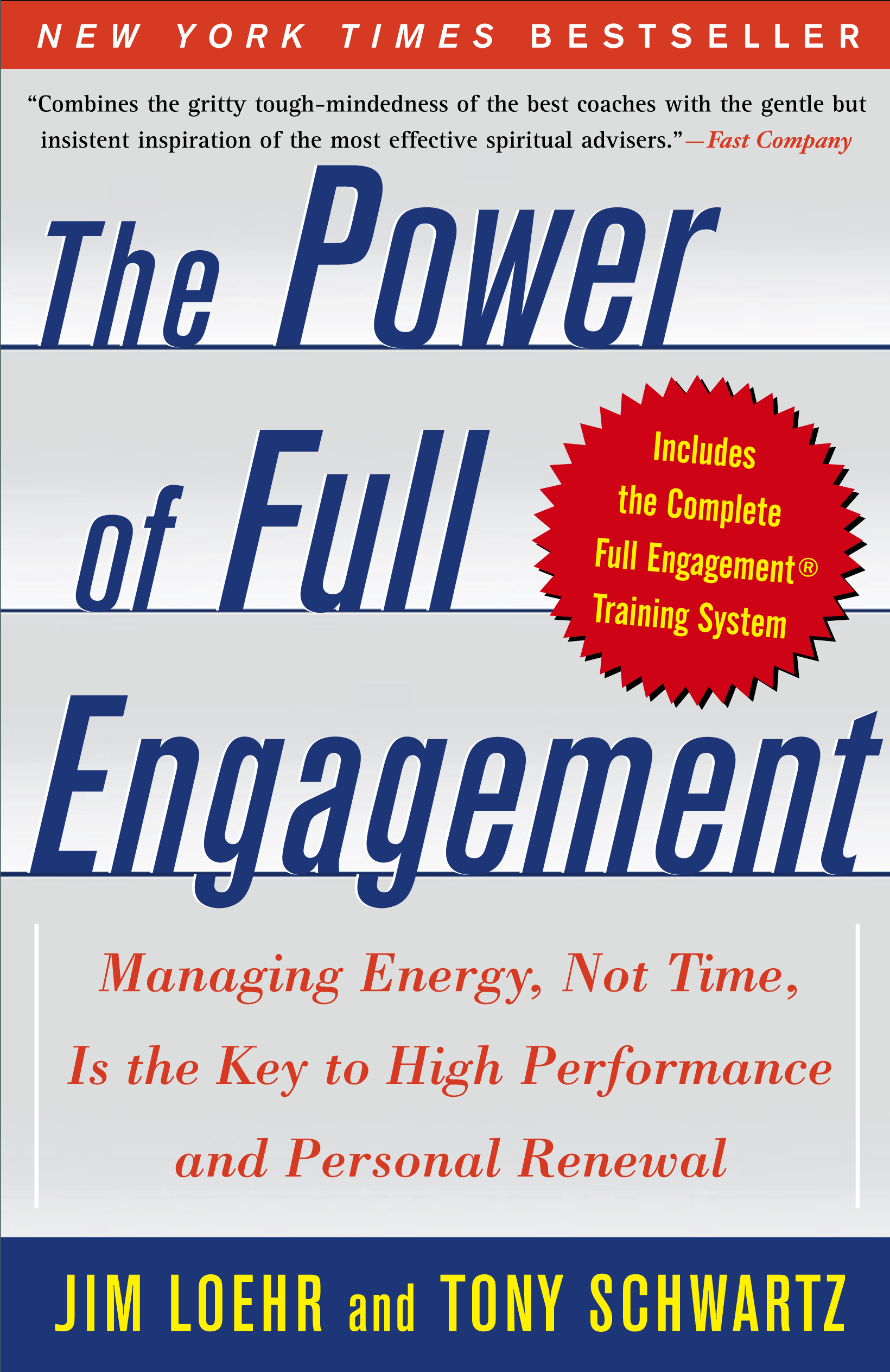
- Title: The Power of Full Engagement: Managing Energy, Not Time, Is the Key to High Performance and Personal Renewal
- Authors: Jim Loehr and Tony Schwartz
- Original publication: 2003
- Verified edition: Free Press trade paperback, ISBN 9780743226752
- Core subjects: Physical, emotional, mental, and spiritual energy; performance; recovery; and purposeful routines.
The central lesson: energy is the real currency
Time is fixed. Energy is more flexible: it can be drained, restored, trained, and directed. Two people may have the same hour available, yet produce very different results depending on sleep, attention, emotional state, physical condition, and sense of purpose. The authors encourage readers to stop measuring productivity only by hours worked.
This is not permission to ignore schedules. Calendars still matter. The more useful question is: What kind of energy does this task require, and when am I best able to supply it? A demanding analysis may belong in a high-focus period, while routine administration can wait for a lower-energy window.
The four dimensions of full engagement
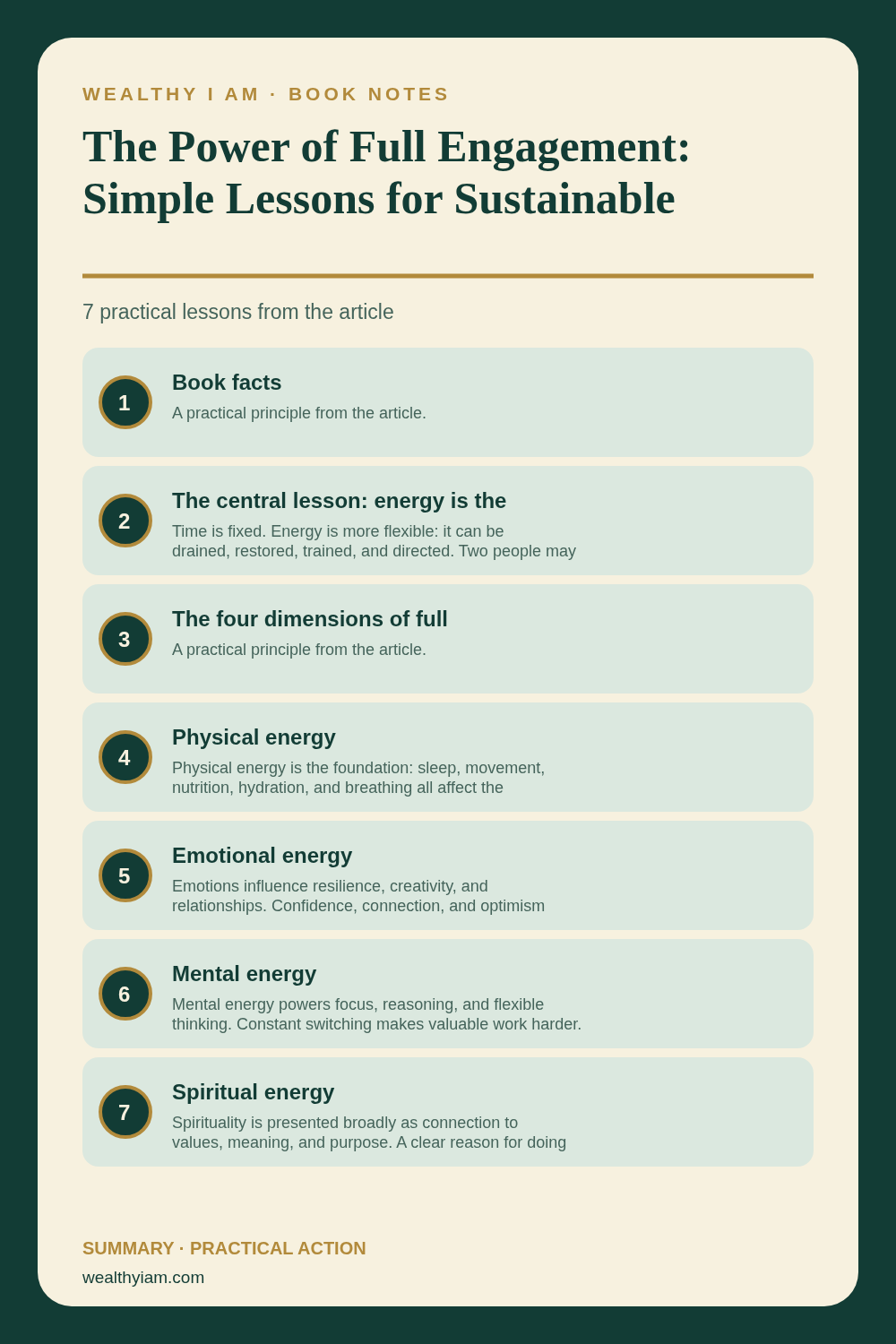
1. Physical energy
Physical energy is the foundation: sleep, movement, nutrition, hydration, and breathing all affect the ability to concentrate and recover. Treat the body as part of the work system rather than an obstacle to work.
2. Emotional energy
Emotions influence resilience, creativity, and relationships. Confidence, connection, and optimism expand our choices; chronic irritation narrows them. For a business owner, emotional energy shows up in how clearly one handles feedback, negotiates, and supports a team.
3. Mental energy
Mental energy powers focus, reasoning, and flexible thinking. Constant switching makes valuable work harder. Protect uninterrupted attention, reduce notifications, and match difficult work to peak focus.
4. Spiritual energy
Spirituality is presented broadly as connection to values, meaning, and purpose. A clear reason for doing the work helps a person persist when immediate rewards are small. Purpose can keep financial goals connected to freedom, family, service, or creativity.
Why recovery is part of performance
The book compares high performers with athletes. Athletes do not train at maximum intensity every minute; they alternate exertion and recovery. Knowledge workers often treat rest as a reward that arrives only after exhaustion. That can produce short-term output but weakens judgment and consistency.
Recovery can be a short walk, a real lunch away from the screen, a protected bedtime, or a pause between demanding meetings. The principle is rhythm: spend energy intentionally, then renew it before the tank is empty.
Step-by-step lessons for building a wealthier life
Step 1: Track energy, not just time
For seven days, record when you feel alert, focused, calm, and depleted. Note the activity, not just the clock. If your best thinking occurs early, reserve that period for skill development, client work, investing research, or creating an asset—not low-value scrolling.
Step 2: Identify your highest-value work
List activities that can improve income, ownership, capability, or relationships. Choose one or two that deserve your strongest energy. A busy day is not automatically productive; direct energy toward work that creates durable value.
Step 3: Build a recovery rhythm
Put renewal on the calendar before you need it. Try a fifty-minute focus block followed by a short break, a daily walk, and a consistent sleep window. Adjust the details, but make recovery specific enough to happen.
Step 4: Train one capacity at a time
Capacity grows through manageable challenge followed by recovery. If you want to write, begin with a protected twenty-minute session. If you want to learn finance, study one focused topic at a time. Gradually increase the challenge rather than relying on a dramatic burst of motivation.
Step 5: Turn intentions into rituals
A ritual removes negotiation. “I will improve my career” is an intention. “At 7:30 on weekdays, I will study for thirty minutes before opening social media” is a ritual. Create cues, define the smallest useful action, and track completion.
Step 6: Protect emotional and relational energy
Notice which interactions leave you clearer and which create friction. Set boundaries, repair important relationships, and seek feedback without treating it as a personal attack. Trust and reputation are long-term assets in every business.
Step 7: Connect money goals to purpose
Write what your financial goal is meant to make possible. A purpose gives discipline a destination. Review it when short-term temptations compete with saving, learning, or building something valuable.
A practical weekly review
- Which activity produced the most valuable result?
- Where did I spend energy without meaningful return?
- When did recovery improve later performance?
- Which ritual should I keep, simplify, or remove?
- What is the one high-energy action I will protect next week?
This review turns the book from an inspiring idea into an operating system. Energy management is not perfect balance every day; it is noticing patterns and making better adjustments.
Bottom line
The Power of Full Engagement is a useful reminder that sustainable success is an energy-management problem as much as a time-management problem. Physical care, emotional steadiness, mental focus, and meaningful direction reinforce one another. When those resources are renewed deliberately, readers are better positioned to learn, create value, make sound financial decisions, and stay in the game long enough for progress to compound.
Sources & credit
- Simon & Schuster publisher page — title, authors, edition, ISBN, and description.
- Google Books record — bibliographic reference.
- Amazon.com product page — matched U.S. product listing.
- Cover image — Simon & Schuster high-resolution cover; credit to the publisher/rightsholder.
Wealthy I AM Action Card
Wealthy I AM Pinterest Copy
TITLE
The Power of Full Engagement: Simple Lessons for Sustainable Performance and Wealth
DESCRIPTION
Jim Loehr and Tony Schwartz explain why managing energy—not just time—supports focused work, recovery, and the sustained effort behind wealth.
KEYWORDS
The Power of Full Engagement book summary, Power Full Engagement lessons, personal development, wealth building, productivity books
ALT TEXT
Wealthy I AM visual summary of The Power of Full Engagement: Simple Lessons for Sustainable Performance and Wealth
ARTICLE URL
https://nappot.com/power-of-full-engagement-simple-lessons-sustainable-performance-wealth/