Quick answer
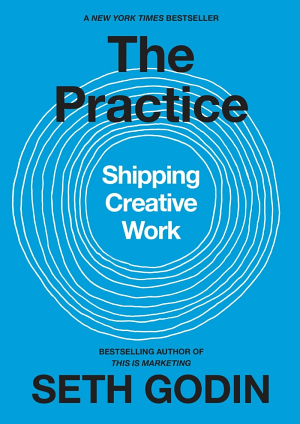
The Practice: Shipping Creative Work argues that creative work becomes more useful when it is treated as a repeatable practice rather than a mood, a burst of inspiration, or a private test of talent. Seth Godin’s central invitation is to make and share work for a defined audience, accept that outcomes are uncertain, and keep improving through consistent contribution.
The book’s connection to wealth is indirect. A dependable practice can help a person turn knowledge into services, products, reputation, or business experiments. It does not guarantee customers, income, profit, or investment returns. This source-bounded article uses the publisher and Google Books descriptions to identify the book and its broad themes; those public descriptions do not establish every chapter, example, exercise, or quotation in the full text. The applications below are original Wealthy I AM interpretations, not a complete reconstruction of Godin’s method.
Who this is for: freelancers, founders, writers, consultants, creators, and professionals who have useful ideas but keep waiting for perfect confidence or perfect conditions before sharing them.
Contents
- What problem does The Practice address?
- Five lessons for turning intention into useful output
- A low-risk four-week shipping experiment
- What the book leaves out
- Sources and evidence boundary
What problem does The Practice address?
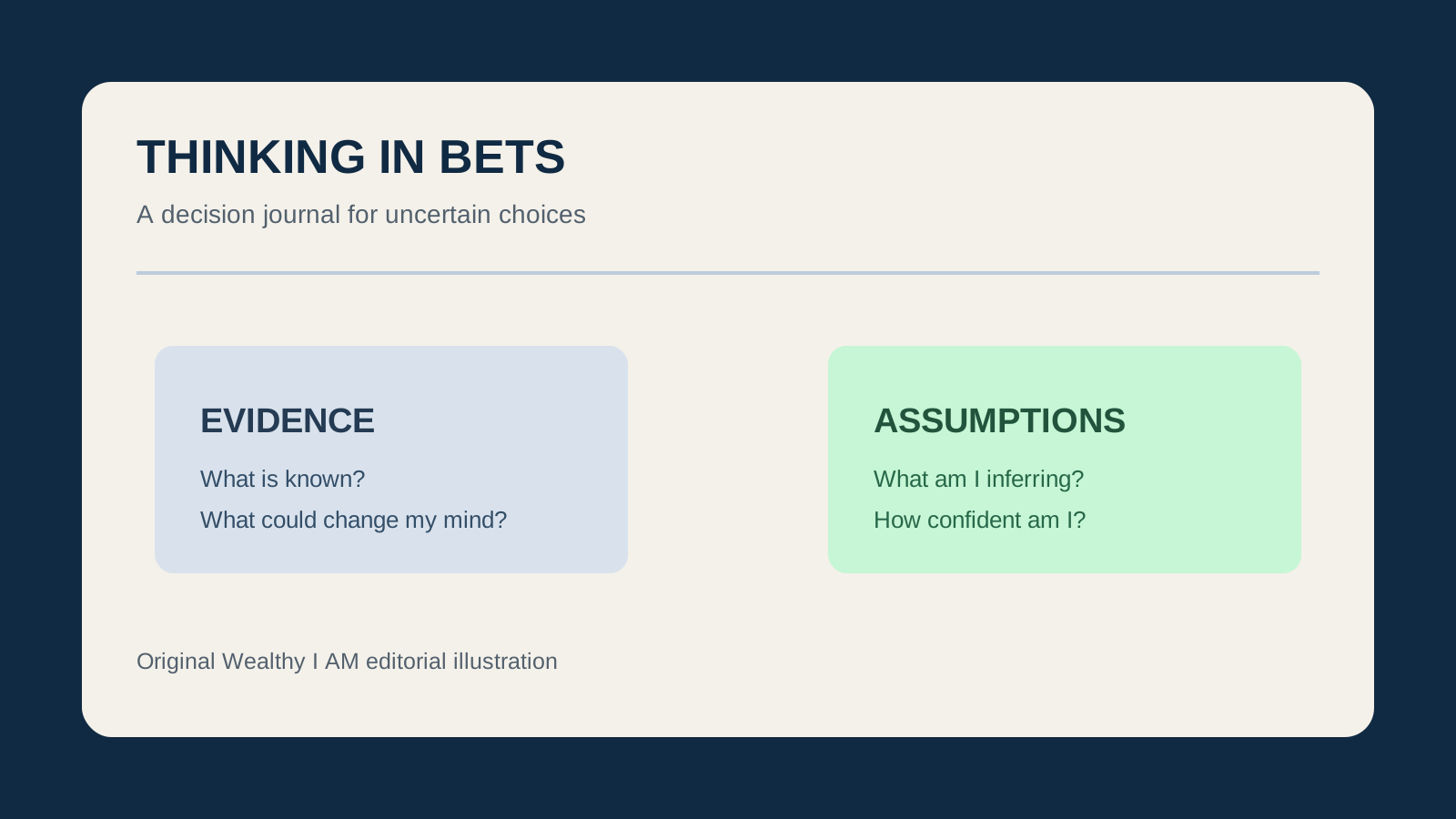
Many people treat creative work as a referendum on identity. If the first offer, essay, product, or presentation performs poorly, they conclude that they are not talented enough. That interpretation makes every attempt feel expensive, so they delay publishing until the work seems unassailable.
The publisher’s description presents a different emphasis: creative work has no guarantee, but consistent practice is a way to keep pursuing it and sharing it. The practical shift is from asking, “Am I ready to be recognized?” to asking, “Can I make something useful for a particular person and learn from the response?”
That shift matters financially because value is not created by an idea that remains private. A useful capability must eventually meet a real problem, a real customer, or a real audience. Still, market response includes timing, competition, distribution, purchasing power, luck, and many other variables. Practice improves the quality and quantity of attempts; it cannot control the result.
Five lessons from the book’s public description—and how to apply them carefully
1. Treat creative work as a practice, not a personality test
A practice is a repeatable set of actions: observe a problem, make a draft, share it with an appropriate audience, and revise. This does not mean producing careless work. It means refusing to make one outcome carry the entire burden of proving your worth.
Wealthy I AM application: Choose a capability that could create value—bookkeeping, design, analysis, teaching, repair, writing, or software—and define a small weekly output. A consultant might publish one short explanation of a common client problem. A baker might test one preorder offer. A job seeker might create one portfolio sample. Measure completed attempts and useful feedback, not assumed future revenue.
2. Make for a specific audience
“Everyone” is not a usable audience. A specific group gives the work a context: what problem matters, what language is clear, and what would make the result worth using. Specificity also makes feedback less vague.
Step by step:
- Name one group you understand without claiming to represent every member of it.
- Write down one recurring problem that group has expressed or demonstrably faces.
- Create the smallest responsible artifact that helps with that problem.
- Ask what was useful, confusing, missing, or unnecessary.
- Revise only after you have evidence that the problem is real and the proposed help is appropriate.
This is not a promise of product-market fit. It is a way to replace imagined demand with better questions.
3. Ship before certainty arrives—but keep the risk bounded
The publisher describes The Practice as encouraging artists, writers, and entrepreneurs to put their best work into the world despite uncertainty. “Ship” should not mean exposing people to avoidable harm or risking money that is needed for essentials. It means releasing a proportionate version that can be evaluated.
For a low-stakes service, shipping may mean offering a paid pilot to one client with a written scope. For an educational idea, it may mean a short workshop with clear limits. For a business, it may mean a landing page or preorder test before buying inventory. The test should be reversible where possible.
Use a simple risk rule: never fund an experiment with rent, debt payments, emergency reserves, required taxes, or money needed for health and family obligations. A creative project can be ambitious while its first test remains small.
4. Consistency is more dependable than waiting for inspiration
The source description emphasizes consistent practice and says the book is based on Godin’s Akimbo workshop. It also presents writer’s block as a myth and consistency as more important than authenticity. Those are the publisher’s characterizations; they should not be inflated into a universal psychological law.
A cautious interpretation is that a schedule can reduce the number of decisions required to begin. Put a recurring block on the calendar, prepare materials in advance, and define “done” before starting. The schedule should serve the work, not become a new identity contest.
A useful weekly review asks:
- What did I finish and share?
- Who was it intended to help?
- What response did I receive?
- What should I improve, stop, or test next?
- Did the routine damage sleep, health, paid obligations, or relationships?
If the practice is unsustainable, change the frequency, scope, or format. Persistence is not the same as repeating a failing plan without learning.
5. Turn private passion into public contribution
The publisher frames the book as a way to turn passion from a private distraction into a productive contribution. Contribution is a helpful standard because it asks what the work does for someone else, not only how strongly the creator feels about it.
For wealth-building purposes, this suggests a sequence rather than a shortcut:
capability → useful output → feedback → trust → offer → sustainable economics
Each link can fail. Skill may not solve an urgent problem. The audience may not find the work. Trust may take time. An offer may be poorly priced or delivered. Costs, taxes, legal duties, platform rules, and competition also matter. The sequence is therefore a diagnostic map, not a forecast.
Before trying to monetize, ask whether the proposed contribution is genuinely useful, whether you can deliver it reliably, and whether the economics work after direct costs and your time. Do not confuse attention with demand or revenue with profit.
A low-risk four-week shipping experiment
This is a Wealthy I AM application, not a stated four-week program from the book.
Week 1: Define the contribution. Select one audience, one problem, and one format. Write a one-sentence promise that avoids guaranteed outcomes. Set a time and money limit for the experiment.
Week 2: Make three small versions. Produce three pieces, prototypes, or service outlines. Keep a record of what each requires in time, materials, and external help. Do not buy substantial inventory or leave employment based on early enthusiasm.
Week 3: Share responsibly. Put the work in front of a small, relevant audience. Request specific feedback. If money changes hands, use clear terms, disclose limitations, protect personal information, and comply with applicable consumer, tax, licensing, and employment requirements.
Week 4: Review the evidence. Compare effort, quality, response, repeat interest, and costs. Choose one of four actions: continue at the same size, modify the offer, pause while building skill, or stop. A “stop” is useful information, not proof of personal failure.
The experiment measures learning and process. It does not establish that a business will succeed or that a particular creative path will produce wealth.
What The Practice leaves out
A practice-centered message can understate structural and practical constraints. People have different access to time, safety, capital, equipment, networks, health, childcare, stable housing, and markets. Consistency cannot remove those differences.
The book’s public description also cannot, by itself, verify particular research findings, case studies, chapter structures, quotations, or financial claims. Readers who need the complete method should consult the full book rather than treating a short summary as a substitute.
For money decisions, separate creative experimentation from investing. Do not borrow to pursue an uncertain project without understanding repayment risk. Keep emergency savings and insurance needs in view, track business income and expenses, and obtain qualified, jurisdiction-specific tax, legal, accounting, employment, medical, or mental-health advice when appropriate. This article is general education, not individualized financial advice.
Conclusion: make the next useful version
The most practical message supported by the available descriptions of The Practice is simple: do not wait for perfect certainty before making a responsible contribution. Choose a real audience, produce a manageable version, share it, learn from evidence, and decide whether the next attempt deserves more time.
That process can support skill-building and, for some people, eventually support income or a business. It cannot promise either. Your next step is to define one useful artifact, cap the downside, and schedule the smallest version you can complete and evaluate this week.
Sources and evidence boundary
- Penguin Random House: The Practice by Seth Godin — publisher page identifying the book, author, subtitle, November 3, 2020 publication date, 272-page edition, and broad description.
- Google Books: The Practice: Shipping Creative Work — bibliographic record and public description identifying Seth Godin, Penguin, November 3, 2020, and 272 pages.
These sources support bibliographic facts and broad public-description themes only. They do not establish every detail of the full book. No quotation, statistic, personal story, chapter claim, or guaranteed financial outcome is presented as verified here.
Safety note: Financial, tax, legal, employment, health, and mental-health decisions depend on individual circumstances and jurisdiction. Seek qualified professional advice where needed, and do not risk money required for essentials on an uncertain experiment.