Building wealth is often presented as a contest of prediction: find the next winning asset, anticipate the next rate decision, and react before everyone else. The Stoic Path to Wealth: Ancient Wisdom for Enduring Prosperity offers a quieter alternative. Darius Foroux argues that the investor’s greatest advantage may be the ability to manage emotions, stay disciplined, and keep perspective when markets become noisy.
Published in 2024, the book combines Stoic ideas about self-mastery with practical reflections on investing, skills, contentment, and financial independence. It is not a promise of effortless returns or a substitute for personal financial advice. Instead, it asks a more useful question: how can you build a money life that remains sensible when fear, greed, and uncertainty arrive?
Book at a glance
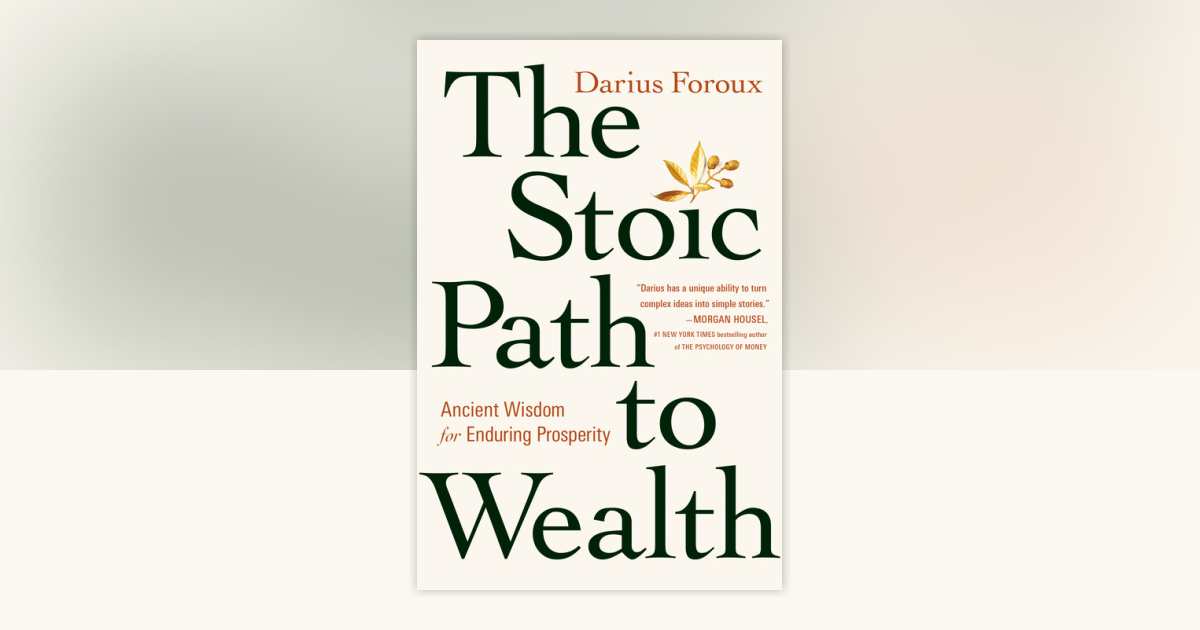
Author: Darius Foroux
First publication: 2024
Core themes: emotional control, long-term investing, personal skills, contentment, and sustainable wealth
Publisher edition verified: Portfolio hardcover, ISBN 9780593544150; Ebury Edge trade paperback, ISBN 9781529146707.
The central lesson: your behavior is part of your strategy
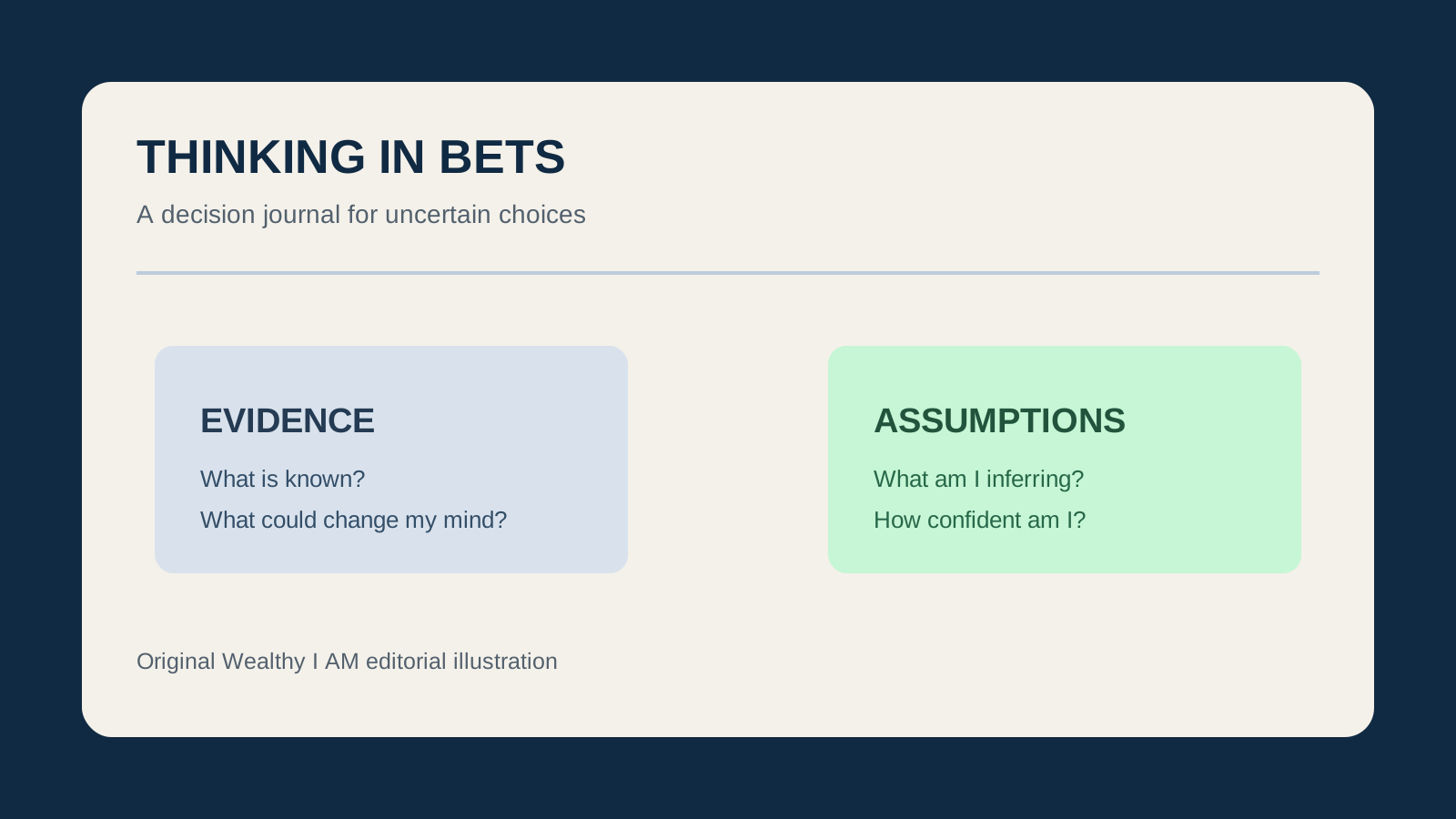
An investment plan can look excellent on paper and still fail if the investor abandons it at the first sharp decline. Foroux’s Stoic framing puts behavior at the center. You cannot control headlines, market prices, inflation surprises, or other people’s decisions. You can control the rules you set, the information you consume, the risks you accept, and the speed with which you act.
This is more than a motivational idea. Every impulsive purchase, panic sale, or speculative bet has a financial cost. A calmer process helps preserve capital and keeps compounding alive. The Stoic path is therefore not passive resignation; it is deliberate action in the areas where action can actually help.
Five practical lessons from the book
1. Separate control from concern
Start with two lists. On the first, write what you can influence: your savings rate, asset allocation, diversification, research habits, earning power, and time horizon. On the second, write what you cannot: tomorrow’s price, a commentator’s prediction, or the exact date of the next recession. Review the first list before making a money decision. If an action belongs only to the second list, it is probably an emotional reaction rather than a sound plan.
2. Build an investing policy before you need courage
Discipline is easiest when it is designed in advance. Write a one-page policy that states why you invest, what types of assets you own, how much volatility you can tolerate, when you rebalance, and what would justify a change. Include a cash reserve appropriate to your circumstances so that a temporary emergency does not force a long-term investment sale.
Then define a cooling-off period for major decisions. Waiting 24 hours before acting on a frightening headline can prevent a permanent mistake driven by a temporary feeling. A policy is not a prediction; it is a guardrail.
3. Develop a personal edge through specific skills
The book connects wealth with the ability to create value. That does not require becoming a professional trader. It may mean learning to sell, write, code, manage projects, analyze businesses, or solve a problem in a particular industry. A rare combination of useful skills can increase income and create opportunities for ownership.
Choose one skill with a clear economic use. Spend three focused hours each week practicing it, produce visible work, and ask for feedback from people who understand the problem. Track outputs rather than intentions: proposals sent, analyses completed, customers helped, or portfolio projects shipped. Skill compounds when practice produces evidence.
4. Treat contentment as a wealth-building tool
Endless comparison creates a spending treadmill. If every gain becomes the new minimum, higher income never becomes greater freedom. Contentment does not mean refusing ambition. It means deciding what “enough” looks like so that your goals remain yours rather than being set by advertising or someone else’s lifestyle.
Try a monthly enough review. List the expenses that genuinely improve health, relationships, learning, or meaningful experiences. Then identify purchases that mainly provide status or momentary relief. Redirect even a portion of that second category toward savings, debt reduction, or an experience you will value for years.
5. Prefer sustainable decisions to exciting decisions
Foroux’s emphasis on durability is a useful test for both investing and entrepreneurship. Ask whether a strategy can be followed through a difficult year, whether the downside is survivable, and whether the process depends on constant attention. A plan that requires perfect timing, permanent optimism, or emotional exhaustion is fragile.
Sustainability may look ordinary: broad diversification, manageable costs, adequate liquidity, regular contributions, and a business offer customers repeatedly value. Ordinary processes can produce extraordinary results when they are maintained for long enough.
A seven-step Stoic money practice
- Write your three most important financial goals and attach a time horizon to each.
- Record your current savings, debt, cash reserve, and investments without judgment.
- Choose a simple allocation that matches your horizon and risk capacity.
- Automate a contribution on payday before discretionary spending begins.
- Schedule one weekly learning block for a valuable income-producing skill.
- Limit market news to a planned window and mute accounts that trigger impulsive behavior.
- Review monthly: what worked, what was noise, and what single adjustment deserves attention?
This practice turns philosophy into a repeatable operating system. It also leaves room for professional guidance when your situation is complex.
Where the book is strongest—and where to stay thoughtful
The strongest contribution is its reminder that financial outcomes are partly character outcomes. Patience, humility, and emotional distance are practical assets. The book also broadens wealth beyond a number: useful work, autonomy, time, relationships, and peace of mind all matter.
Readers should still distinguish principles from prescriptions. A Stoic mindset cannot remove investment risk, and no book can know your tax position, obligations, or capacity for loss. Use the ideas to improve your process, not to justify concentrated bets or a trading decision you already want to make.
Bottom line
The Stoic Path to Wealth is a thoughtful guide to the inner discipline behind lasting prosperity. Its message is simple but demanding: control your reactions, build useful capabilities, invest with a long horizon, and decide what enough means. Wealth is not only the result of finding the right asset. It is also the result of becoming the kind of person who can follow a sensible plan through uncertainty.
Sources & credits
- Penguin Random House / Portfolio edition page — author, publication details, ISBN 9780593544150, and publisher description.
- Penguin Books Australia / Ebury Edge edition page — paperback details, ISBN 9781529146707, and thematic description.
- Amazon.com product page — verified U.S. product listing for the book.
- Cover credit: official Portfolio cover image supplied by Penguin Random House, ISBN 9780593544150.
This article is educational and is not individualized investment, tax, or legal advice.
Wealthy I AM Action Card
Wealthy I AM Pinterest Copy
TITLE
The Stoic Path to Wealth: Calm Investing and Enduring Prosperity
DESCRIPTION
Darius Foroux’s Stoic guide to calmer investing, useful skills, contentment, and a sustainable path to enduring.
KEYWORDS
The Stoic Path to Wealth book summary, Stoic Path Wealth lessons, personal development, wealth building, productivity books
ALT TEXT
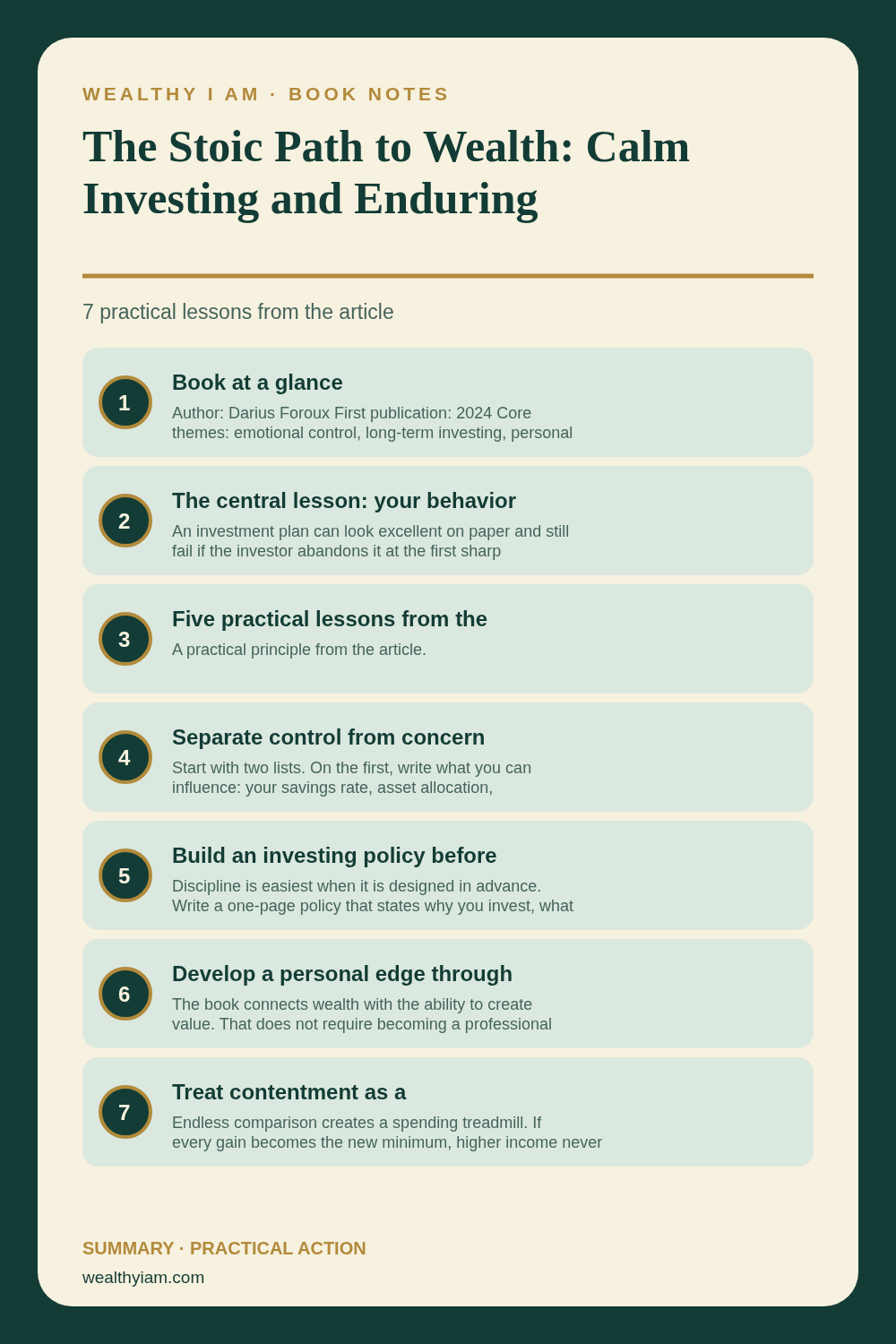
Wealthy I AM visual summary of The Stoic Path to Wealth: Calm Investing and Enduring Prosperity
ARTICLE URL
https://nappot.com/stoic-path-to-wealth-calm-investing-enduring-prosperity/