The Success Principles by Jack Canfield with Janet Switzer is a practical guide to moving from vague hopes to deliberate action. The book gathers principles about responsibility, goals, learning, relationships, confidence, and persistence. Its message is motivational, but its most useful contribution is operational: progress becomes more likely when a person defines a result, takes ownership of the next move, and practices helpful behaviors long enough for them to become habits.
For Wealthy I AM readers, the book is relevant because financial progress rarely begins with a perfect investment idea. It begins with clearer goals, better decisions, valuable skills, and consistent action. Wealth is not guaranteed by positive thinking, but a purposeful mindset can help you notice opportunities, recover from setbacks, and direct your effort toward work that creates value.

What the book is about
Canfield presents a broad set of principles for personal and professional achievement. Several ideas form the foundation: accept responsibility for your choices, decide what you want, believe improvement is possible, develop the skills your goals require, and keep taking constructive action. The book also emphasizes asking for support, learning from feedback, and refusing to let other people’s doubts become your permanent limits.
The approach is deliberately action-oriented. A goal is not just a statement that sounds inspiring; it should influence the calendar, the budget, and the decisions you make this week. That distinction matters for money. “I want to be wealthy” is a wish. “I will build a three-month emergency fund, remove high-interest debt, and invest a fixed amount every payday” is a plan that can be reviewed.
Key ideas in plain English
- Take responsibility. You cannot control every event, employer, market, or economy. You can control your response, preparation, spending choices, learning, and follow-through.
- Choose a clear destination. Specific goals give your effort a direction. They also make it easier to decide what to ignore.
- Act as a learner. Skill is developed through study, practice, feedback, and repetition. Earning power can grow when your abilities solve valuable problems.
- Use your strengths. You do not need to copy another person’s path. Notice the work you do unusually well and find where that ability helps people.
- Build a support network. Mentors, peers, customers, and collaborators can offer knowledge and accountability that you cannot create alone.
- Persist intelligently. Setbacks are information. Persistence means continuing to pursue a worthwhile outcome while adjusting the method when evidence says a change is needed.
Seven practical steps to apply the book
- Write a personal definition of wealth. Describe what money is meant to provide: security, flexibility, family support, creative freedom, or a business opportunity. Include a number where useful, but also name the life the number is supposed to support.
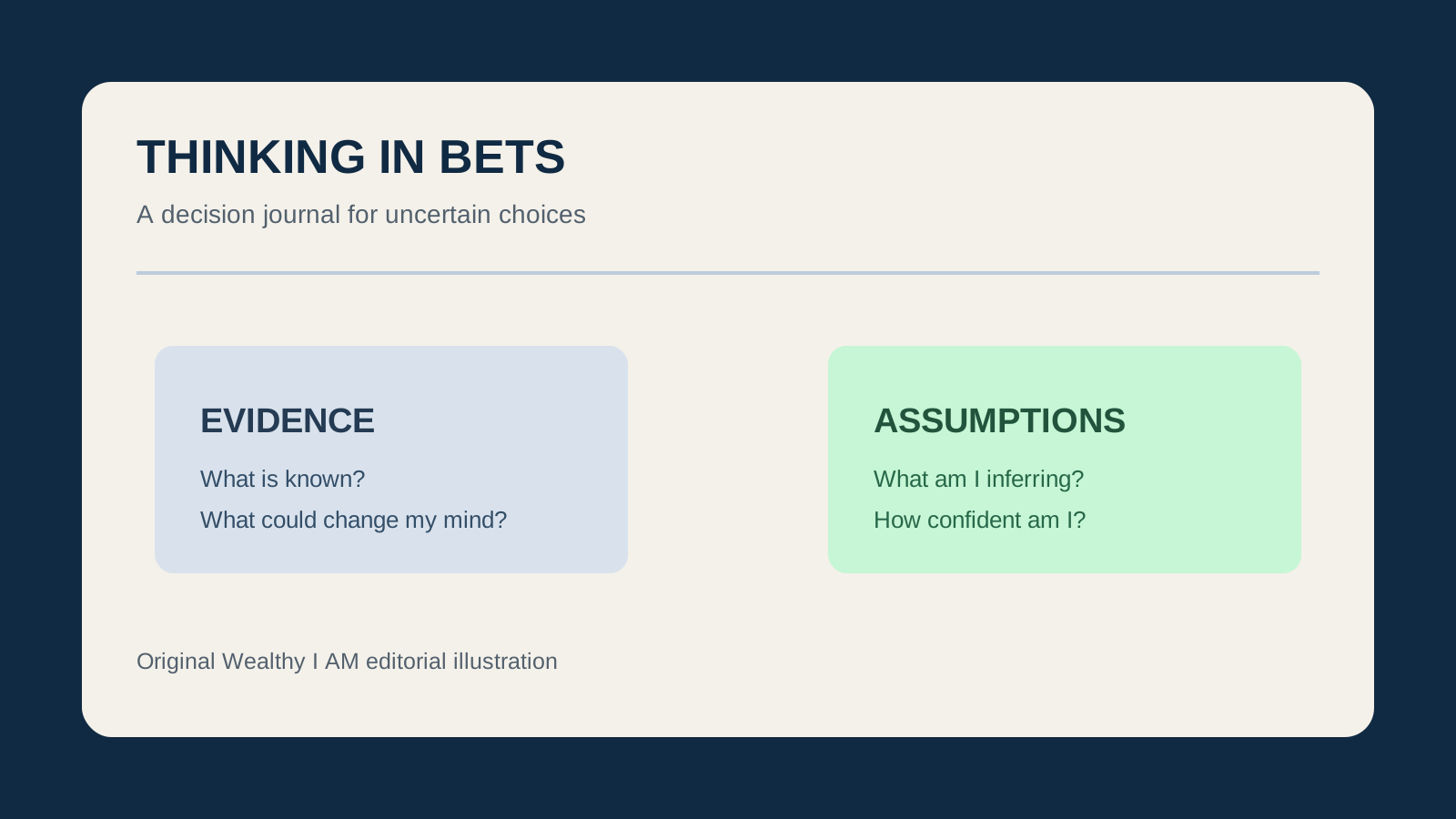
- Separate facts from stories. List your income, fixed costs, debts, savings, investments, and recurring obligations. Then identify the beliefs attached to them. “I am bad with money” is a story; “I have no automatic savings transfer” is a changeable fact.
- Choose one 12-month outcome. Pick a goal that would materially improve your position, such as paying off a credit card, earning a certification, increasing reliable income, or saving a defined amount. One focused target is easier to execute than ten competing ambitions.
- Convert the goal into weekly actions. Decide what happens every week: one sales conversation, three hours of study, a spending review, a portfolio contribution, or a product improvement. Put the action on your calendar before the week becomes crowded.
- Invest in a valuable skill. Choose a capability connected to a real market need. Practice it through small projects, ask for direct feedback, and keep evidence of the results you create. Skills become financially useful when they solve problems for an employer, customer, or community.
- Ask for help specifically. Instead of saying “I need advice,” ask a knowledgeable person to review a budget, critique an offer, explain an industry, or identify the weakest part of your plan. Specific questions produce better assistance.
- Review and adjust monthly. Compare the result with the behavior you intended. If savings did not happen, change the system—perhaps the transfer date, account structure, or spending limit—not merely the level of self-criticism.
How the lessons connect to wealth building
The book’s responsibility principle is useful because it moves attention from blame to leverage. If income is too low, the response may be skill development, negotiation, a job search, or a small business experiment. If spending is too high, the response may be a simpler lifestyle or an automated limit. Responsibility does not mean pretending circumstances are equal; it means identifying the part of the situation where action is possible.
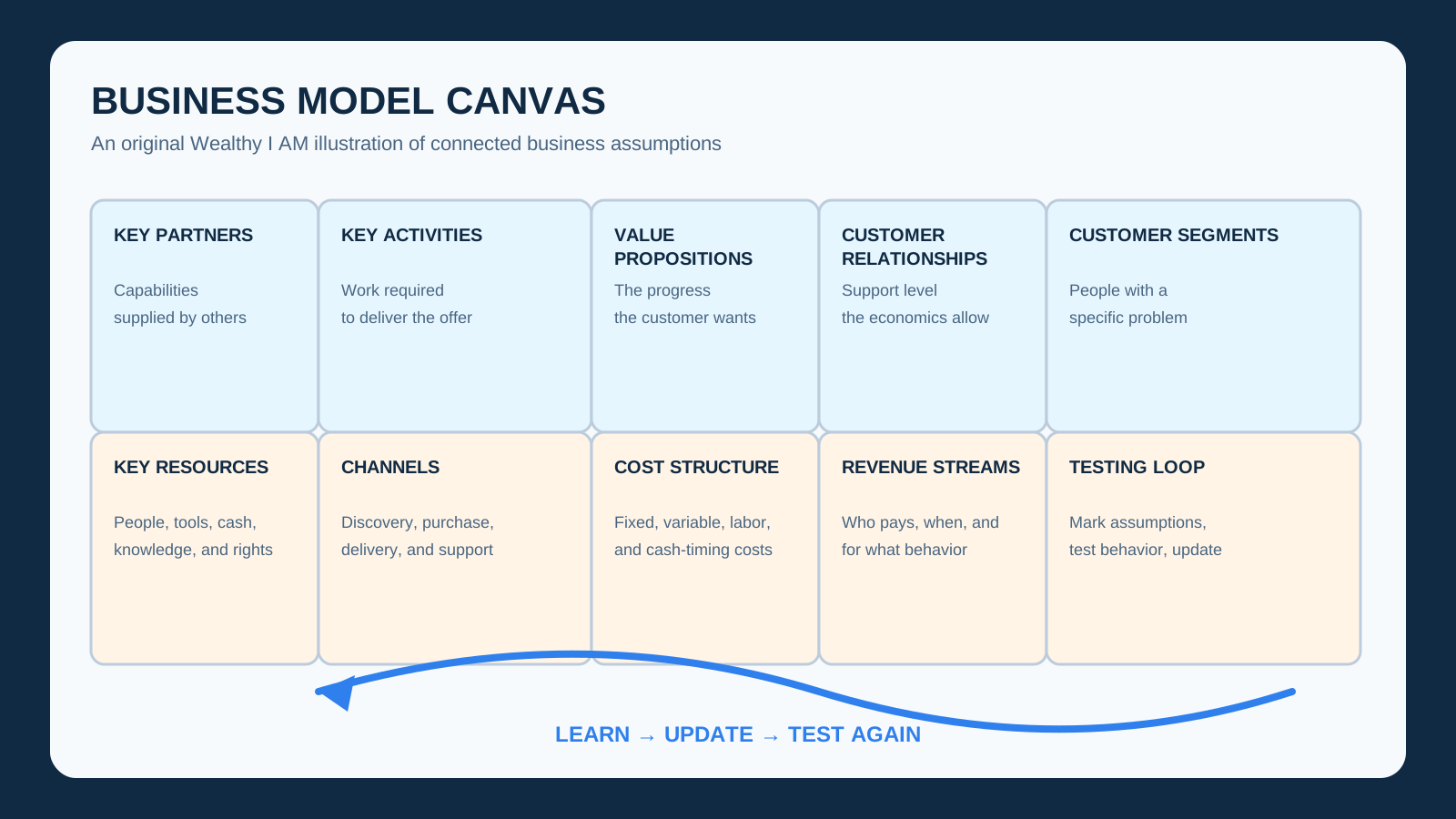
Its focus on goals also protects scarce resources. Time, attention, and cash are limited. A clear target helps you reject purchases, projects, and commitments that do not support the outcome. This is especially important for entrepreneurs, who can mistake activity for progress. A full calendar is not the same as profitable customer value.
The emphasis on learning has a compounding effect. A useful skill can improve the quality of your work, which can create stronger results, better references, higher pay, or new opportunities. Those gains can then fund further learning and investing. The process is gradual, but repeated improvement can change the slope of a career or business.
What to approach with care
Some success literature can sound as though mindset alone controls outcomes. It does not. Health, family responsibilities, discrimination, economic conditions, luck, and starting resources all matter. A positive attitude cannot guarantee wealth, and failure is not proof that someone lacked sufficient belief.
Read the principles as tools for agency, not as a moral judgment. Use optimism to keep working, but use evidence to choose the work. Set ambitious goals while maintaining a cash buffer, avoiding reckless debt, and respecting investment risk. A practical wealth plan combines motivation with numbers, safeguards, and patience.
Bottom line
The Success Principles is most valuable when it turns encouragement into a routine: define what you want, accept responsibility for your next move, develop useful abilities, ask for help, and review the results. Applied to money, the lesson is straightforward. Let your goals shape your weekly behavior, and let your behavior gradually build the skills, savings, relationships, and ownership that support lasting wealth.
Sources and credit
- Jack Canfield official website — author and Success Principles resources.
- Open Library bibliographic record — title and edition reference.
- Amazon.com book page — product reference for The Success Principles by Jack Canfield with Janet Switzer.
- Open Library cover image — cover image source for the matched ISBN edition.