Building wealth does not require a secret stock tip or a six-figure salary. It starts with a few understandable decisions repeated for years: spend less than you earn, protect your family, invest patiently, and give your money time to grow.
The Wealthy Barber presents those ideas through a friendly financial fable rather than a wall of technical language. David Chilton uses the fictional barber Roy to show ordinary people how to take control of saving, investing, insurance, taxes, housing, and retirement planning. The central promise is deliberately unglamorous: financial independence is built slowly and steadily, not won through a get-rich-quick scheme. [1][2]

Book facts
| Exact title | The Wealthy Barber, Updated 3rd Edition: Everyone’s Commonsense Guide to Becoming Financially Independent |
|---|---|
| Author | David Chilton |
| First published | 1989; updated third edition published November 25, 1997 |
| Publisher | Crown Currency |
| ISBN | 978-0761513117 |
| Core subjects | Saving, compounding, investing, insurance, taxes, housing, spending, and retirement planning |
What the book is really teaching
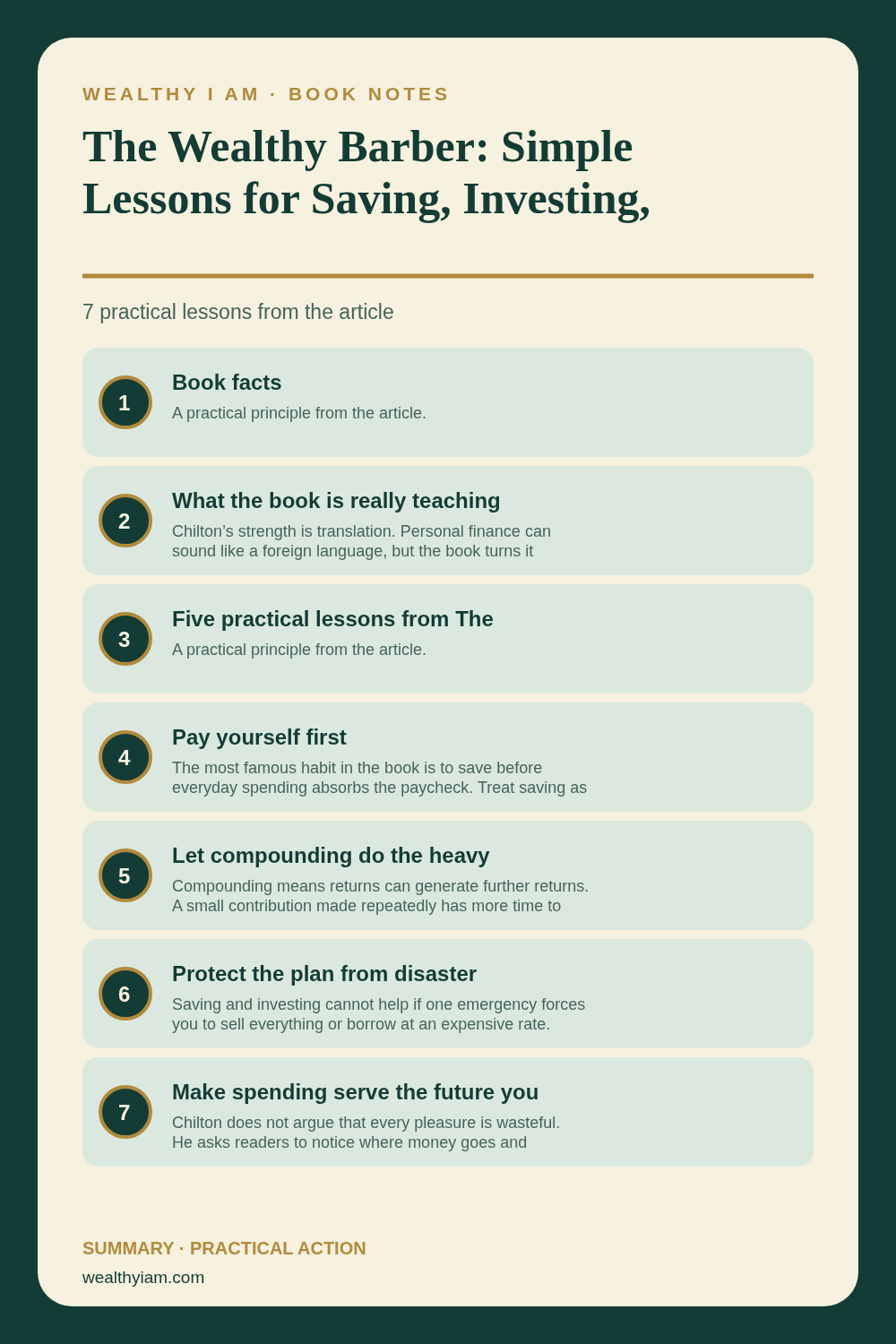
Chilton’s strength is translation. Personal finance can sound like a foreign language, but the book turns it into conversations between people who have recognizable worries. Roy is not presented as a genius who discovered a magic formula. He is a believable guide who explains why small habits matter and how a plan can work on an average income.
The book also makes an important distinction between earning more and keeping, protecting, and growing what you earn. A raise helps, but a higher income can disappear if spending rises at the same speed. Wealth is the part of your income that becomes security and ownership over time.
Five practical lessons from The Wealthy Barber
1. Pay yourself first
The most famous habit in the book is to save before everyday spending absorbs the paycheck. Treat saving as a bill owed to your future self. Automate a percentage on payday into a separate savings or investment account so the decision does not depend on willpower. The exact percentage should fit your income, debt, and responsibilities. Begin with an amount you can maintain, then increase it when your income grows.
2. Let compounding do the heavy lifting
Compounding means returns can generate further returns. A small contribution made repeatedly has more time to grow than a larger contribution made only at the end of a working life. The book’s message is not that growth is guaranteed; markets fluctuate and investments carry risk. It is that time is an asset. Choose a diversified, low-cost approach you understand, contribute regularly, and review it instead of reacting to every headline.
3. Protect the plan from disaster
Saving and investing cannot help if one emergency forces you to sell everything or borrow at an expensive rate. Build an emergency reserve appropriate to your household, keep high-interest debt under control, and review insurance needs as your family and assets change. Insurance is not an investment contest: its job is to transfer a risk that would be financially devastating.
4. Make spending serve the future you want
Chilton does not argue that every pleasure is wasteful. He asks readers to notice where money goes and distinguish useful spending from automatic spending. A monthly review can reveal subscriptions, convenience purchases, or upgrades that no longer add much value. Give every major expense a job. Spend generously on what genuinely matters, but stop allowing invisible habits to decide your priorities.
5. Turn good intentions into a written plan
A financial plan becomes useful when it names the goal, amount, deadline, and next action. Write down your emergency-fund target, debt payoff order, retirement contribution, insurance review date, and investment rules. Review the plan once a month and after major life changes. A written process reduces the temptation to make a completely new decision every time the market or your emotions move.
A step-by-step seven-day money reset
- Day 1 — See the truth: List take-home income, fixed bills, flexible spending, debts, savings, and investments using actual statements.
- Day 2 — Choose your first percentage: Set an automatic transfer for a sustainable amount. The first win is making it happen.
- Day 3 — Build a buffer: Label an emergency account and direct extra cash there until you have a useful reserve.
- Day 4 — Attack expensive debt: Keep minimum payments current and send additional money toward the highest-interest balance.
- Day 5 — Check protection: Review beneficiaries, essential insurance, wills, and account access. Ask a licensed professional where the situation is complex.
- Day 6 — Start or simplify investing: Use diversified investments and understand fees, taxes, time horizon, and risk before committing money.
- Day 7 — Write the rules: Record what you will automate, what you will review, and what you will not do, such as panic-selling or borrowing for speculation.
What to question in an older classic
The original framework remains useful, but account names, tax rules, contribution limits, and investment products change by country and year. Do not copy a historical example blindly. Confirm current rules with official government or financial-provider sources, and get regulated advice for taxes, insurance, or retirement decisions that affect your household.
Simple takeaway: keep the behavior lesson, then update the details for your country, age, goals, and risk tolerance.
Bottom line
The Wealthy Barber is valuable because it makes foundational money habits feel possible. Its advice is not exciting, but that is part of the point. Save automatically, control spending, protect against ruin, invest with patience, and review a written plan. Those actions will not make anyone wealthy overnight. They can, however, turn an ordinary income into greater resilience, ownership, and choice over a long enough period.
Sources and credits
- Penguin Random House: bibliographic details and book overview
- Amazon.com: matched Updated 3rd Edition product page
- The Wealthy Barber official site
- Cover image credit: Open Library ISBN 9780761513117 edition image
This article is educational and is not individualized financial, tax, or insurance advice.
Wealthy I AM Action Card
Wealthy I AM Pinterest Copy
TITLE
The Wealthy Barber: Simple Lessons for Saving, Investing, and Financial Independence
DESCRIPTION
David Chilton’s classic personal-finance fable explained through practical lessons on saving, compounding, protection, spending, and financial.
KEYWORDS
The Wealthy Barber book summary, Wealthy Barber lessons, personal development, wealth building, productivity books
ALT TEXT
The Wealthy Barber, Updated 3rd Edition by David Chilton book cover
ARTICLE URL
https://nappot.com/wealthy-barber-simple-lessons-saving-investing-financial-independence/