Learning faster is a wealth skill. Every useful capability you acquire can improve the work you do, the problems you can solve, and the opportunities you can pursue. But many people delay learning because they imagine mastery requires years before it becomes useful.
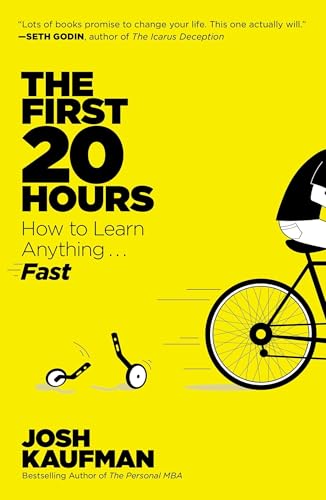
In The First 20 Hours: How to Learn Anything . . . Fast!, Josh Kaufman offers a more encouraging starting point. His argument is not that anyone can become world-class in twenty hours. It is that a focused beginner can become noticeably competent by concentrating on the basics, removing barriers, and practicing deliberately. [1][2]
You do not need to know everything before you begin. You need a clear target, a small first step, and enough protected practice to get past the frustrating beginning.
What the book is really about
Kaufman separates rapid skill acquisition from mastery. Mastery is a long journey. Rapid acquisition is the process of learning enough of a skill to perform useful tasks with confidence. That distinction matters for wealth because careers and businesses often reward useful output long before perfect expertise.
The book’s method grows from Kaufman’s own experiments with skills including yoga, programming, touch typing, the game Go, ukulele, and windsurfing. Across those examples, he emphasizes deconstructing a skill, learning just enough to correct mistakes, removing practice obstacles, and putting in roughly twenty hours of focused work. [1][3]
The core principles, explained simply
- Choose a meaningful target. “Learn marketing” is vague. “Write and test three email campaigns for my service” gives you something observable to practice.
- Define the desired performance level. Decide what “good enough for now” looks like. A specific target prevents endless preparation and makes progress visible.
- Break the skill into subskills. Most skills are bundles. Selling may include listening, asking questions, explaining value, handling objections, and following up. Practice the pieces instead of wrestling with an enormous label.
- Identify the most important tools and concepts. A small amount of research can prevent wasted effort. Learn the rules that explain most beginner mistakes, then return to practice.
- Remove barriers to practice. Put the instrument on the stand, the writing document in your bookmarks, or the course materials beside your desk. Make starting easier than avoiding.
- Practice in short, focused sessions. The goal is not to sit near a skill while distracted. It is to give the skill your attention and collect feedback on what to change next.
A practical 20-hour plan for a wealth-building skill
Use this sequence for a skill connected to your income, business, or financial education. Adjust the timing; the structure is the important part.
- Hour 1: Pick the outcome. Write one sentence describing what you want to do. Example: “I will build a simple monthly dashboard that shows revenue, expenses, and cash flow.”
- Hours 2–3: Research the map. Find a reliable beginner resource and list the component skills. Do not collect ten courses. Choose one path and identify the vocabulary you need.
- Hour 4: Prepare the environment. Gather the software, templates, equipment, or reference materials. Schedule the remaining sessions on your calendar and silence avoidable notifications.
- Hours 5–8: Practice the smallest pieces. Work through basic exercises. If the skill is negotiation, practice labeling concerns and asking calibrated questions. If it is bookkeeping, categorize a sample set of transactions.
- Hours 9–14: Build a small real project. Apply the pieces to something that matters. A real project exposes gaps that tutorials hide and creates evidence you can inspect.
- Hours 15–18: Seek feedback and correct. Ask a knowledgeable person to review the result, compare your work with a strong example, or test it with a real user. Treat criticism as information, not a verdict on your identity.
- Hours 19–20: Demonstrate the skill. Complete the target task without step-by-step instructions. Record what you can now do, what remains weak, and the next practice milestone.
How this connects to wealth
Skills create earning options. A capability can improve your performance in a current job, support a promotion, make a freelance offer more valuable, or help you build a small business. The book does not promise that twenty hours automatically creates income. It gives you a way to test whether a skill is worth deeper investment before spending months on it.
Focused learning reduces opportunity cost. Time is limited. A clear target helps you stop studying when you have enough knowledge to act and move toward feedback, customers, or useful work.
Projects become proof. A completed dashboard, sales page, analysis, portfolio piece, or process improvement can demonstrate ability more clearly than a list of intentions. Proof can strengthen applications, proposals, and conversations about compensation.
Learning compounds. One skill can make the next easier. Writing improves marketing; financial literacy improves business decisions; data skills improve measurement. Over time, a portfolio of complementary abilities can become career leverage.
Common mistakes to avoid
- Confusing consumption with practice: watching another video is not the same as using the skill.
- Setting an impossible standard: demanding expert performance at the beginning makes normal friction feel like failure.
- Switching resources constantly: every new method resets your attention. Stay with one practical route long enough to test it.
- Practicing without feedback: repetition can reinforce mistakes. Build in review, measurement, or outside observation.
- Learning skills with no economic or personal purpose: curiosity is valuable, but if the goal is wealth, connect practice to a real problem people care about.
Kid-simple takeaway: you cannot learn to play every song in one afternoon, but twenty focused hours can take you from “I have no idea” to “I can do the basic version.” That is enough to decide whether to keep going.
Bottom line
The First 20 Hours is a useful antidote to all-or-nothing thinking. You do not need to wait until you have abundant time, perfect confidence, or a complete curriculum. Define a useful result, break the skill down, make practice easy to start, and use concentrated effort to get through the awkward early stage.
For wealth building, the best next skill is usually not the trendiest one. It is the capability that helps you earn more, create more value, manage money more intelligently, or make better decisions. Give it twenty serious hours. Then let evidence—not anxiety—tell you whether it deserves the next two hundred.
Sources & credit
- [1] Penguin Random House: The First 20 Hours by Josh Kaufman.
- [2] Amazon.com product page for the 9781591846943 edition.
- [3] Josh Kaufman’s official book page.
- Cover credit: Amazon edition image linked above; author and title verified against the cited publisher and product records.