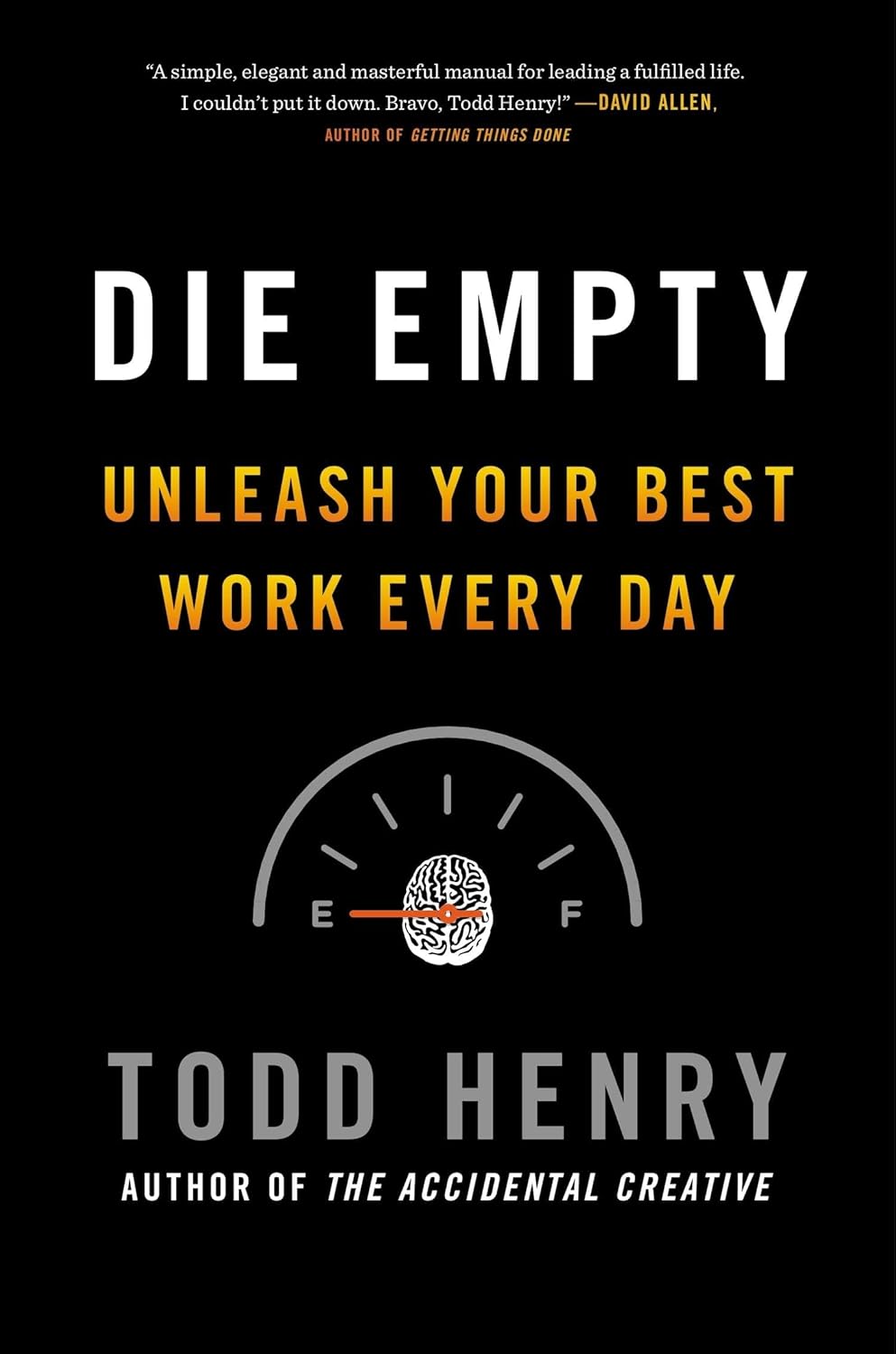
Many people are busy all day yet finish the evening unsure whether they moved anything important forward. We answer messages, attend meetings, and keep promising ourselves that the meaningful project will get our attention later. Todd Henry’s Die Empty: Unleash Your Best Work Every Day challenges that habit. Its central idea is not reckless spending or working without rest. It is the reminder that time, energy, insight, and creativity are temporary resources. The work we keep postponing cannot help anyone until we release it into the world.
Henry, an author and speaker focused on creative work and leadership, frames wealth broadly. Money matters, but so do skills, relationships, reputation, and the satisfaction of making a useful contribution. When we consistently develop and share those assets, we create career capital and opportunities that can eventually produce income. The book is a strong fit for anyone trying to build a meaningful career, business, or financially independent life.
Book facts
| Author | Todd Henry |
|---|---|
| Original publication | 2013 |
| U.S. paperback | Portfolio, ISBN 9781591846994; 240 pages |
| Themes | Purpose, curiosity, persistence, creative contribution, and intentional use of time |
| Wealth connection | High-value work compounds into skills, trust, opportunities, and income |
The central message
“Die empty” means reaching the end of a day, project, or career having given away the ideas and effort that were yours to contribute—not carrying your best work unused. Henry argues that stagnation often arrives quietly. Comfort, fear, familiarity, ego, and aimlessness can make postponement feel sensible. We tell ourselves we need more permission, more certainty, or better conditions. Meanwhile, our strongest ideas remain private and our skills stop stretching.
That message is relevant to wealth building. A salary is only one form of return from work. Learning to solve valuable problems, communicating clearly, serving customers, and creating dependable results can increase earning power. But those benefits require practice and visible output. Potential that never becomes a useful result cannot compound.
Three ideas worth carrying forward
Define your battles
Do not let an overflowing task list decide what your life is about. Choose the few outcomes that deserve your best attention, then let lower-value activity take a smaller place.
Stay fiercely curious
Curiosity keeps familiar work from becoming automatic. Ask better questions, study excellent people, and look for what customers or colleagues still struggle to solve.
Embrace discomfort
Growth feels awkward before it feels natural. A harder assignment, difficult conversation, or public first attempt protects you from becoming comfortable but replaceable.
Release the work
Finished and shared beats endlessly polished in private. Feedback is information that helps the next version become more useful.
A practical seven-step application
- Name the contribution. Write one sentence describing the result you most want to create this season: a client outcome, product, skill, portfolio, or healthier financial system.
- Find the hidden delay. Notice what pushes that work aside. Is it unclear scope, fear of judgment, too many commitments, or a phone capturing every spare minute? Name the actual obstacle.
- Schedule a daily release. Reserve 30–90 minutes before reactive tasks expand. End the block with something observable: a draft, proposal, analysis, practice recording, or customer conversation.
- Use an output target. Replace “work on my business” with “send three offers,” “interview five customers,” or “publish one useful guide.” Outputs connect effort to value.
- Build a curiosity list. Keep questions about your industry, money habits, customers, or craft. Investigate one each week and turn the answer into a decision or experiment.
- Ask for useful feedback. Choose someone with relevant experience and ask what would make the work more valuable. Listen for patterns rather than defending every choice.
- Review and renew. Record what you shipped, learned, and will do next. Remove one commitment that consumes energy without supporting your chosen contribution.
How this creates wealth
The productivity message becomes financially meaningful when connected to leverage. A focused hour improving a scarce skill can raise the quality of future work. A useful article, tool, or product can reach more people than the hour required to make it. A thoughtful conversation can lead to a partnership, referral, or opportunity months later. These are not guarantees, but they show how contribution creates assets beyond the immediate paycheck.
There is also a defensive wealth lesson: attention is capital. If your day is consumed by low-value activity, you are spending a finite resource without checking the return. Protecting attention, choosing worthwhile commitments, and completing important work can be as consequential as trimming a recurring expense. The goal is not maximum busyness. It is a better return on the time you already have.
Use the message carefully
“Die empty” is not permission to ignore rest, family, health, or financial boundaries. Sustainable contribution requires recovery. Nor does every idea need to become a business. Some work is valuable because it strengthens a relationship, teaches a child, improves a community, or gives you a life you enjoy.
The book cannot remove uncertainty. You may release excellent work and receive little response at first. That is why the application is a process: define, ship, learn, and adjust. Consistency gives you more evidence than waiting for perfect confidence.
Bottom line
Die Empty is an urgent but useful book about turning intention into contribution. Todd Henry’s challenge is simple: do not let fear, comfort, or endless preparation keep your best work trapped inside you. Choose a meaningful battle, protect time for it, practice with curiosity, and share the result. Over years, that pattern can build the skills, trust, opportunities, and income that support a wealthier life—while making the life itself more purposeful.
One more way to practice
At the start of each month, choose one piece of work that would make your future easier: a reusable sales process, a stronger case study, a course lesson, a savings automation, or a relationship worth nurturing. Break it into small releases and place the first release on the calendar immediately. This turns the book’s urgency into a calm system instead of a burst of motivation. You do not need to transform your whole life in one weekend. You need a dependable rhythm that sends useful work outward before another month disappears.
Sources and credit
This article is original educational commentary. Book facts, publication details, and the author’s stated themes were checked against: