Starting a business, product, service, or independent career can feel like a contest of ideas. Guy Kawasaki’s The Art of the Start 2.0 makes a more useful argument: the winning advantage usually comes from turning an idea into something real, useful, and easy for the right people to support. The book is a practical guide to launching anything, updated for social media, crowdfunding, cloud computing, and a lower-cost startup environment.
That message belongs in a wealth conversation because wealth is built by creating value and keeping a share of the value created. A clever concept is not an asset until it solves a real problem, earns trust, and produces sustainable cash flow. Kawasaki’s advice is energetic and entrepreneurial, but its deeper lesson is disciplined execution: start with meaning, learn from the market, build the right team, and make progress visible.
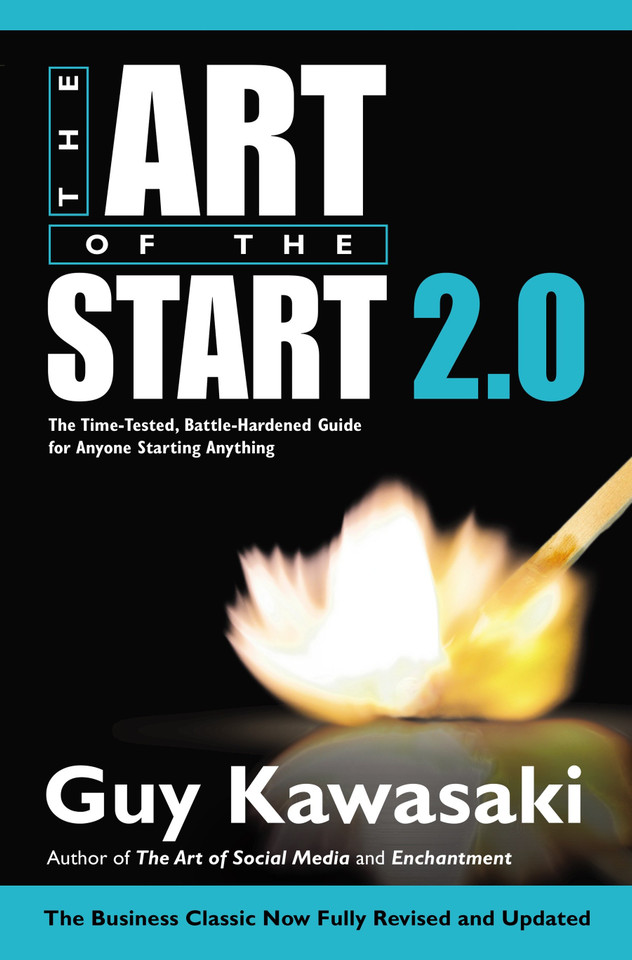
What the book is about
Kawasaki writes for founders, small-business owners, intrapreneurs, nonprofit leaders, and anyone trying to make an ambitious idea stick. Rather than burying the reader in theory, he concentrates on the decisions that repeatedly determine whether a new venture gets traction: defining a meaningful purpose, creating a product people want, recruiting capable people, positioning the offer, raising resources responsibly, and communicating a clear story.
The “2.0” edition reflects a changed business landscape. Online communities can replace some traditional promotion, cloud services reduce infrastructure costs, and crowdfunding can help test demand or finance a project. Yet the fundamentals remain. New tools cannot rescue an offer that nobody needs, a team that cannot deliver, or a founder who spends more time polishing a plan than learning from customers.
Five practical lessons for building wealth
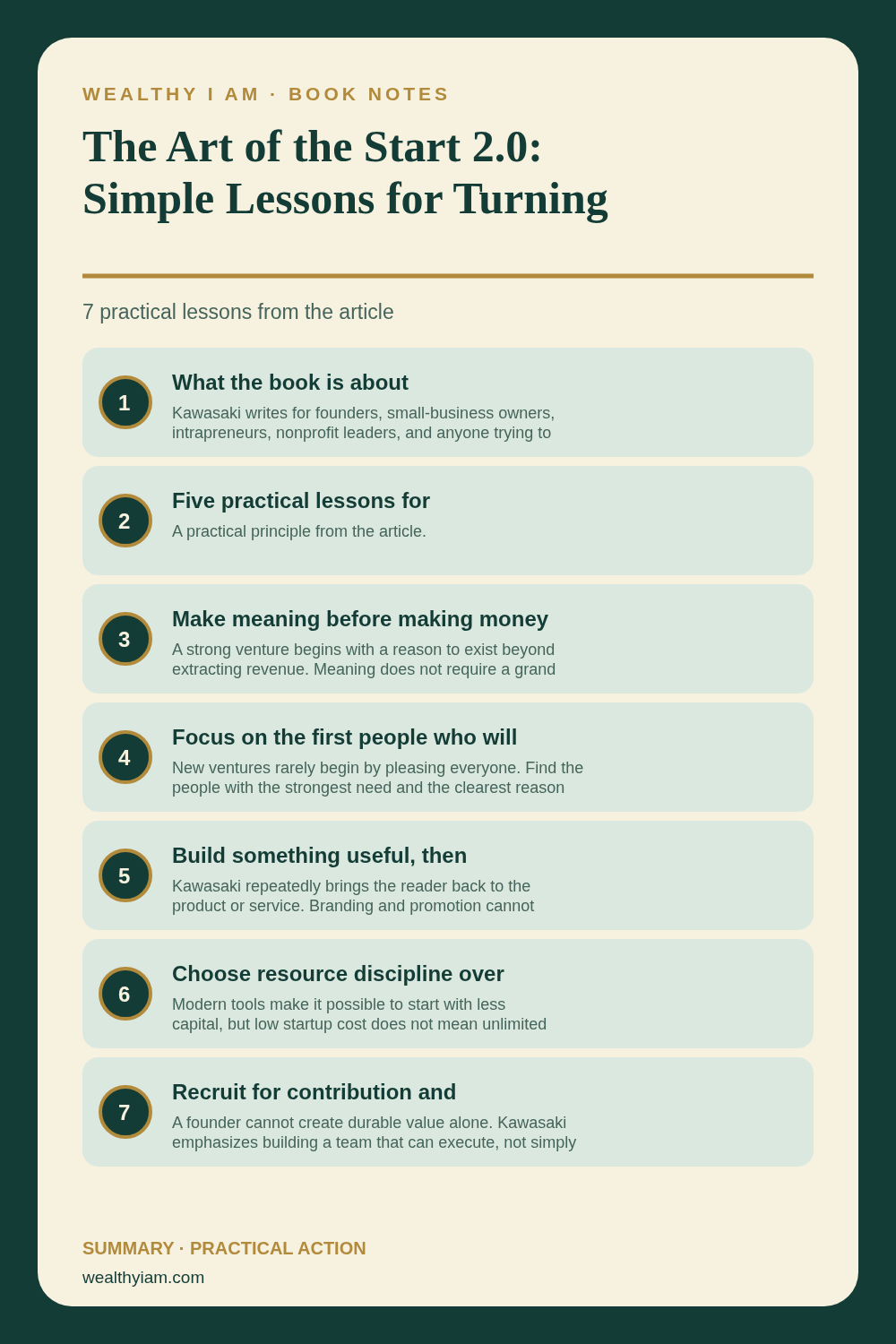
1. Make meaning before making money
A strong venture begins with a reason to exist beyond extracting revenue. Meaning does not require a grand social mission. It can mean saving customers time, making a difficult process less frustrating, helping families protect their finances, or giving a specific community a better option. A clear purpose improves decisions: it tells you whom to serve, what quality means, and why people should care.
Profit still matters. It is the fuel that lets a useful organization survive and continue serving people. Meaning and money are not enemies when the business earns sustainably by solving a problem well.
2. Focus on the first people who will love the offer
New ventures rarely begin by pleasing everyone. Find the people with the strongest need and the clearest reason to try your solution. These early customers provide better feedback than a broad audience that is merely curious. Their language can sharpen your positioning, and their results can become proof for the next group.
For personal wealth, the same principle applies to a service or career skill. Instead of saying “I help everyone with marketing,” choose a customer and a painful problem you can address unusually well. Specific value is easier to explain, sell, improve, and price.
3. Build something useful, then communicate it simply
Kawasaki repeatedly brings the reader back to the product or service. Branding and promotion cannot compensate for a weak customer experience. Start with the smallest useful version, put it in people’s hands, and observe what they do—not only what they say. Improve the offer around evidence.
Then explain it in plain language. A useful positioning statement identifies the customer, the problem, and the distinctive benefit. Clear communication lowers the effort required to understand and trust you. That can improve referrals, sales, partnerships, and ultimately the cash flow available for saving and investing.
4. Choose resource discipline over impressive appearances
Modern tools make it possible to start with less capital, but low startup cost does not mean unlimited room for waste. Keep fixed expenses modest, distinguish learning expenses from vanity spending, and make every recurring cost answerable to customer value. Crowdfunding or outside funding can help, but capital is not proof of a business model.
Personal wealth grows through the same discipline. Separate an investment in a skill, system, or customer experiment from consumption that only looks entrepreneurial. Protect a cash reserve, understand your obligations, and avoid taking financial risk merely to appear successful.
5. Recruit for contribution and character
A founder cannot create durable value alone. Kawasaki emphasizes building a team that can execute, not simply collecting impressive résumés. Look for complementary strengths, reliability, learning ability, and a willingness to do the unglamorous work. Shared purpose helps people make good decisions when instructions are incomplete.
Solo operators can apply this lesson through advisors, contractors, peers, and mentors. The goal is not to outsource judgment. It is to add capabilities that remove bottlenecks and let you spend more time on the work where you create the greatest value.
A step-by-step wealth application
- Write the problem in one sentence. Describe a specific person and the costly, frustrating, or time-consuming problem you want to solve. If the sentence is about your idea rather than their need, rewrite it.
- Choose a narrow first customer. List ten people or organizations that feel the problem most acutely. Speak with them before investing heavily. Ask about their current workaround, what it costs, and what would make them switch.
- Create a useful first version. Offer a small service, prototype, workshop, newsletter, or paid pilot. Set a real price when appropriate; payment is stronger evidence than compliments.
- Measure behavior and economics. Track conversations, conversions, repeat use, delivery time, revenue, direct costs, and cash left over. A growing audience without a workable economic engine is not yet wealth.
- State your positioning clearly. Complete: “For [customer] who needs [result], we provide [solution], unlike [alternative], because [distinctive advantage].” Use language a customer would actually say.
- Build a 90-day launch plan. Pick three priorities: improve the offer, reach the right customers, and strengthen delivery. Put dates and owners beside each action. Do not hide behind an endless planning phase.
- Reinvest selectively. Direct early surplus toward the constraint that most improves value or capacity—training, dependable tools, customer research, or a carefully chosen collaborator. Keep personal spending and speculative bets from consuming the business’s oxygen.
- Convert surplus into durable wealth. Once income is reliable, maintain reserves, handle high-cost debt, and use a diversified long-term investing plan suited to your circumstances. A business can create income; ownership of productive assets can help preserve and compound it.
A simple example
Imagine a professional who wants to leave employment and become a financial coach. “Start a finance brand” is too broad. Conversations reveal that self-employed creatives struggle to create a predictable tax and savings routine. The first offer becomes a four-week cash-flow setup for that niche, with a clear price and a repeatable process. The coach tests it with ten prospects, measures paid conversions and delivery hours, gathers outcomes, and improves the program before buying expensive software or hiring.
This path does not promise instant riches. It creates a sequence of learnable decisions. If customers do not buy, the diagnosis changes. If they buy but delivery takes too long, the process changes. If demand is strong, the founder can add recurring support, train another coach, or invest surplus. Each step connects customer value to a stronger economic engine.
Bottom line
The Art of the Start 2.0 is a reminder that entrepreneurship is a state of mind expressed through action. Start with meaning, serve a specific customer, build something useful, communicate simply, protect resources, and recruit people who add real strength. For wealth builders, the practical challenge is to turn those principles into a small experiment this week. The idea becomes valuable when it helps someone, earns trust, and produces results that can be reinvested for the long term.
Sources and credits
- Amazon.com product page — The Art of the Start 2.0, Guy Kawasaki, hardcover ISBN-10 1591847842 / ISBN-13 9781591847847
- Penguin Random House publisher page — bibliographic and book-description source
- Guy Kawasaki official website
- Cover credit: matched Amazon.com hardcover product image, identified by ISBN 9781591847847.
Wealthy I AM Action Card
Wealthy I AM Pinterest Copy
TITLE
The Art of the Start 2.0: Simple Lessons for Turning Ideas into Wealth
DESCRIPTION
Practical wealth-building lessons from Guy Kawasaki’s guide to turning ideas into useful, sustainable.
KEYWORDS
The Art of the Start 2.0 book summary, Start lessons, personal development, wealth building, productivity books
ALT TEXT
Wealthy I AM visual summary of The Art of the Start 2.0: Simple Lessons for Turning Ideas into Wealth
ARTICLE URL
https://nappot.com/art-of-the-start-2-0-simple-lessons-turning-ideas-wealth/