The future feels like a problem we should solve with enough data and a clever forecast. In Same as Ever: A Guide to What Never Changes, Morgan Housel offers a more durable approach: instead of trying to predict every new development, study the human behaviors and pressures that remain consistent.
That perspective is valuable for building wealth. Markets, technologies, and headlines change, but fear, greed, impatience, overconfidence, status-seeking, and the desire for a better life keep influencing decisions. Housel encourages readers to prepare for uncertainty by designing plans that can survive surprises rather than depending on one perfect forecast.
This is not an investing formula or a promise of easy returns. It is a framework for judgment: recognize what is permanent, leave room for randomness, and make choices that remain sensible across many possible futures.
Book facts and central idea
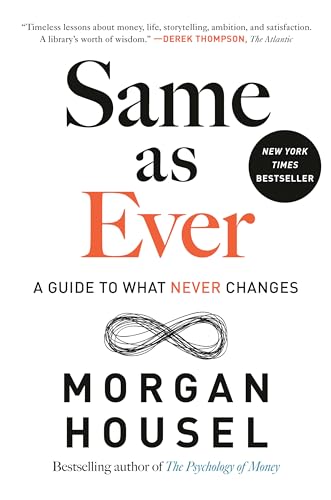
- Title: Same as Ever: A Guide to What Never Changes
- Author: Morgan Housel
- First published: 2023
- Publisher: Portfolio
- Verified U.S. hardcover ISBN: 9780593332702
- Core subjects: Risk, investing, behavior, opportunity, uncertainty, satisfaction, and long-term thinking.
What never changes?
Housel’s premise is not that nothing changes. Change is real and often dramatic. His point is that people frequently respond to change in familiar ways. We become excited by novelty, underestimate low-probability risks, extrapolate recent events too far into the future, and confuse a lucky outcome with a brilliant decision. Those patterns can persist even as the tools around us evolve.
For an investor, this shifts attention from trying to know exactly what happens next to asking what a sound plan should look like if several different things happen. For an entrepreneur, it means building cash reserves, customer trust, and adaptability rather than assuming today’s demand will last forever. For a household, it means respecting small repeated choices and the danger of fragile commitments.
Practical lessons from Same as Ever
1. Replace prediction with preparation
Forecasts can be useful, but they should not be the only support under your financial plan. Create a base case, then ask what would make it wrong. A job loss, market decline, health expense, business slowdown, or unexpected opportunity can all test a plan. Preparation might include an emergency fund, manageable fixed expenses, diversified investments, and skills that travel across employers or industries. The goal is not to eliminate uncertainty. It is to reduce the number of surprises that can force a bad decision at the worst possible time.
2. Build a margin of safety
When a plan works only if every assumption is correct, it is not robust. Leave breathing room between an optimistic estimate and your actual commitment. Borrow less than the maximum a lender offers. Avoid investing money you may soon need. Keep a cash buffer before increasing lifestyle costs. In a business, do not treat temporary revenue as permanent until customers demonstrate that they will return. A margin of safety can feel inefficient during calm periods; its value appears when conditions change.
3. Separate good outcomes from good decisions
A profitable investment can result from skill, luck, or both. A losing investment can follow a disciplined process and still lose money. Review the quality of the decision using the information available at the time, not only the result. Did you understand the downside? Did you size the position appropriately? Did you have a reason stronger than excitement or social proof? This protects you from overconfidence after a win and unnecessary despair after a loss.
4. Respect incentives and stories
People rarely evaluate facts in a vacuum. We notice information that supports our identity, employer, portfolio, or preferred story. Before accepting confident advice, ask who benefits if you believe it. What is missing? Which fact would change your mind? This is especially useful when evaluating investments, financial products, business opportunities, and online advice. A persuasive story can explain why something might work; it cannot guarantee that it will.
5. Let patience compound
Many valuable outcomes are delayed. Skills become useful after practice. Trust grows after repeated reliability. Investments compound when capital remains in productive assets long enough. Housel’s emphasis on enduring patterns reminds us that impatience can make people abandon a sound process before it has time to work. Choose behaviors you can repeat for years: save automatically, invest according to a written policy, learn a valuable skill, publish useful work, or maintain relationships with integrity.
6. Define “enough” before you reach it
Wealth is not only a number. If every gain becomes a reason to raise the target, progress can produce more pressure instead of more freedom. Write what money is meant to provide: security, time with family, creative independence, generosity, or meaningful work. “Enough” is not an excuse to stop growing. It is a boundary that keeps ambition connected to a life you actually want.
A seven-step application plan
- List permanent pressures: Write the behaviors most likely to affect your decisions—fear, envy, impatience, overconfidence, and the desire for certainty.
- Review fixed costs: Identify obligations that would be difficult to reduce during a downturn. Lowering fragility can be more valuable than chasing a slightly higher return.
- Write an investment rule: Define your horizon, diversification approach, contribution schedule, and conditions for changing course. Keep it simple enough to follow when headlines are loud.
- Run three scenarios: Consider good, disappointing, and strange outcomes. Ask what resources would help in each case.
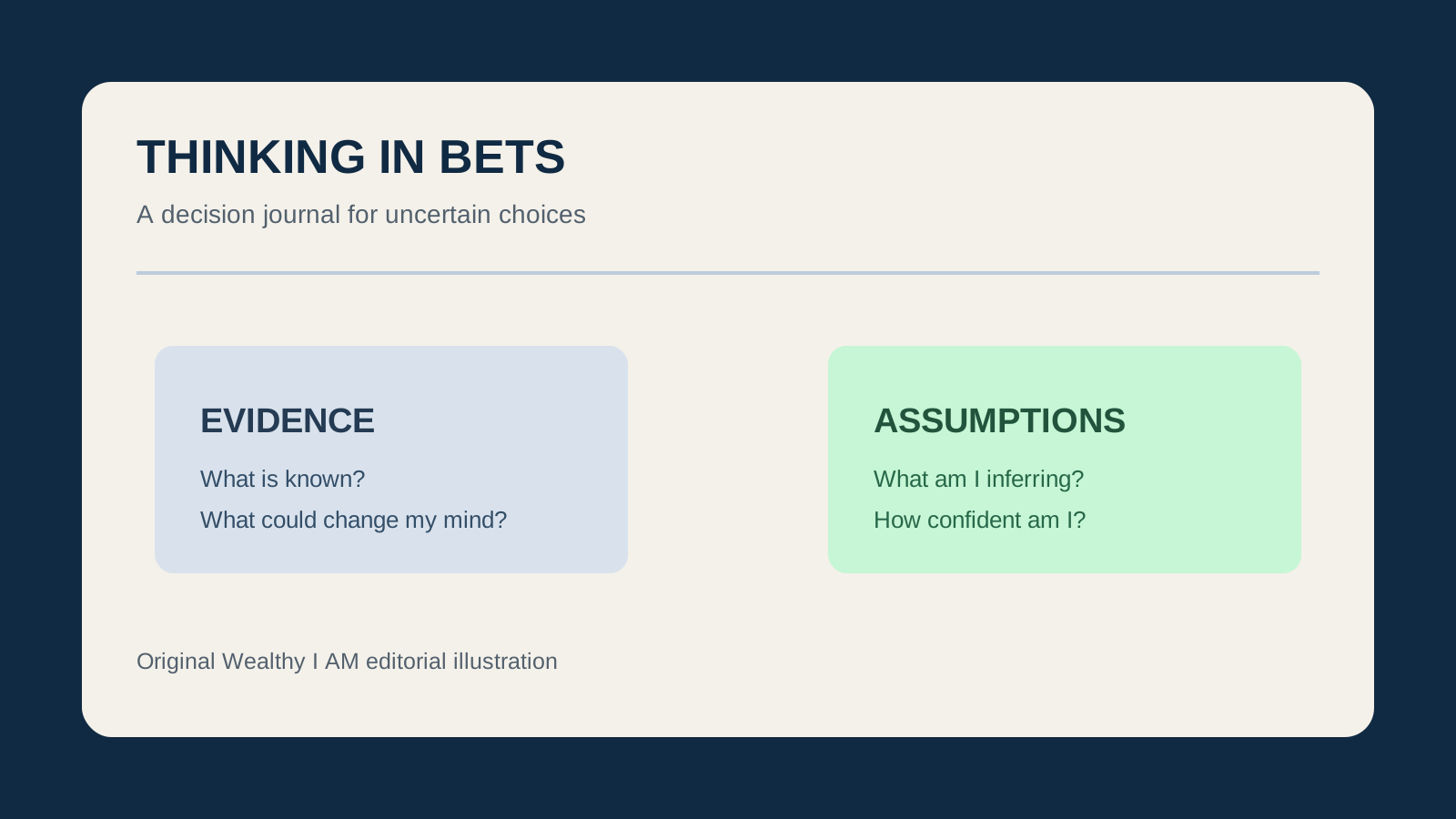
- Use a decision journal: Before a major choice, record assumptions, alternatives, risks, and confidence. Revisit it later without rewriting history.
- Choose one long game: Commit to a skill, relationship, business asset, or saving habit that becomes more valuable through repetition.
- Schedule a quarterly reset: Review what changed, what stayed true, and whether your plan still protects your future self. Change it when evidence changes—not merely when mood changes.
What to keep in perspective
Same as Ever is a collection of ideas and stories, not a personalized financial plan. Adapt its lessons to your income, obligations, risk tolerance, tax situation, and goals. Diversification and emergency savings can reduce certain risks, but they cannot remove investment losses. No book can predict the future, and no framework replaces careful research or qualified professional advice when the stakes are high.
Bottom line
Morgan Housel’s useful challenge is to stop treating novelty as the only source of insight. The next tool, crisis, or market trend may be impossible to forecast, but people will still make decisions under pressure, seek stories, respond to incentives, and benefit from patience and resilience. Build around those durable truths. A plan that survives uncertainty has a better chance to compound into financial security and a life well lived.
Sources & credit
- Penguin Random House / Portfolio publisher page — author, publication details, ISBN, and description.
- Google Books bibliographic record — title, author, and 2023 edition reference.
- Amazon.com product page — matched Morgan Housel product listing.
- Book cover image — Amazon.com cover asset for ISBN 9780593332702; cover copyright belongs to the publisher/rightsholder.