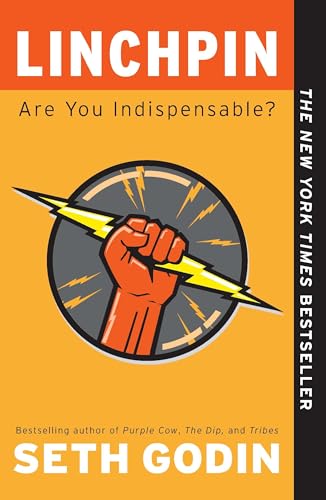
What if the most valuable thing you could bring to work was not another credential, job title, or productivity trick, but the courage to solve problems that have no instructions? In Linchpin: Are You Indispensable?, Seth Godin argues that the modern economy rewards people who contribute initiative, judgment, connection, and creativity—not merely those who follow a process. That idea matters for wealth because earning power grows when your work becomes difficult to replace and easy for others to value.
Godin is not promising permanent job security or suggesting that anyone should accept unhealthy dependence on one employer. His challenge is more useful: develop the habits of a person who notices what matters, takes responsible action, and creates a human contribution customers and teams remember. Those habits can strengthen a career, a freelance practice, or a small business.
The central idea: value beyond compliance
A compliant worker waits for a complete rulebook. A linchpin sees the gap between what is happening and what should happen, then uses judgment to move things forward. Godin describes these people as essential building blocks of organizations: they connect people, create order from confusion, improve the customer experience, and make decisions when no script applies.
This does not mean becoming indispensable by hoarding information or making a team dependent on you. The healthier interpretation is to become unusually valuable through transferable judgment. You document what you learn, raise the capability of the people around you, and bring a quality of thought that cannot be reduced to a checklist. That is a stronger foundation for long-term career leverage.
Five practical lessons from Linchpin
1. Find the problem hiding in plain sight
High-value work often begins with observation. Look for repeated customer complaints, delays between teams, confusing instructions, avoidable costs, or decisions everyone postpones. First write down the problem in one sentence, identify who experiences it, and estimate what it costs in time, money, trust, or opportunity.
Action step: Keep a “friction log” for seven days. Each day record one obstacle and one small experiment that might reduce it. Choose the problem with the clearest beneficiary and test a low-risk improvement.
2. Practice emotional labor
Godin emphasizes that valuable contribution includes more than technical output. Emotional labor means bringing patience, care, attention, and courage to interactions that affect the work. It may look like explaining a difficult decision clearly, calming a frustrated client, giving useful feedback, or making a thoughtful introduction.
These actions compound into trust. Trust lowers the cost of collaboration and increases the chance that people will invite you into important decisions. In business, that can lead to referrals, repeat customers, better partnerships, and pricing power.
Action step: Before an important conversation, ask: “What does this person need to understand, feel, or be able to do afterward?” Prepare around that outcome instead of merely defending your position.
3. Ship before resistance wins
One of the book’s recurring ideas is “shipping”: finishing and delivering work to the people it is meant to serve. Resistance often disguises itself as endless research, perfectionism, or waiting for permission. A useful first version creates feedback; an invisible perfect idea creates none.
Shipping does not mean being careless. Define the smallest version that can be evaluated, set a deadline, and learn from the response. This is powerful for wealth-building projects such as a service offer, newsletter, portfolio, course, or online store. Market feedback is more informative than private speculation.
Action step: Choose one delayed project. Define a version that can be delivered within five working days, list its quality checks, send it to a real user, and schedule a review based on evidence.
4. Build a personal asset, not only a task list
Tasks disappear when completed. A personal asset continues to create value: a reputation for solving a particular problem, a body of useful work, a trusted network, a repeatable process, or a skill that remains scarce. Ask whether today’s work is strengthening an asset that can travel with you.
Action step: Each week save one proof of value: a case study, testimonial, before-and-after metric, useful template, published explanation, or documented lesson. Over time, this becomes evidence for better roles, clients, negotiations, and business decisions.
5. Choose generosity over being a bottleneck
Being valuable is not the same as being the only person who knows how something works. A linchpin improves the system, shares context, and helps others make better decisions. That behavior creates leverage: your contribution expands because people can use what you teach.
Action step: Turn one recurring answer into a guide, checklist, or short training. Ask the next person who uses it what remains unclear. Teaching converts experience into an enduring organizational asset.
A 30-day linchpin practice
- Days 1–7: Observe. Keep the friction log and interview one customer, colleague, or audience member about a repeated problem.
- Days 8–14: Select. Choose one problem where you can create a measurable improvement without waiting for a title or large budget.
- Days 15–21: Ship. Deliver a small solution, invite feedback, and track one outcome such as time saved, errors reduced, response rate, or satisfaction.
- Days 22–30: Systemize. Document what worked, teach it to someone else, and decide whether the result deserves larger investment.
How this connects to wealth
Wealth is not only an investment account. It also includes earning power, ownership, optionality, and the ability to choose how you use your time. Linchpin speaks most directly to earning power. Scarce skills and trusted judgment can improve income, but the goal is not to chase busyness or make your identity depend on being needed.
Use the book’s lessons alongside sound financial foundations: maintain an emergency reserve, control high-cost debt, save consistently, and invest according to your goals and risk tolerance. A stronger contribution can increase income; a deliberate money system helps keep that income from disappearing. Together, they create more choices.
What to keep in perspective
Not every workplace rewards initiative fairly, and no individual can solve structural problems through effort alone. Becoming more valuable should not mean accepting burnout, unpaid labor without boundaries, or an employer’s expectation that you will always be available. Create value deliberately, communicate limits, and build portable assets so your future is not controlled by one gatekeeper.
Bottom line
Seth Godin’s Linchpin asks readers to stop waiting for a perfect rulebook and start contributing judgment, care, and original problem-solving. The wealth lesson is simple: make your work matter to a specific person, deliver useful results, and turn experience into assets that compound. Start by becoming the person who notices one important problem and responsibly helps solve it.
Sources and credit
- Book: Linchpin: Are You Indispensable? by Seth Godin, Portfolio, 2010/2011 editions.
- Penguin Random House book page — bibliographic verification and publisher description.
- Google Books record — title, author, publisher, and edition details.
- Amazon.com product page — matched product listing and cover-image source.
This article is educational and is not financial, legal, or career advice.