A promising product can have enthusiastic first users and still fail to become a durable business. Early adopters may tolerate rough edges and enjoy being first. Mainstream customers usually ask a different question: can this solve a defined problem reliably, with acceptable risk and enough support?
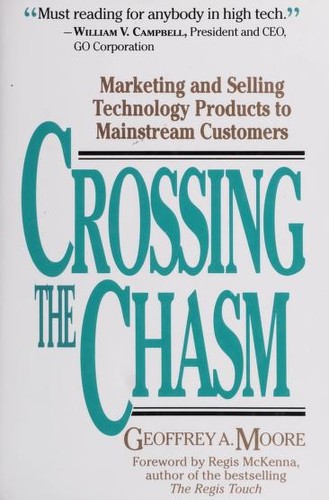
That gap is the central business problem behind Crossing the Chasm by Geoffrey A. Moore. This article presents six practical lessons as an original Wealthy I AM synthesis, not Moore’s exact numbered framework. The available catalog evidence verifies the book’s identity and broad technology-marketing focus, but does not establish every chapter detail, quotation, statistic, or example. This is general business education, not individualized financial advice.
Who should read this summary?
The ideas are relevant to founders, product managers, consultants, and sales leaders who have evidence of interest but not yet a repeatable path to dependable demand. They help operators ask who buys first, what problem is being solved, what proof reduces buyer hesitation, and whether the company can serve customers consistently.
The core idea: early enthusiasm is not a mainstream market
An early user and a mainstream buyer may value the same product for different reasons. Early users may care about novelty, technical possibility, or a competitive edge. Pragmatic buyers may care more about reliability, integration, training, budget approval, and the consequences of failure. A focused transition plan does not remove uncertainty, but it makes assumptions visible.
Lesson 1: Name a specific customer with an urgent problem
A market is easier to serve when the first customer group is specific. “Businesses that need artificial intelligence” is not a useful starting point. A hypothetical offer for independent accounting firms that spend too much time preparing a recurring report is more actionable because the buyer, workflow, and possible measure of value are clearer.
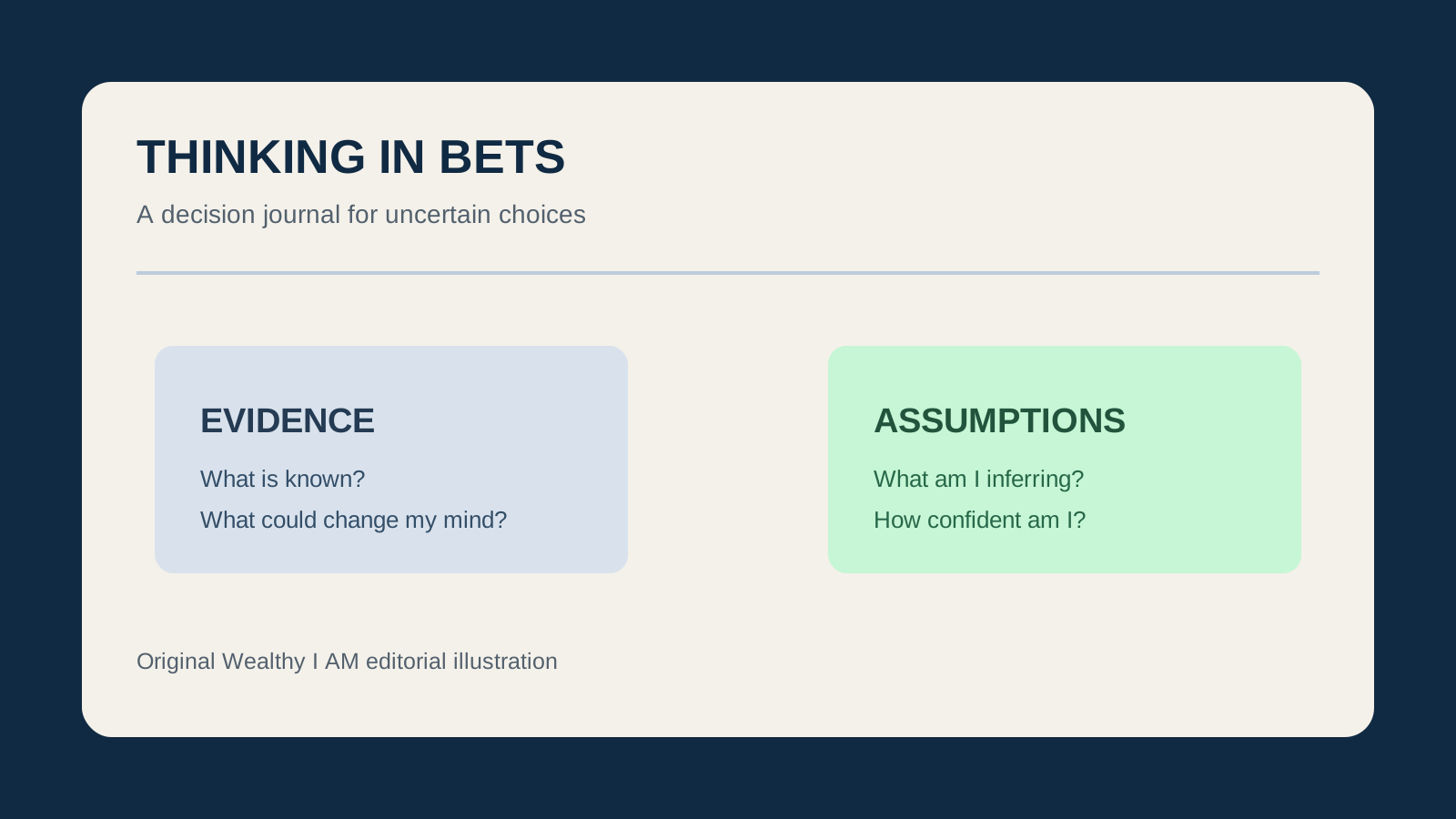
Try this: Write: “We help [specific customer] reduce or improve [specific problem] during [specific situation].” Then list the evidence you actually have: conversations, trials, renewals, referrals, or only expressions of interest. Do not count enthusiasm as revenue.
Lesson 2: Choose a narrow beachhead before expanding
A beachhead is a deliberately narrow initial segment where the product, message, implementation, and proof can be made highly relevant. Compare possible segments by urgency, buyer access, ability to deliver the promise, and cost to serve. Select the segment your current capabilities can serve responsibly, not the one with the most exciting theoretical market size.
Lesson 3: Sell a complete solution, not an isolated feature
A feature may be technically impressive but commercially incomplete. Customers may also need setup, data migration, training, support, security information, workflow changes, and a clear internal owner. Map the first successful use from purchase to routine operation. Identify responsibility, failure points, and the reassurance or service required.
Lesson 4: Replace broad claims with proof that reduces buyer risk
Pragmatic buyers need enough evidence to decide that adoption is manageable. Useful proof may include a defined pilot, transparent implementation plan, comparable references, security documentation, service terms, or a measurement agreed before the trial. Ask prospective buyers what could make adoption fail, then build evidence for the most common concern. Never present one successful customer as a universal forecast.
Lesson 5: Align the offer, sales process, and delivery capacity
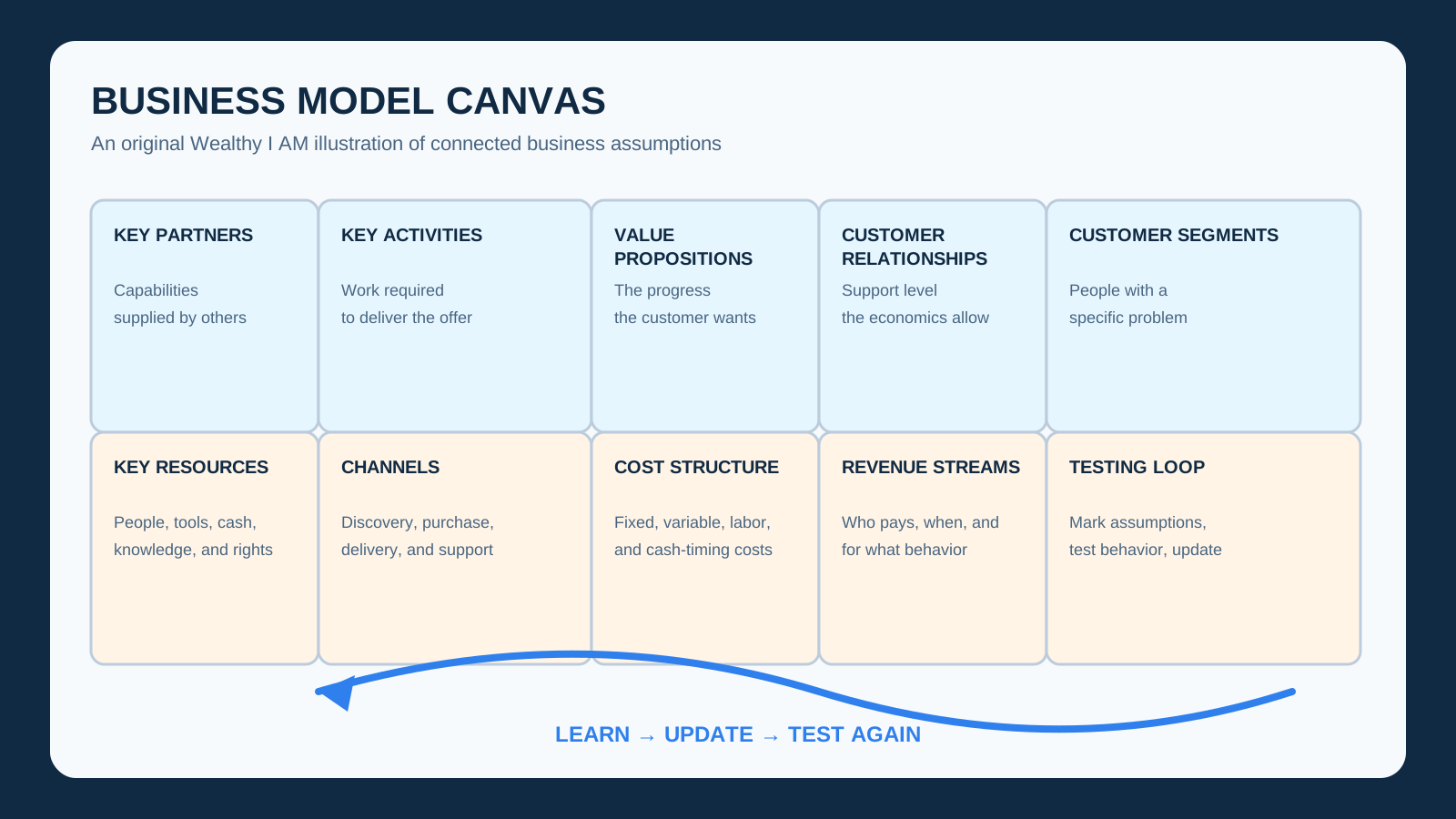
A transition to a larger customer group can expose a mismatch between what sales promises and what the team can deliver. Before increasing acquisition spending, understand implementation cost, support load, payment timing, and working capital. Revenue growth is not automatically financial health; a business can grow while losing money on each deployment.
Lesson 6: Treat the transition as a learning and sequencing problem
Moving from early users to mainstream customers is not a single publicity event. It is a sequence of choices: which segment to serve first, which objections to resolve, what solution to package, and when the business has enough evidence and capacity to broaden its target.
Original 30-day application: In week one, interview target buyers about workflow and purchase risks. In week two, rewrite the offer around one problem and segment. In week three, test a limited pilot with a pre-agreed success measure. In week four, compare the result with the original assumptions and decide whether to improve, narrow, pause, or proceed. This is not a guaranteed growth method.
What this book leaves out of a simple summary
A short article cannot establish every detail of Moore’s argument, examples, or how later editions frame technology markets. Consumer services, regulated products, nonprofits, and local businesses may face different buying constraints. Market timing, competition, regulation, execution quality, and luck remain important.
Do not use this framework to justify reckless spending, deceptive sales, or pressure on customers to adopt an unsuitable product. Test demand with a budget you can afford to lose, protect customer data, and obtain qualified legal, tax, accounting, or regulatory advice where required.
A practical next step
Choose one customer segment and write down the problem, buying risk, complete solution, proof you can provide, and delivery constraint most likely to hurt you. Speak with real buyers before expanding the audience or increasing promotional spend. The goal is not to manufacture certainty, but to replace a broad story with testable assumptions.
Crossing the Chasm is a reminder that adoption requires more than a clever product. Sustainable business value depends on serving a specific customer well, reducing practical risk, and building a delivery system that can support the promise. Outcomes vary, and no book guarantees income, profit, or wealth.
Sources and evidence boundary
The sources support the book’s identity, author, and broad publication context. The six lessons, checklist, and 30-day review are original Wealthy I AM applications.